Kharkiv marks muted Easter as Ukrainians brace for renewed fighting
Air raid sirens cut into Easter just 38 minutes after a truce began in Kharkiv, where families still queued for blessings at a damaged church.
Air raid sirens sounded in Kharkiv region 38 minutes after an Orthodox Easter truce took effect, underscoring how little faith many Ukrainians have in symbolic pauses that do not alter daily danger.
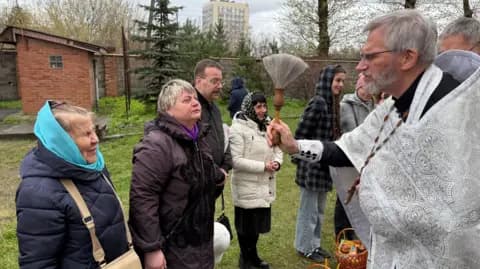
In the city’s east, families still carried baskets of iced Easter cakes, painted eggs and sausage to St John the Theologian Church for a blessing before the 4 p.m. ceasefire start time. The service was moved to mid-afternoon because of the curfew, and parishioners lined up to be doused with holy water by the priest. St John’s had already been damaged at the start of the full-scale war, and boarded-up windows on one side were a reminder that even a holy day does not restore normal life.
President Volodymyr Zelensky said Easter should be “a time of safety, a time of peace,” but trust in the truce remained thin. A parishioner named Larisa said, “Maybe there will be a pause,” before adding that Russia would “only launch even more intense attacks.” The priest, Viktor, put the doubt even more bluntly: “Do you believe them?”
The skepticism was echoed beyond the church. At a military training ground about 12 miles from the Russian border, members of the Yasni Ochi strike UAV unit, part of the Khartia corps, spent the weekend testing new equipment and loading kamikaze drones with explosives. Their commander, Heorhiy, ordered troops to hold their positions during the 32-hour ceasefire unless they were attacked. “Russia says one thing, then does the other. So you have to be ready,” he said.
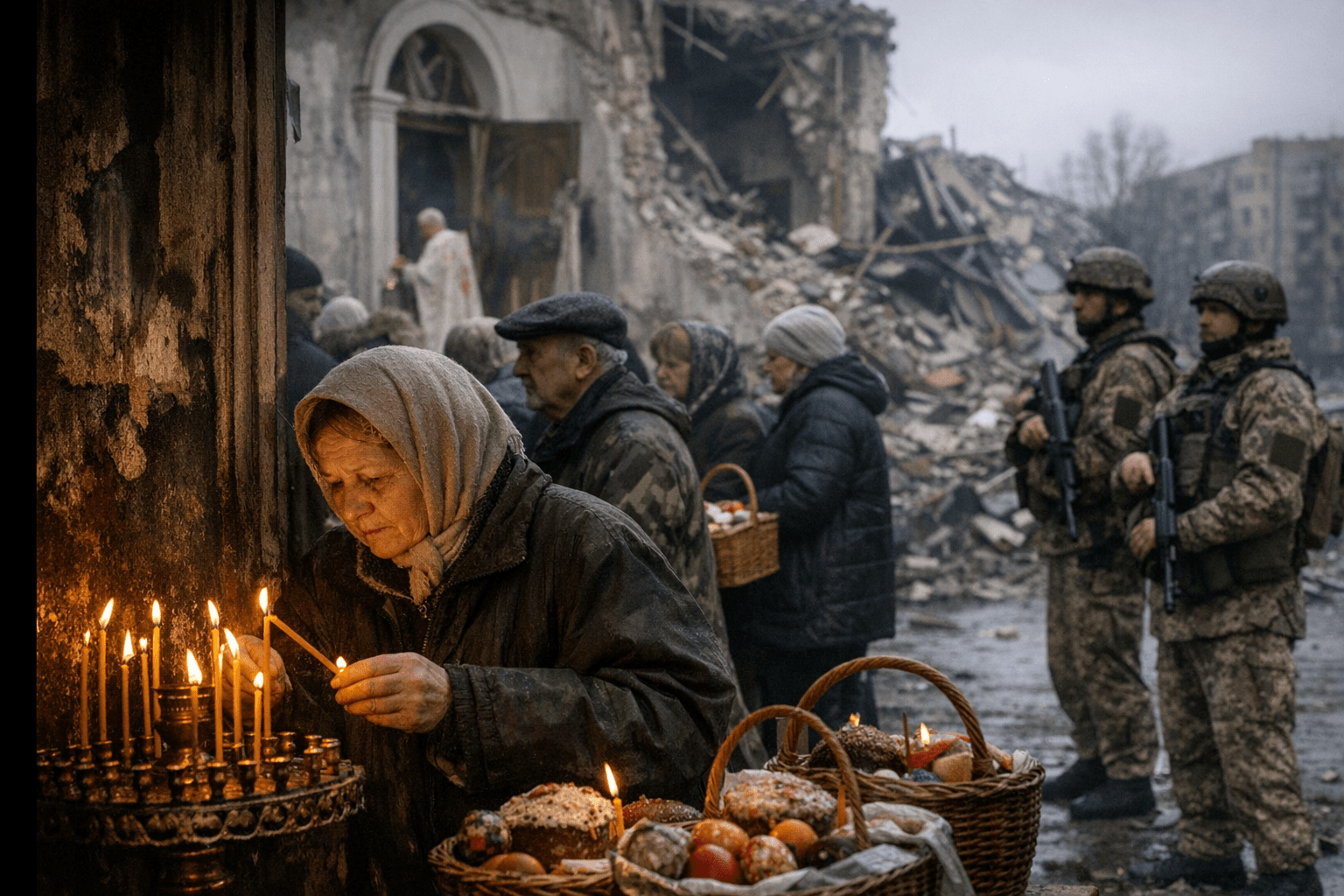
The pause in fighting was meant to give people a much-needed rest after more than four years of full-scale war, but officials and military commanders recorded multiple ceasefire violations along the frontline. By mid-morning on Easter Sunday, Ukraine’s military said more than 2,000 violations had been recorded, though no long-range missile or drone strikes had been reported. For people in Kharkiv, that distinction mattered little. The city has lived through occupation, bombardment and repeated warnings that any calm may be temporary.
The village used by the drone unit was occupied by Russian forces in 2022 and later retaken by Ukraine. The houses around it remain rubble. In that landscape, the value of a truce is not measured in diplomacy alone, but in whether it can interrupt fear long enough for a family to bless a basket, a priest to pray, and a city to breathe without believing the silence will last.
Sources:
Know something we missed? Have a correction or additional information?
Submit a Tip