Kim welcomes Xi in Pyongyang from a position of unusual strength
Kim welcomed Xi with Moscow behind him, a growing nuclear arsenal and no urgency to deal with Washington, giving Pyongyang rare leverage.

Kim Jong Un was preparing to receive Xi Jinping in Pyongyang with a level of confidence North Korea has not shown in years. The visit, set for June 8-9 at Kim’s invitation, came as Pyongyang leaned on a stronger mix of military muscle, Russian backing and defiance toward Washington.
Xi’s two-day trip was his first to North Korea since June 20-21, 2019, and China said the two leaders would exchange views on bilateral ties and issues of common concern. Beijing described the visit as a chance to push relations forward “in keeping with the times,” a sign that China still wants to keep North Korea in its orbit even as Moscow has become a more active partner for Kim.
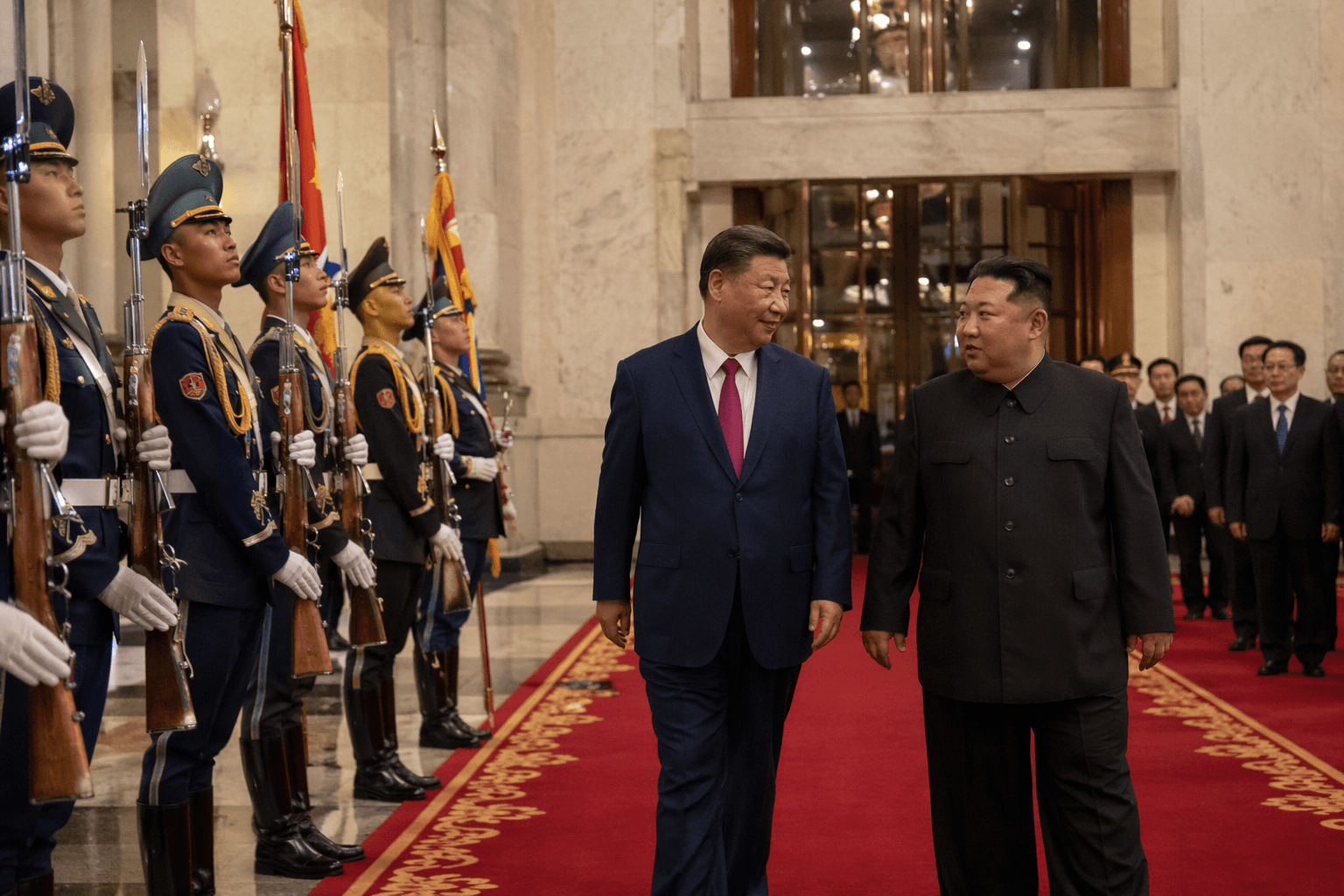
That shifting balance is what gives Kim unusual leverage. North Korea confirmed in 2025 that it had sent troops to support Russia’s war against Ukraine, after U.S. and allied assessments said about 10,000 to 12,000 North Korean troops were dispatched in late 2024. Since then, Pyongyang has kept expanding its weapons programs in open defiance of United Nations sanctions, and it used the eve of Xi’s arrival to announce a new 10,000-ton naval destroyer and reaffirm that its status as a nuclear-armed state was not negotiable.
Kim Yo Jong said North Korea would never back down from being a nuclear-armed state, calling that policy an irreversible and final conclusion. North Korea also recently unveiled a new nuclear material production factory, where Kim called for an exponential expansion of the atomic arsenal, and ordered missile production capacity to increase 2.5 times over the next five years. The message was unmistakable: Kim was not arriving at the table as a supplicant.
For Xi, the trip underscored China’s concern about losing ground to Russia in a country that remains its only formal treaty ally under the 1961 Treaty on Friendship, Cooperation and Mutual Assistance. Passenger rail service between Beijing and Pyongyang resumed on March 12, and Air China restarted direct flights on March 30, showing that ties were thawing again after years of pandemic disruption. But the larger strategic picture was set by the collapse of Kim’s 2019 talks with Donald Trump over denuclearization and sanctions relief. With Kim’s nuclear forces judged by the Congressional Research Service to be increasingly capable of reaching the U.S. homeland, and the United Nations warning in April that North Korea’s missile and nuclear drive remained a serious concern, Pyongyang entered Xi’s visit from a position of uncommon strength.
This article was produced by Prism’s automated news system from verified source data, official records, and press releases, then run through automated quality and moderation checks before publishing. The system is built and supervised by the people who set the standards it runs under. Read our full AI policy.
Know something we missed? Have a correction or additional information?
Submit a Tip