KKR beats estimates as assets under management surge to $758 billion
KKR’s AUM climbed to $758 billion as fee income jumped 30%, but the firm also warned that slower exits could trim 2026 profit growth.
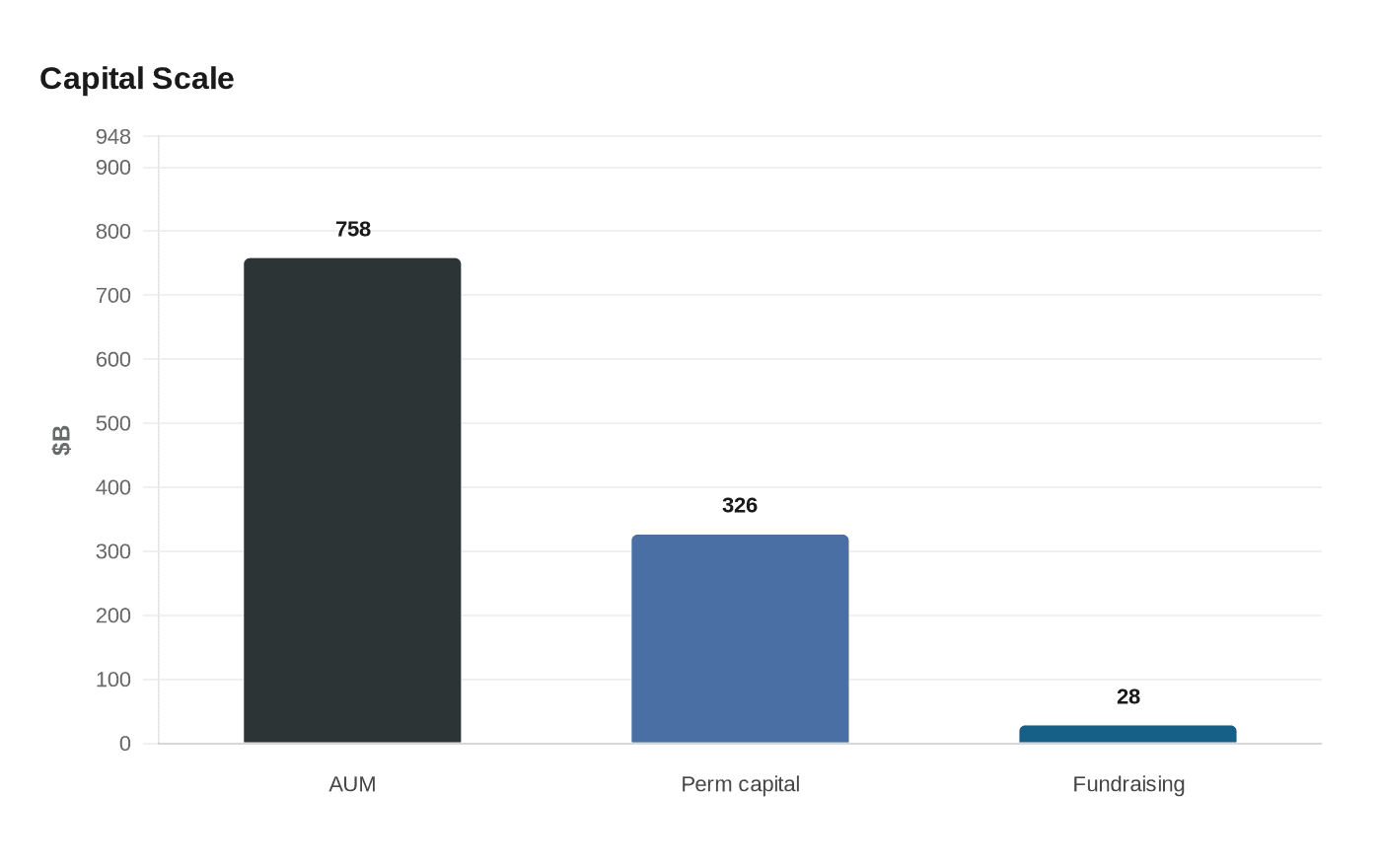
KKR’s asset base surged to $758 billion in the first quarter, a scale milestone that showed how the largest private-capital firms are still pulling ahead even as the industry faces a choppier exit market and a tougher fundraising backdrop. The New York-based firm said management fees rose 30% from a year earlier to $1.2 billion, driving roughly 20% growth in fee-related earnings, total operating earnings and adjusted net income per share.
The numbers mattered beyond the headline beat. KKR posted adjusted net income of $1.2 billion, or $1.39 per share, above Wall Street’s estimate of $1.29. Fee-related earnings per share came in at $1.13, up 23%, while total operating earnings rose to $1.47 per share, up 18%. Those results reinforced the importance of recurring fee revenue in a market where investment gains can swing sharply with valuations and deal volumes.
Fundraising remained the clearest sign of strength. KKR raised $28 billion in fresh capital during the quarter, with credit, now its largest business line, accounting for much of the inflow. The company’s permanent capital base reached $326 billion, or about 43% of total assets under management, giving KKR a more durable stream of fees than firms that depend more heavily on episodic fund launches.

That durability is central to KKR’s long-term pitch. Co-Chief Executive Officers Joseph Y. Bae and Scott C. Nuttall have said they want assets under management to reach at least $1 trillion by 2030. KKR also marked its 50th anniversary on May 1, a symbolic nod to how the firm has expanded from a buyout pioneer into a sprawling alternative-asset platform with private equity, real assets and credit each contributing about one-third of total fees over the trailing 12 months.
Still, the quarter also showed why the broader private-capital landscape remains uneven. KKR said its traditional private-equity portfolio returned 1% in the period, while leveraged credit and private credit composites each returned negative 1%. The firm said monetization improved and proceeds from asset sales picked up, but management also lowered expectations for 2026 adjusted net income per share, saying it now expects that figure to land below its earlier $7-plus target because exits are taking longer than planned.
That tension captures the state of private capital in 2026. Scale, recurring fees and strong fundraising are cushioning the biggest firms, but slower realizations, scrutiny of private credit and volatile markets are still testing how quickly the industry can convert paper gains into cash. KKR’s quarter suggested the reopening is real, but incomplete.
This article was produced by Prism’s automated news system from verified source data, official records, and press releases, then run through automated quality and moderation checks before publishing. The system is built and supervised by the people who set the standards it runs under. Read our full AI policy.
Did this article answer your question?