KLM suspends Gulf and Israel routes, avoids Iranian and Iraqi airspace
KLM suspends services to several Gulf and Israeli destinations and will avoid Iranian, Iraqi and Israeli airspace until further notice, citing rising regional tensions.
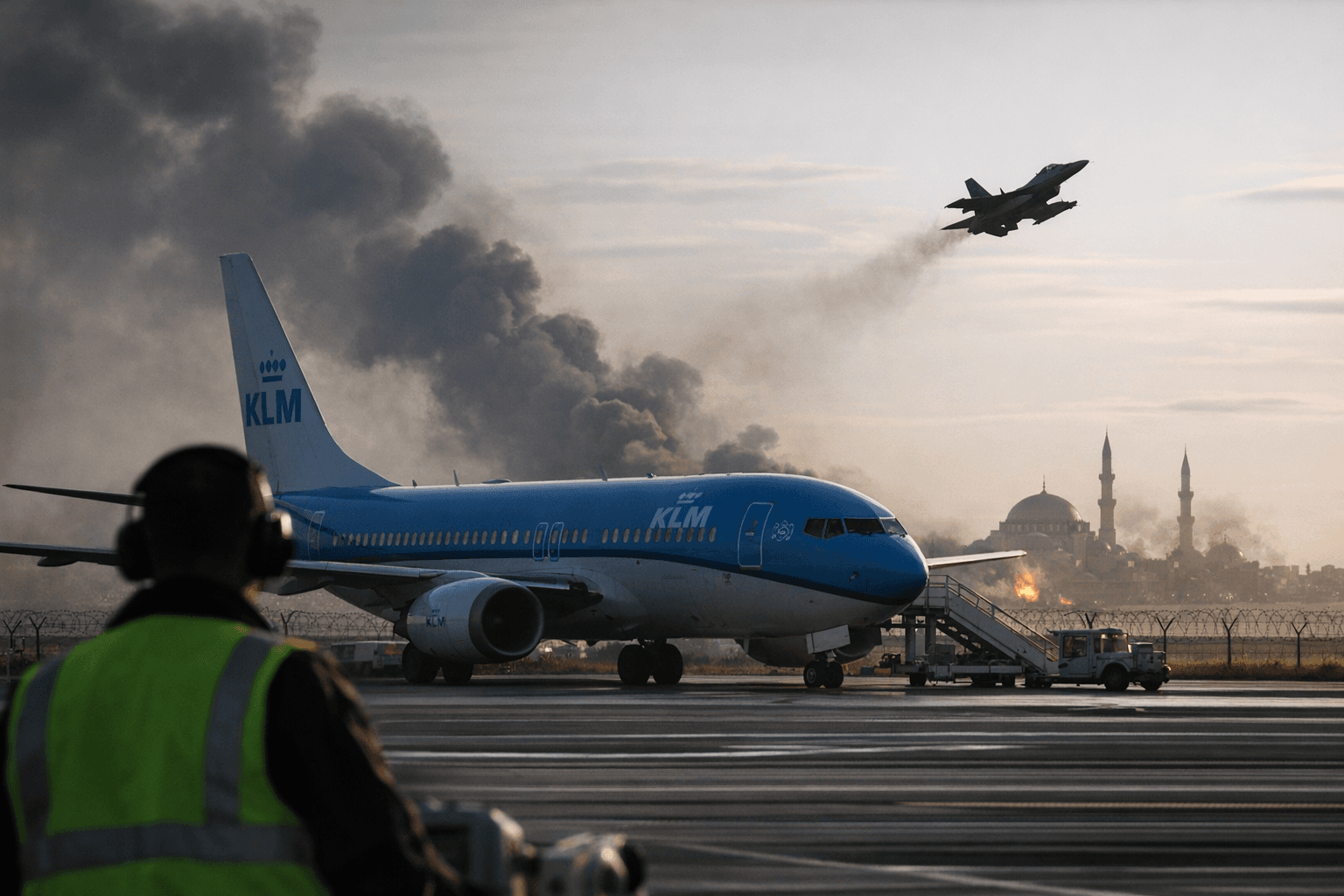
Dutch carrier KLM is suspending flights to multiple Gulf hubs and Israeli destinations and will avoid flying through the airspace of Iran, Iraq and Israel until further notice, the airline announced today. The move affects services to major Middle Eastern airports, including Dubai, Riyadh and Dammam, and prompts wider rerouting across Europe-Asia and Europe-Middle East corridors.
The decision reflects a precautionary response to escalating regional tensions that raise safety and insurance concerns for commercial carriers. KLM said the restrictions are temporary and will be reviewed as conditions evolve. The announcement forces immediate operational changes: flight plans must be refiled, crews adjusted and some schedules cancelled, creating knock-on effects for passengers and cargo customers.
Operationally the cost impact is quick and tangible. Avoiding airspace used by many Europe-to-Asia and Europe-to-Gulf flights typically lengthens routings and increases fuel consumption. Jet fuel accounts for a large share of airlines variable costs, commonly cited in the 20 to 30 percent range, so longer sectors materially raise operating expenses. For some city pairs the detours can add several hundred kilometres and tens of minutes to flight time; for longer haul flights they can add multiple hours, compelling airlines to reassess fleet deployment and crew rotations.
Beyond fuel, insurers and liability underwriters may demand higher premiums for routes that approach conflict zones, pushing up the unit cost of capacity. Air cargo is particularly sensitive because time-sensitive and high-value goods often travel by bellyhold or freighter on the same passenger networks that are being adjusted. Disruptions to established routings can raise freight rates and complicate supply chains between Europe and Asia that rely on predictable air connectivity.
The timing compounds pressure on an airline industry already adjusting to inflationary input costs and tighter profitability targets after the pandemic-era recovery. Air France-KLM, KLM’s parent group, will face fare and revenue management challenges as the company seeks to rebook passengers on longer itineraries or refund tickets. Alternative hubs in Turkey, Qatar and the United Arab Emirates may pick up some diverted traffic, but capacity constraints at those airports and slot limitations could limit how quickly carriers restore service levels.
Policymakers and aviation authorities will have to balance safety imperatives against economic disruption. National regulators typically issue guidance and no-fly directives in consultation with military and intelligence assessments; airlines tailor operations to those advisories while weighing commercial consequences. For freight-dependent industries and businesses that use air travel for high-value exchanges, the interruption will add to short-term costs and scheduling uncertainty.
If the restriction persists, market effects could ripple into passenger yields, freight pricing and regional hub dynamics over the coming weeks. For now KLM’s move signals a cautious industry posture toward Middle East airspace, underscoring how geopolitical volatility can translate rapidly into operational costs and broader economic friction for international trade and travel.
This article was produced by Prism’s automated news system from verified source data, official records, and press releases, then run through automated quality and moderation checks before publishing. The system is built and supervised by the people who set the standards it runs under. Read our full AI policy.
Did this article answer your question?

