Kremlin Claims EU Forces Working to Defeat Orbán Ahead of Hungary Vote
Kremlin spokesman Dmitry Peskov accused Brussels of trying to unseat Orbán four days before Hungary's vote, citing no evidence as a leaked Putin call transcript inflamed the race.

Kremlin spokesman Dmitry Peskov accused unnamed European Union forces of actively working to prevent Viktor Orbán from winning Hungary's April 12 parliamentary election, offering the charge without producing a shred of evidence to support it. The accusation arrived on April 8, four days before Hungarians vote in what analysts have described as one of the most consequential elections the country has faced during Orbán's 16-year grip on power.
"Many forces in Europe, many forces in Brussels, would not like Orbán to win the elections again," Peskov said, framing the alleged interference as a self-evident pattern rather than a claim requiring substantiation. The remarks came in direct response to questions about a leaked transcript, first published by Bloomberg, of a conversation between Orbán and Russian President Vladimir Putin in which Orbán reportedly told Putin he was "at his service" and made reference to a Hungarian folktale. Peskov offered no connection between specific EU officials and the leak itself.
The European Commission did not leave the charge unanswered. A Commission spokesperson replied that "Elections are the sole choice of the citizens," a pointed rejection of any suggestion that EU institutions had manipulated the contest.
What gave the Kremlin's framing additional diplomatic weight was the parallel signal coming from Washington. U.S. Vice President J.D. Vance visited Budapest and publicly criticized what he characterized as EU interference in the Hungarian race, a posture that effectively aligned American and Russian messaging against Brussels at the same moment. That alignment is itself a function of the broader geopolitical architecture Orbán has cultivated: warmer relations with Moscow than any other EU capital, repeated blocking of EU sanctions measures targeting Russia, and a deepening dependence on Russian energy supplies that successive EU energy-decoupling efforts have failed to fully dislodge.
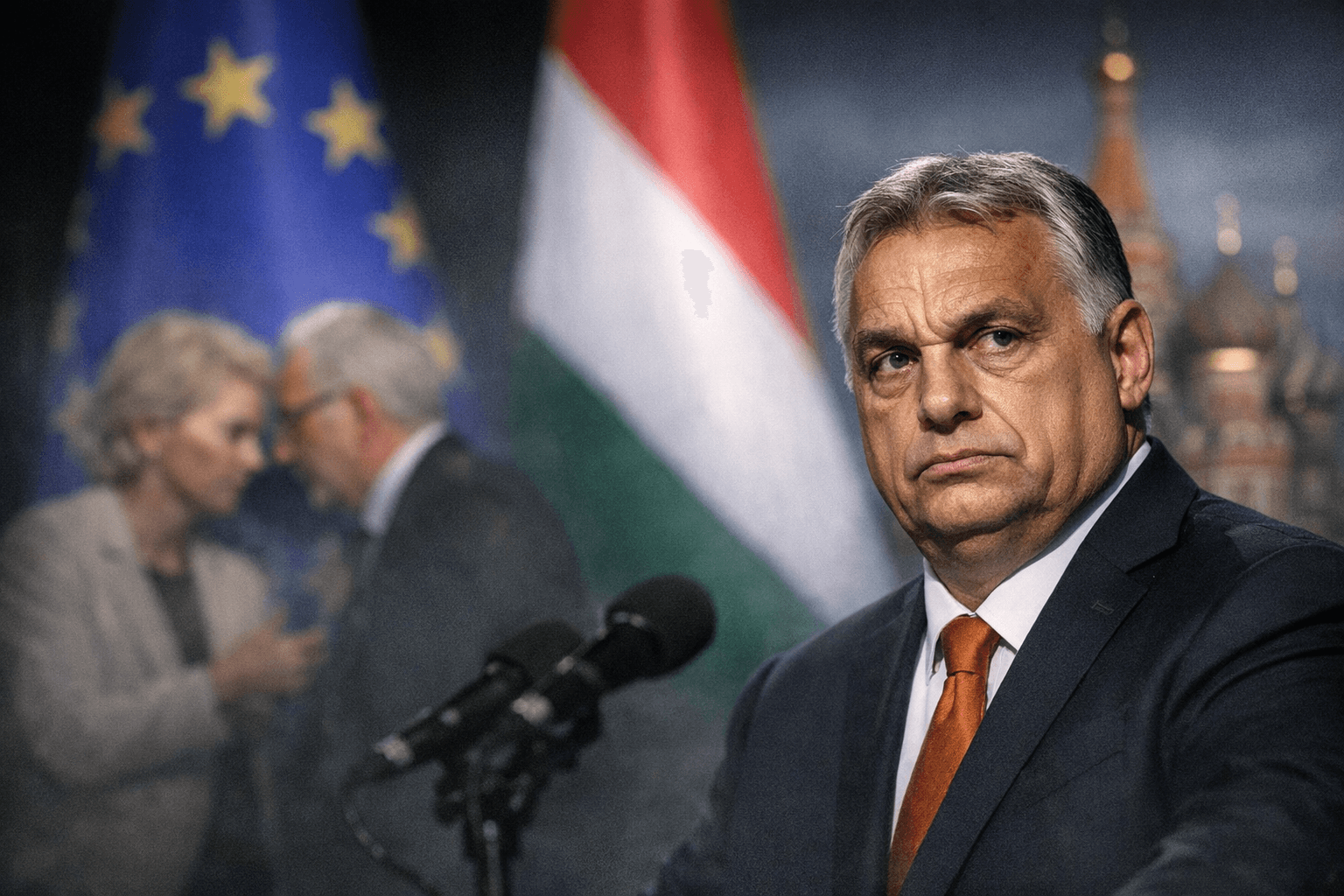
Moscow's intervention fits a well-documented playbook. By asserting foreign meddling in a domestic vote, the Kremlin amplifies a narrative that energizes Orbán's nationalist base while casting doubt on the credibility of the opposition's gains. Early April polling suggested Orbán faced a genuinely credible threat to his parliamentary majority from a unified opposition bloc, the first such competitive challenge in years. The "Brussels interference" claim reframes that threat as external manipulation rather than domestic discontent.
The stakes extend well beyond Budapest. Should Orbán lose his majority, Hungary's capacity to block EU measures on Ukraine aid and Russia sanctions diminishes sharply. Should he prevail, the bloc faces another term of a member state using its veto leverage to complicate cohesion on the war's most critical policy levers. Either outcome, arriving in a week when the U.S., EU, and Russia have each inserted themselves into Hungarian political discourse, will test whether the EU's foreign-policy architecture can hold when geopolitical fault lines run directly through a member state's ballot box.
This article was produced by Prism’s automated news system from verified source data, official records, and press releases, then run through automated quality and moderation checks before publishing. The system is built and supervised by the people who set the standards it runs under. Read our full AI policy.
Did this article answer your question?


