Trump's Fragile Iran Nuclear Deal Already Shows Signs of Fraying
Less than two hours before his own deadline, Trump declared a ceasefire with Iran that both sides immediately interpreted differently; Israel's strikes on Lebanon may have already broken it.

The ceasefire between the United States and Iran lasted roughly 18 hours before it started breaking apart.
On April 7, President Trump announced a two-week suspension of military attacks at just before 6:30 p.m. ET, less than 90 minutes before his own self-imposed 8 p.m. deadline, after which he had threatened to strike Iranian power plants and bridges. He called a 10-point peace proposal from Iran "a workable basis on which to negotiate," declaring "we have already met and exceeded all Military objectives." By early the next morning, Israeli airstrikes killed 254 people in Lebanon, and the ceasefire's fundamental terms were already in public dispute.
The deal was improvised under pressure that Trump himself had manufactured. The underlying military conflict began in June 2025, when Trump ordered strikes on three Iranian nuclear sites, Fordow, Natanz, and Isfahan, using 14 GBU-57A/B bunker-buster bombs from B-2 stealth bombers and Tomahawk missiles from a submarine. His own White House acknowledged the strikes had "significantly degraded" rather than eliminated Iran's nuclear program. Iran responded by closing the Strait of Hormuz on March 27, 2026, to all vessels traveling to and from U.S., Israeli, and allied ports.
As his April 6 deadline approached, Trump warned on April 4 that "time is running out — 48 hours before all Hell will reign down." On Easter Sunday, April 5, he extended the deadline 24 hours and posted that "Tuesday will be Power Plant Day, and Bridge Day, all wrapped up in one, in Iran." Pope Leo XIV called Trump's earlier threat to destroy Iranian civilization "truly unacceptable," and Democrats in Congress questioned whether the president was openly threatening war crimes.
The last-minute pivot came through Islamabad. Pakistani Prime Minister Shehbaz Sharif publicly urged Trump to extend his deadline by two weeks "to allow diplomacy to run its course," calling diplomatic progress "progressing steadily, strongly and powerfully." Sharif simultaneously asked Iran to reopen the strait as a goodwill gesture and invited both delegations to Islamabad on April 10 for further talks. Trump, who said of Sharif "I know him very well — he's a highly respected man, all over," agreed.
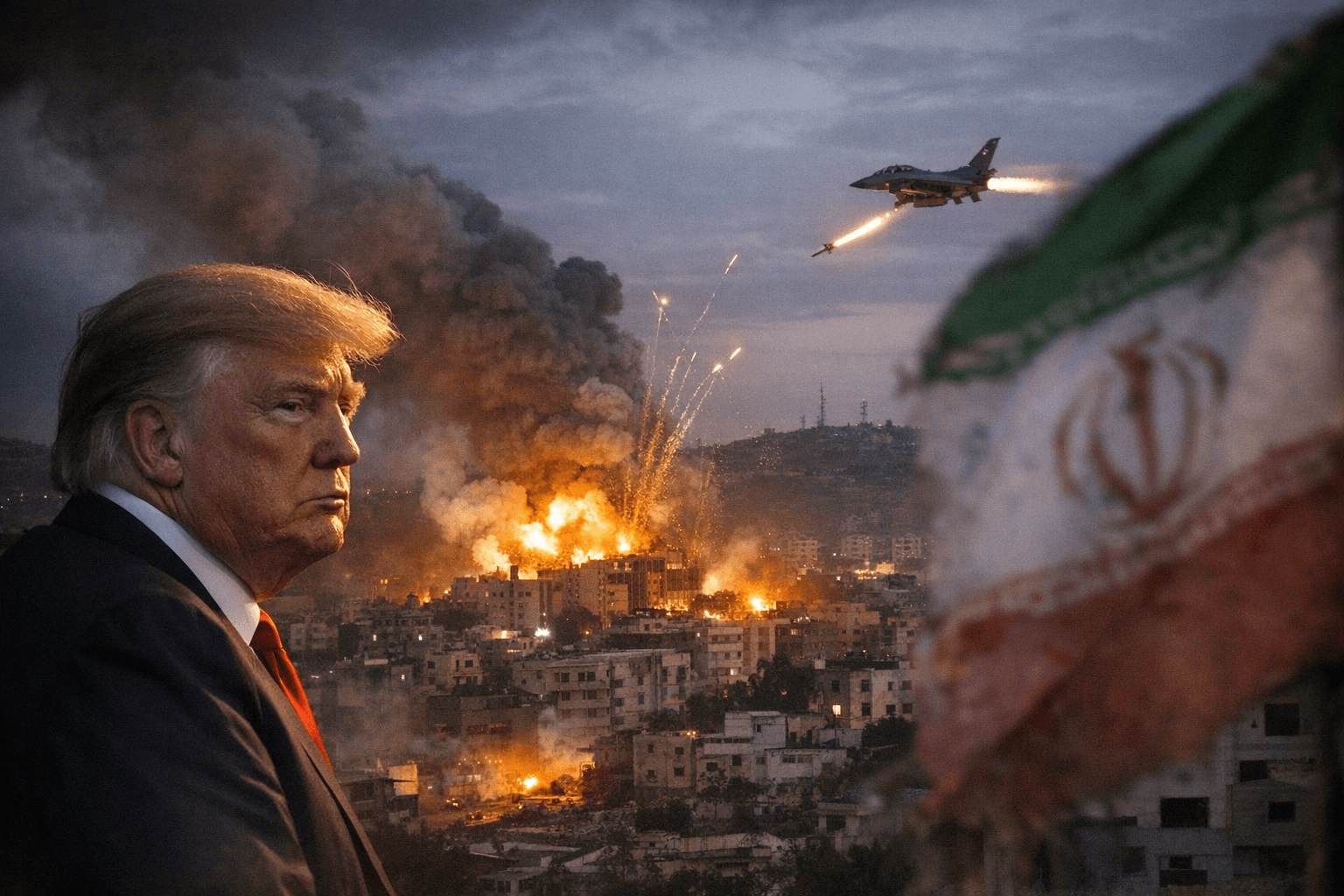
The ceasefire's durability depends entirely on whether the deal's terms mean the same thing to each side, and they do not. Iran's semi-official Tasnim news agency, affiliated with the Islamic Revolutionary Guard Corps, framed the agreement as having "forced the criminal America to accept its 10-point plan, in which the United States is committed in principle to guaranteeing non-aggression, continuing Iranian control over the Strait." Washington characterized it as a pause from a position of military strength.
The Strait of Hormuz, which carries 20 to 21 million barrels of oil per day and roughly 20 to 25 percent of global petroleum liquids consumption, remained effectively shut. Ship tracking service MarineTraffic confirmed the first vessels had passed through after the ceasefire announcement, but traffic remained a "slow trickle." Vice President JD Vance said Iran was "promising to reopen" the waterway and that he was "seeing signs" of movement, but could not provide a timeline, warning the agreement would not hold if it stayed closed.
Then came Lebanon. Israel's April 8 airstrikes, the heaviest of the conflict, killed 254 people in densely populated areas. Iran claimed the strikes violated the ceasefire. Vance said the agreement does not cover Lebanon, then acknowledged the disagreement may stem from a "legitimate misunderstanding." The definitional gap is not trivial: the ceasefire has no enforcement mechanism, no third-party arbitrator, and no agreed-upon geographic scope.
Trump did not seek congressional approval for any military action against Iran, drawing constitutional challenges under the 1973 War Powers Act. Special Envoy Steve Witkoff has been the primary American negotiator throughout. The Islamabad talks on April 10 will test whether a deal built on competing claims of victory can survive the weight of its own contradictions.
This article was produced by Prism’s automated news system from verified source data, official records, and press releases, then run through automated quality and moderation checks before publishing. The system is built and supervised by the people who set the standards it runs under. Read our full AI policy.
Did this article answer your question?