Kremlin welcomes Bulgarian leader Radev’s call for pragmatic talks with Russia
Moscow signaled it saw an opening in Sofia after Radev's bloc won 44.7% in Bulgaria, a result that could test EU and NATO unity on Russia.
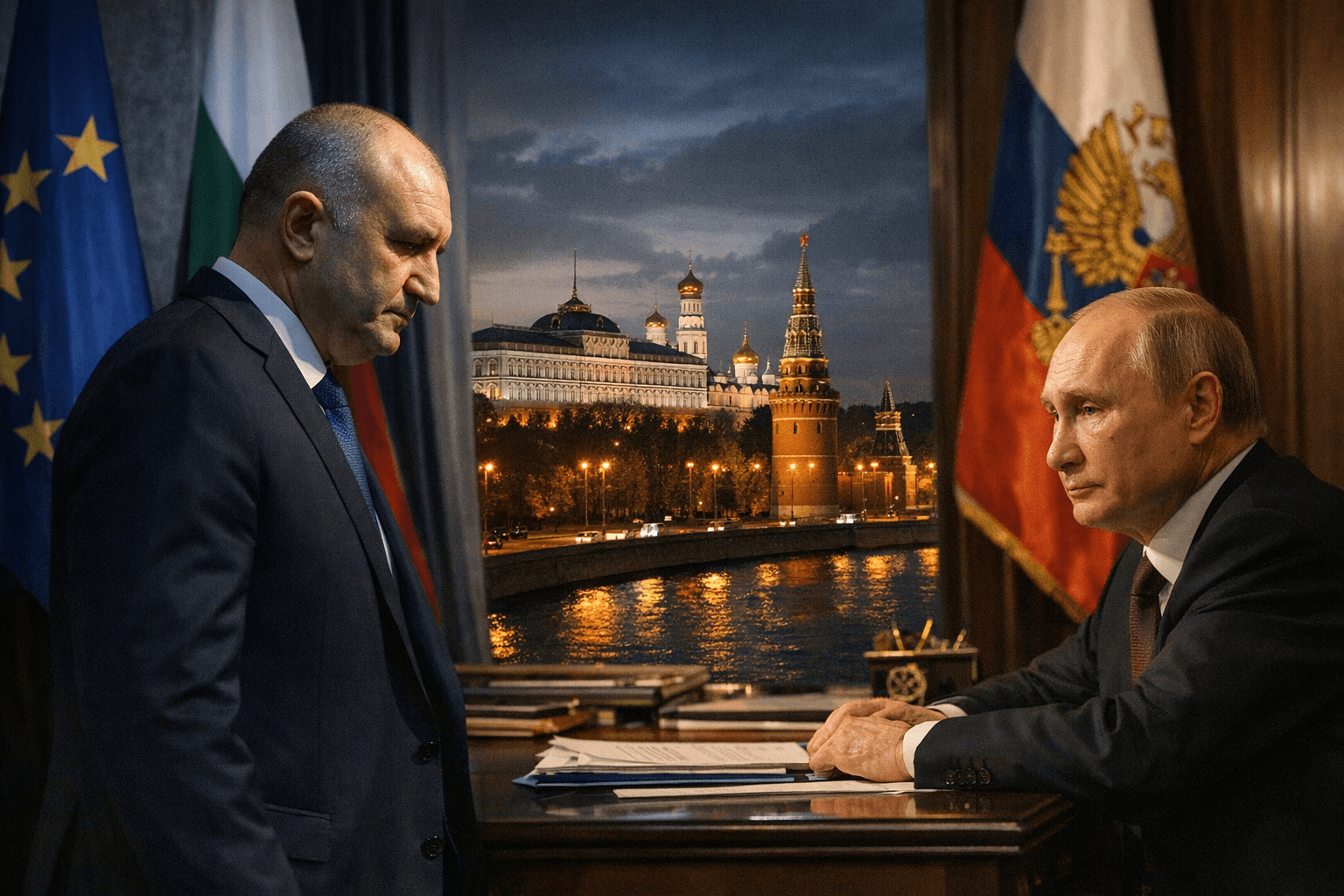
The Kremlin moved quickly to welcome Rumen Radev’s push for pragmatic talks with Russia after his bloc won a commanding 44.7% of the vote, a result that left Bulgaria’s pro-European PP-DB coalition at about 12.8% to 13.2% and GERB at 13.4%. With 97.52% of ballots counted, the outcome stood as one of the strongest for a single party in a generation and another sign of how deeply Bulgaria’s political system has been unsettled.
That is why Moscow is reading the result as more than a domestic protest vote. Kremlin spokesman Dmitry Peskov said Russia was encouraged by Radev’s words and by the stance of other European leaders who favor dialogue, while stressing that it was still too early to draw broad conclusions about Europe’s political climate. The distinction matters. A government led by or aligned with Radev could press harder for softer sanctions language, slower military support for Ukraine and a more accommodating energy policy, but the country’s NATO and European Union commitments still define the outer limits of what Sofia can do.
Radev, 62, has built his appeal on a mix of anti-establishment politics and foreign-policy revisionism. He stepped down from Bulgaria’s largely ceremonial presidency in January to run, after mass protests forced out the previous government in December. He later said Bulgaria would continue on its European path and work on judicial reform, but he has also criticized the timetable for joining the eurozone, opposed military aid to Ukraine and argued that Bulgaria should help restore ties with Moscow. Radev has said Bulgaria, as the EU’s only Slavic and Eastern Orthodox member state, could serve as a bridge back to Russia.
The stakes reach well beyond Sofia. Bulgaria sits at a sensitive crossroads in southeastern Europe and on the Black Sea, where security, energy transport and sanctions enforcement overlap. Radev’s call to reopen the free flow of Russian oil and gas into Europe would not just be a domestic energy argument; it would test how far a member state can push against the common line on Moscow without triggering a wider clash inside the alliance system.
Brussels and NATO answered with courtesy rather than alarm. European Council President Antonio Costa congratulated Radev and said he looked forward to working with him on a prosperous, autonomous and secure Europe. EU foreign policy chief Kaja Kallas and NATO Secretary General Mark Rutte also offered cooperation. The diplomatic tone was calm, but the political signal was sharper: Bulgaria’s vote has reopened a question Europe has tried to close for three years, whether Moscow can still find friendly voices inside the EU and NATO willing to turn fatigue, economic strain and institutional weakness into leverage.
This article was produced by Prism’s automated news system from verified source data, official records, and press releases, then run through automated quality and moderation checks before publishing. The system is built and supervised by the people who set the standards it runs under. Read our full AI policy.
Did this article answer your question?


