Kuomintang Leader Visits China, First Sitting Head to Do So in a Decade
KMT chairwoman Cheng Li-wun met Xi Jinping in Beijing Friday, the first CPC-KMT leader summit in a decade, framed as a "journey for peace" amid spiking cross-strait tensions.
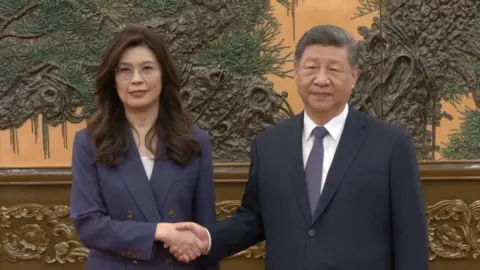
Kuomintang chairwoman Cheng Li-wun met Chinese President Xi Jinping at the Great Hall of the People in Beijing on Friday, completing the most symbolically charged leg of a six-day mainland visit that made her the first sitting KMT leader to cross the strait in ten years.
Cheng arrived in China on April 7 at the invitation of Xi Jinping, leading a KMT delegation she described as a "journey for peace." The delegation stopped in Jiangsu Province and Shanghai before reaching Beijing, where Xi characterized the two leaders' meeting, after a gap of ten years, as being "of great significance for relations between the two parties and for the development of cross-Strait relations."
Xi opened their exchange by declaring, "Compatriots on both sides of the Taiwan Strait belong to the Chinese nation," adding that cross-strait affairs should be settled by Chinese people themselves. He also said, "This is a responsibility that the CPC and the KMT cannot shirk, and also a driving force for the two parties to work together." In remarks broadcast online before the two sides entered closed session, Xi warned that "Taiwan independence" is the chief culprit undermining peace across the Taiwan Strait.
In Nanjing, Cheng had laid a wreath at the Sun Yat-sen Mausoleum, invoking the founding father's legacy as a bridge between the KMT's historical identity and her stated goal of easing tensions. Before departing Taipei, she said the trip could mark a first step toward peace and stability, stressing that "because of the 1992 Consensus, we can create peace." The 1992 Consensus, a disputed framework acknowledging one China while allowing differing interpretations, has long been the KMT's preferred basis for engaging Beijing.
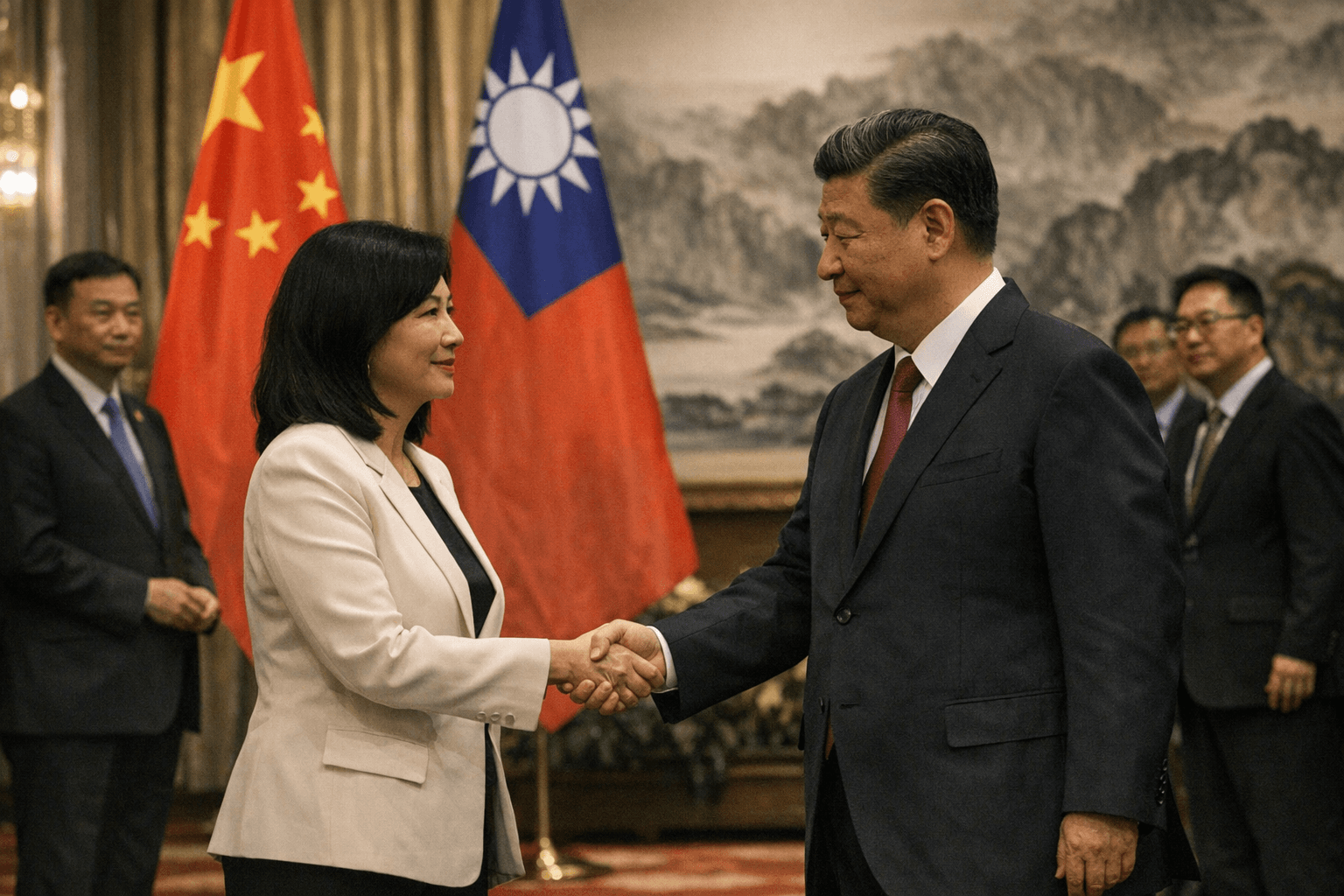
The visit drew pointed criticism from Taiwan's own government. Taiwan's Mainland Affairs Council warned that Beijing had "summoned" Cheng for the purpose of cutting off Taiwan's military purchases from the United States and cooperation with other countries. Council spokesman Liang Wen-chieh said: "Beijing's intention, in short, is to internalise the cross-strait issue, treating it as a domestic matter for China, with foreign intervention prohibited."
Analysts read Beijing's decision to elevate Cheng so conspicuously as a calculated move with domestic payoffs on both sides. Albert Tzeng, a former KMT adviser, told AFP that Beijing sees "a need to rescue Cheng Li-wun" from a "power crisis," and that Xi's endorsement would make her critics wary of attacking her.
The visit came ahead of a planned summit in May between Xi and U.S. President Trump, at which Taiwan is expected to be a top agenda item. Cross-strait diplomacy has rarely moved in so compressed a timeframe, and Cheng's Beijing meeting placed the KMT squarely at the center of whatever negotiating landscape emerges from that encounter.
This article was produced by Prism’s automated news system from verified source data, official records, and press releases, then run through automated quality and moderation checks before publishing. The system is built and supervised by the people who set the standards it runs under. Read our full AI policy.
Did this article answer your question?


