Kushner and Khomeini explain the core conflict in Iran talks
The battle over Iran talks is really a fight over purpose: contain Tehran’s nuclear program, or pressure it until the regime accepts new terms.
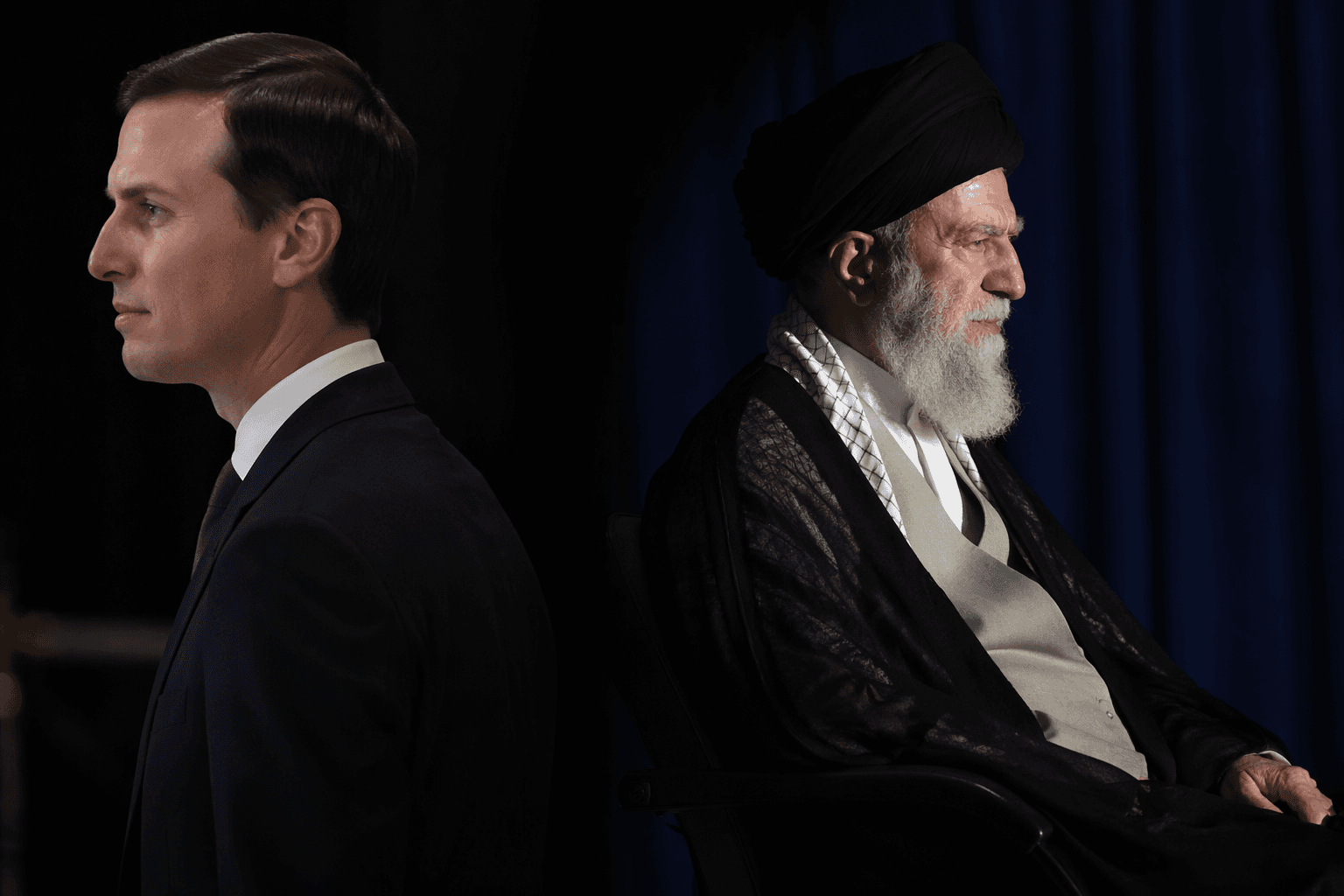
On May 8, 2018, President Donald Trump announced that the United States was ceasing participation in the JCPOA. The decision crystallized a dispute over what a deal with Iran is supposed to do: lock in limits on Iran’s nuclear program, or use pressure to force a broader political outcome. The split is visible in the contrast between Jared Kushner’s transactional worldview and Ruhollah Khomeini’s revolutionary vision.
What the JCPOA was built to do
The Joint Comprehensive Plan of Action was agreed on July 14, 2015, by Iran, the United States, and other world powers. The White House summary issued that day described the arrangement as designed to keep Iran’s nuclear program exclusively peaceful, while Iran reaffirmed that it would never seek, develop, or acquire nuclear weapons. In exchange, the deal traded sanctions relief for limits on the program and extensive monitoring and verification.
The agreement was a containment instrument, not a transformation project. The goal was not to remake Iran’s politics or erase the hostility between Tehran and Washington. It was to reduce the risk that Iran could move quickly toward a bomb, while giving inspectors and outside powers a way to watch compliance.
Why July 2015 was not the end of the argument
The deal did not settle the broader debate over Iran’s place in the regional order. On July 20, 2015, U.N. Security Council Resolution 2231 unanimously endorsed the JCPOA at United Nations Headquarters in New York, giving the accord international legal weight. But it did not erase the question that had driven the negotiations in the first place: whether restraining the nuclear file was enough.
Trump said the administration would seek a real, comprehensive, and lasting solution, a formulation that signaled the core split inside U.S. policy. One camp treated a nuclear deal as a bounded bargain meant to cap a specific threat. The other treated the same bargain as insufficient unless it extracted wider concessions and kept pressure on the Islamic Republic.
Kushner’s transactional logic
Jared Kushner’s worldview helps explain the pressure side of that divide. His style as a real-estate-minded negotiator is transactional: define the deal, measure the concessions, and judge success by whether the other side accepts terms that can be defended as better than the status quo. In that framework, an agreement is not sacred because it exists. It is only useful if it can be improved, leveraged, or replaced by a tougher one.
That approach favors visible leverage, sharp deadlines, and the belief that hard pressure can force the other side back to the table on more favorable terms. It also makes compromise look provisional, because a deal that does not satisfy the larger political objective can be treated as a weak bargain rather than a durable settlement.
Khomeini’s revolutionary logic
Khomeini represents a nearly opposite strategic grammar. He led the 1979 Iranian Revolution that overthrew Mohammad Reza Shah Pahlavi, became the first supreme leader of the Islamic Republic of Iran, and held that office until his death in 1989. His politics were not transactional in the way a business negotiation is transactional. They were revolutionary and ideological, built around the conviction that the new republic was founded to resist the old order, not to normalize itself within it.
That history changes how concessions are understood. Under a revolutionary worldview, limits on a nuclear program are not just technical commitments. They touch sovereignty, deterrence, and the regime’s claim that it can survive outside U.S. dictates. A negotiation is therefore never only about technical verification or sanctions tables. It is also about whether the state founded in Khomeini’s revolution can accept constraints without appearing to surrender its strategic independence.
Where the two worldviews collide
This is the deeper conflict in Iran talks: one side wants a deal that contains the threat, while the other fears that containment is merely a slower route to capitulation. The JCPOA tried to bridge that gap by pairing strict nuclear limits and monitoring with sanctions relief, creating a bargain that could be defended as practical rather than ideological. But the agreement’s structure also exposed the gap between the two assumptions. If a deal is meant to normalize behavior, then technical restrictions are enough. If a deal is meant to reshape a regime’s strategic posture, then those same restrictions look incomplete.
That is why the sticking points are rarely only about uranium enrichment levels or inspection access. They are about whether diplomacy should freeze a dangerous capability, extract broader behavioral change, or signal acceptance of Iran as a long-term actor on terms Washington can live with.
This article was produced by Prism’s automated news system from verified source data, official records, and press releases, then run through automated quality and moderation checks before publishing. The system is built and supervised by the people who set the standards it runs under. Read our full AI policy.
Know something we missed? Have a correction or additional information?
Submit a Tip