Thai woman faces Myanmar court in killing of U.S. diplomat ex-husband
A Thai national appeared in a Yangon court on an immigration charge before the murder case over her U.S. diplomat ex-husband reaches trial.
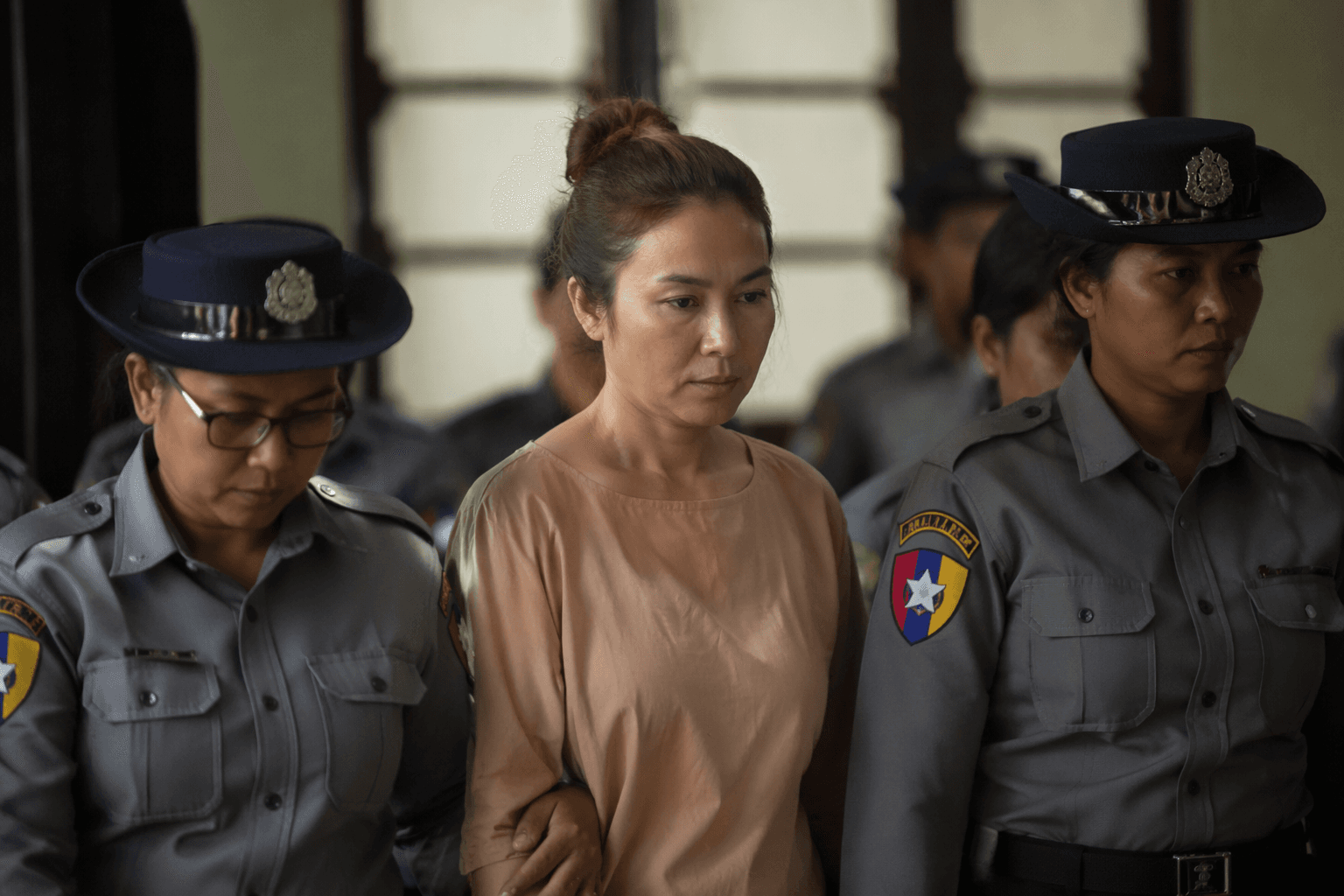
Pavinee Supasirivisan appeared in Kamayut Township Court in Yangon on Tuesday, facing an immigration-related charge tied to the killing of her U.S. diplomat ex-husband. Three prosecution witnesses, including immigration officers, testified at the hearing, and an attorney familiar with the case said Supasirivisan had two legal representatives in court, but it remained unclear whether she entered a plea.
Myanmar is moving the case in two tracks. The immigration charge falls under a code that applies to any foreign national who commits a crime in the country, and it carries a sentence of six months to five years. The separate murder case has not yet gone to trial and carries a possible punishment of 10 years in prison to the death penalty, making the prosecution both a criminal proceeding and a test of how Myanmar handles foreign defendants inside a tightly controlled court system.
The diplomat was found dead on May 11 at Sakura Residence & Hotel in Yangon, a site popular with diplomats and business travelers and located about a mile from the U.S. Embassy in Yangon. He had stab wounds to the head and neck. His identity has not been publicly released, but the circumstances have put a diplomatic killing at the center of a case that now depends on Myanmar’s immigration rules as much as its murder laws.
Kamayut Township Court has original jurisdiction over criminal cases, which helps explain why the immigration hearing opened there before the murder charge moves forward. The proceedings are unfolding under military rule, where access is sharply limited. Journalists are barred from court proceedings, and prison, police and court officials declined comment, leaving the public with little visibility into how the case is being handled.
That secrecy is part of a broader pattern that has taken hold since the Feb. 1, 2021 coup that ousted Aung San Suu Kyi and triggered a bloody civil war. Human-rights monitors have documented more than 220 journalists detained in Myanmar since the coup, a tally that underscores how little independent scrutiny reaches politically sensitive or high-profile trials.
Thailand’s Foreign Ministry said it has provided consular assistance to Supasirivisan, adding a diplomatic dimension to a prosecution already shaped by nationality, jurisdiction and military control. The case now sits at the intersection of immigration enforcement, a murder allegation and a court system that remains difficult to see from the outside.
This article was produced by Prism’s automated news system from verified source data, official records, and press releases, then run through automated quality and moderation checks before publishing. The system is built and supervised by the people who set the standards it runs under. Read our full AI policy.
Know something we missed? Have a correction or additional information?
Submit a Tip