Labor Department threatens states with funding cuts over unemployment fraud
Washington warned 53 governors it could withhold unemployment administrative funds, a move that could slow payments as states tighten fraud checks.

The Labor Department put states on notice that the next fight over unemployment insurance will be about speed, control and who bears the cost of fraud. Acting Labor Secretary Keith Sonderling sent formal letters to governors of 53 states and territories on June 17, warning that the department would use “every available enforcement tool,” including withholding administrative funds from states for the first time in history, if they do not crack down on fraud, waste and abuse.
The warning lands at the center of a long-running tension in the unemployment system: states must pay eligible workers quickly, but they also have to stop false claims before taxpayer dollars disappear. The program has existed for more than 80 years as a joint federal-state safety net, with state agencies running day-to-day administration under federal rules. The Labor Department’s Office of Inspector General has said that urgency and integrity have to move together, because the program is meant to help workers who lost jobs through no fault of their own while keeping claimants eligible.

Sonderling said the administration is “putting governors on notice,” and Labor Department Inspector General Anthony D’Esposito said states that fail to protect taxpayer dollars should expect consequences. The department said years of failed oversight, outdated technology, weak identity verification and lax controls allowed unprecedented fraud to flourish. It pointed to California, New York and Illinois as the most troubling examples, saying California owes more than $20 billion to the federal government after years of fraud, improper payments and mismanagement, New York is losing an estimated $2 million a day and has an improper payment rate above 20%, and Illinois improperly paid out more than $320 million at a rate above 14%.
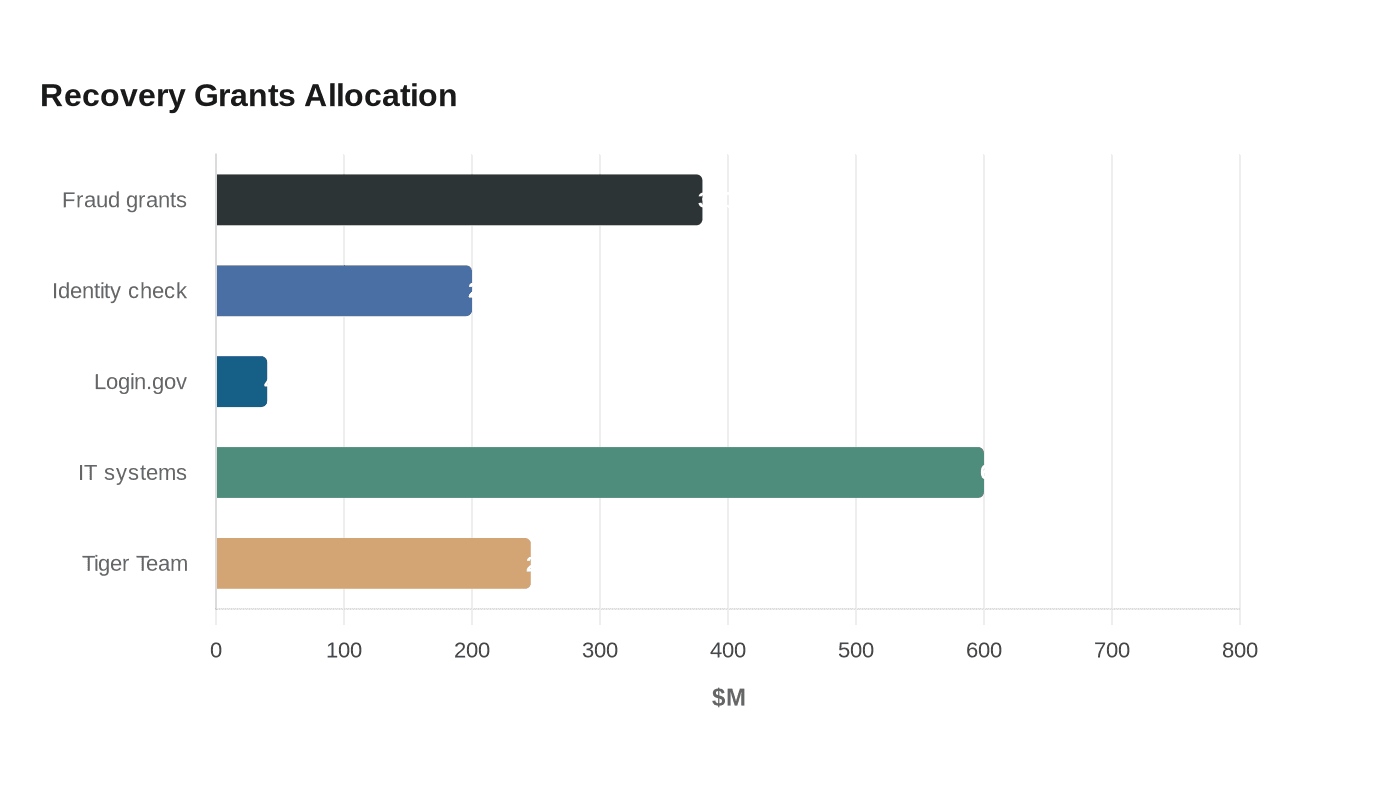
The crackdown builds on a broader effort already underway in Washington. In May, the department and its inspector general launched a partnership under the Task Force to Eliminate Fraud, part of President Donald J. Trump’s order creating the task force. The department also said it had allocated $2 billion in American Rescue Plan Act money to strengthen unemployment systems, including $380 million for fraud-prevention and overpayment-recovery grants, $200 million for identity verification and integrity controls, more than $40 million for Login.gov and U.S. Postal Service verification efforts, $600 million to modernize vulnerable state IT systems and $246 million for “Tiger Team” implementation support.
The risk for legitimate claimants is that tighter controls can mean more friction at the front end. States may have to add stronger identity checks, more data matching and deeper audits before benefits are released, which could slow payments for workers who need them fast. The department said six states, California, Illinois, Massachusetts, New Jersey, New York and Pennsylvania, together pay nearly $19 billion in unemployment benefits each year, underscoring how much money now sits inside systems still vulnerable to abuse. The Labor Department said additional guidance and directives will follow in the coming weeks, and the message to states is clear: improve controls now, or risk losing federal support.
This article was produced by Prism’s automated news system from verified source data, official records, and press releases, then run through automated quality and moderation checks before publishing. The system is built and supervised by the people who set the standards it runs under. Read our full AI policy.
Did this article answer your question?

