Labour suffers historic election losses as Reform surges across UK
Labour lost more than 1,000 seats as Reform surged, while Wales delivered a brutal rebuke: Plaid became largest and Eluned Morgan lost her seat.

Labour’s local election collapse cut far deeper than a routine midterm setback, with more than 1,000 municipal seats lost and more than 1,200 English council seats gone in overnight counts as Reform UK surged across England, Wales and Scotland.
The damage landed hardest in places that had long underpinned Labour’s claim to govern. Hartlepool, Redditch and Tamworth all slipped away, Birmingham moved to no overall control, and in Tameside Labour lost 16 of the 17 seats it was defending, ending 47 years of control. The scale of that reversal pointed to more than protest voting: it signaled a broad erosion in trust in Labour’s local machinery, especially in northern and Midlands councils that had once looked secure.
Wales delivered the sharpest political shock. Labour was reduced to just nine seats in the Senedd, while Plaid Cymru became the largest party with 43. Eluned Morgan, the Welsh First Minister, lost her seat, the first time a sitting Welsh leader has been defeated in an election for the Welsh Parliament. For Labour, the result was not just a bad night but a collapse in one of its historic strongholds, exposing how far the party’s support had thinned under pressure from both nationalist and insurgent challengers.
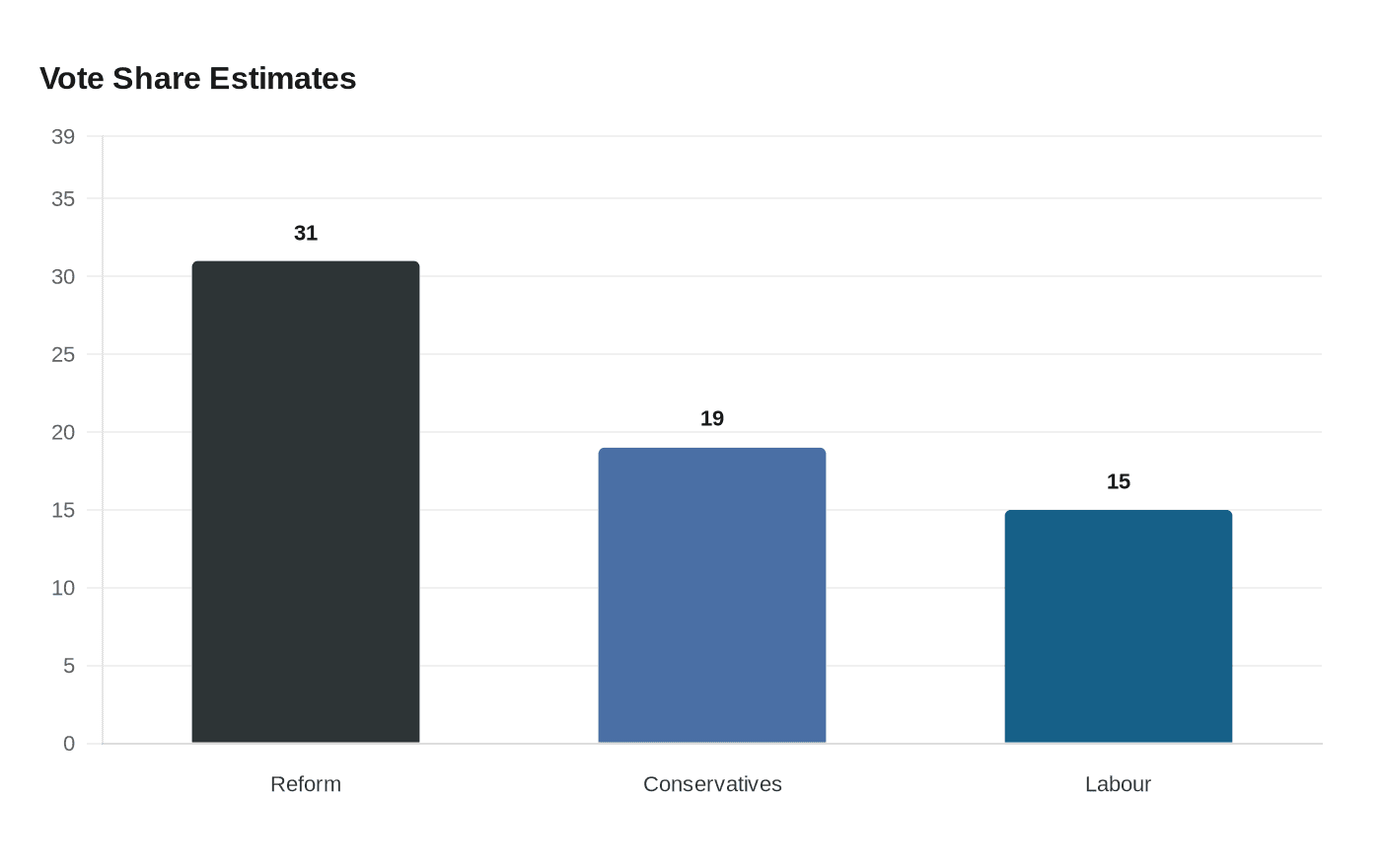
Reform’s advance was broad and unmistakable. Nigel Farage’s party won control of Essex County Council and posted major gains for a second straight year, feeding the sense that Britain’s party system is fragmenting. Early National Equivalent Vote estimates put Reform on about 31 percent, the Conservatives on 19 percent and Labour on 15 percent, though those figures were still shifting as London results came in. Even so, the direction of travel was clear: Labour was losing ground to parties on both flanks while failing to hold its own vote together.
Keir Starmer tried to contain the political fallout, saying he was “hurt” but would not walk away and would stay in office to “deliver change.” Yet the results left him facing renewed pressure from MPs and commentators after what looked increasingly like one of Labour’s worst-ever electoral defeats. John Curtice captured the deeper significance, describing the results as evidence of the “fracturing of British politics.” The message from the ballot box was larger than a bad local election for Labour: governing fatigue is setting in, and the next national contest is already being shaped by it.
Know something we missed? Have a correction or additional information?
Submit a Tip