Putin scales back Moscow Victory Day parade amid drone fears
Moscow’s Victory Day parade was stripped of tanks and missiles as drones, airport disruption and new signal restrictions exposed the Kremlin’s vulnerability.
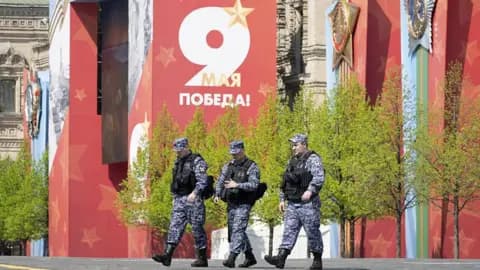
Russia marked Victory Day in Moscow under unusually tight security, and for the first time in two decades the Red Square parade went ahead without tanks or missiles on display. The scaled-down spectacle, held May 9, came after the Kremlin said it feared a Ukrainian drone attack, turning Vladimir Putin’s most important secular holiday into a show of caution rather than force.
The contrast was striking. Victory Day has long been Moscow’s stage for projecting military strength and Soviet triumph over Nazi Germany. This year, Ukraine’s drone campaign helped reshape that symbolism. Volodymyr Zelenskyy publicly said Russia feared drones over Red Square and warned that Moscow was not in a strong position. In the days before the parade, Russia also imposed new restrictions on satellite internet and mobile connections in Moscow, while reporting indicated SMS services were hit too.
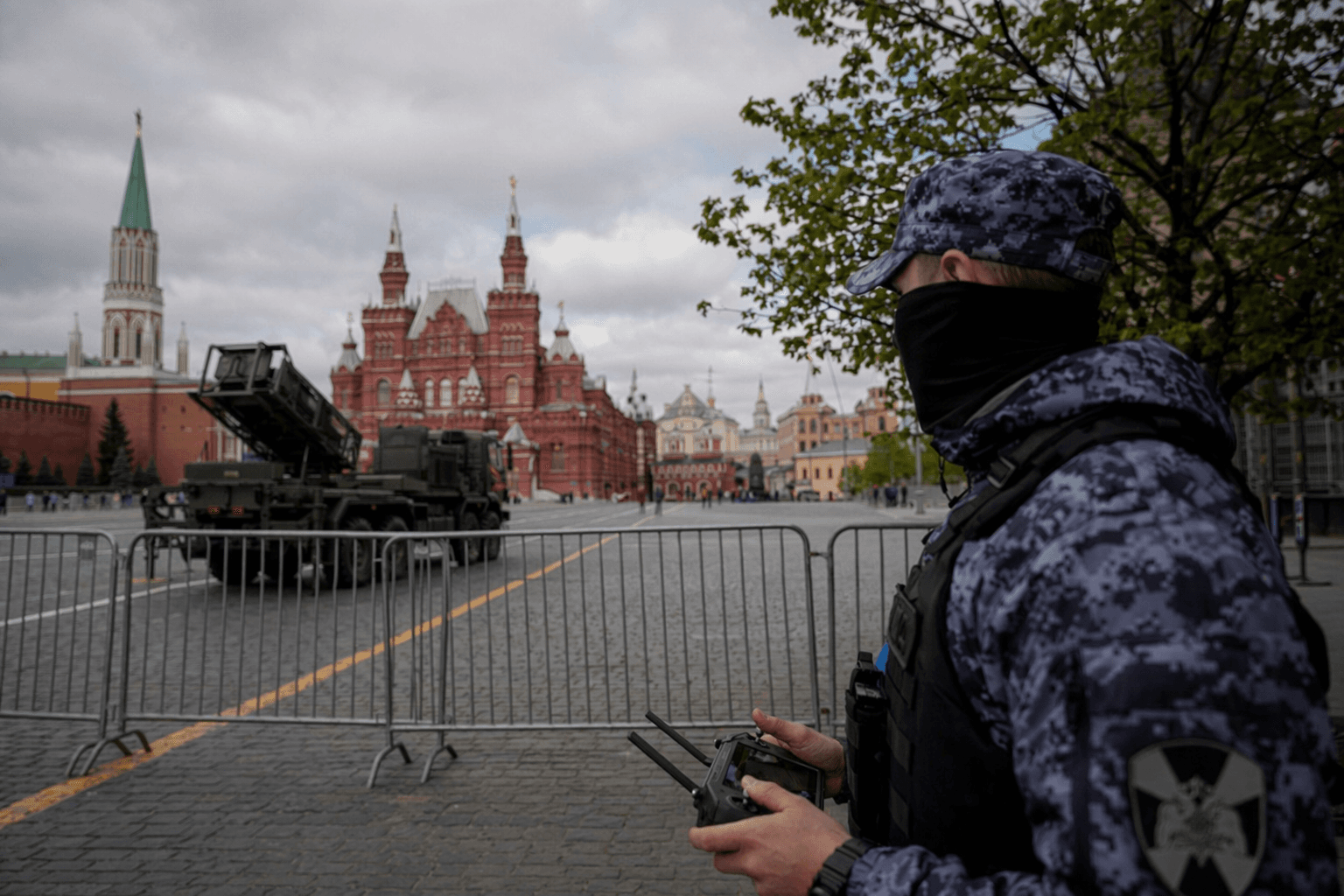
The pressure was not abstract. A Ukrainian drone struck an elite residential building about 6 kilometers from the Kremlin on Monday before the parade. Russia said it shot down 347 Ukrainian drones overnight on May 7-8, one of the largest drone attacks of the war. The assault disrupted Moscow-area air travel, with nearly 100 flights delayed or cancelled by midday, underscoring how fast, inexpensive drone warfare has begun to reach deep into Russia’s rear and complicate daily life in the capital.
That shift helps explain why Robert Brovdi, known by his call sign Madyar, has become such a consequential figure. Ukraine’s Ministry of Defence says Brovdi leads the Unmanned Systems Forces, the world’s first dedicated military branch built around unmanned aerial vehicles, ground-based robotic systems, and marine surface and underwater drones. Zelenskyy signed the decree initiating the force on February 6, 2024, and Brovdi was appointed commander on June 3, 2025. His role reflects a broader military transition: Ukraine is formalizing drone warfare as a separate branch, not treating it as an improvisation.
Reuters described this year’s parade as Russia’s most modest in years because of the threat from Ukraine. That matters far beyond a single ceremony. A reduced parade on Red Square shows how asymmetric disruption can puncture even the Kremlin’s most choreographed displays of power, forcing Russia to defend symbolism as much as territory. As the war grinds on, the ability to threaten Moscow itself has become part of Ukraine’s strategy, and part of the story of how the war is changing.
Know something we missed? Have a correction or additional information?
Submit a Tip

