Last US iron lung polio survivor Martha Lillard dies at 78
Martha Lillard, who spent decades in an iron lung after polio at 5, died in Shawnee, Oklahoma, at 78 as the machine that kept her alive began to fail.

Martha Lillard, the last known American still relying on an iron lung, died June 26 in Shawnee, Oklahoma, at 78 after decades spent inside the metal ventilator that had kept her breathing since childhood. Her family said long COVID was a contributing factor, and her sister said Lillard had been told as a child that she would not live past 20, a grim forecast she outlived by nearly six decades.
Lillard contracted polio in 1953 when she was 5 years old, two years before the Salk vaccine was announced as successful on April 12, 1955. That announcement came after field trials involving 1.8 million children began on April 26, 1954, in a country still living under the fear of epidemic paralysis. In 1952, the United States recorded about 58,000 new polio cases, more than 21,000 paralytic cases and more than 3,000 deaths.
The machine that sustained Lillard through much of her life was an iron lung, a negative-pressure ventilator that encloses most of the body and helps the chest expand and contract. News reports said the aging device had begun to break down and no one could be found to repair it. KFOR said Lillard invited News 4’s Ali Meyer to her home about three weeks before her death because she was desperate for help with repairs.
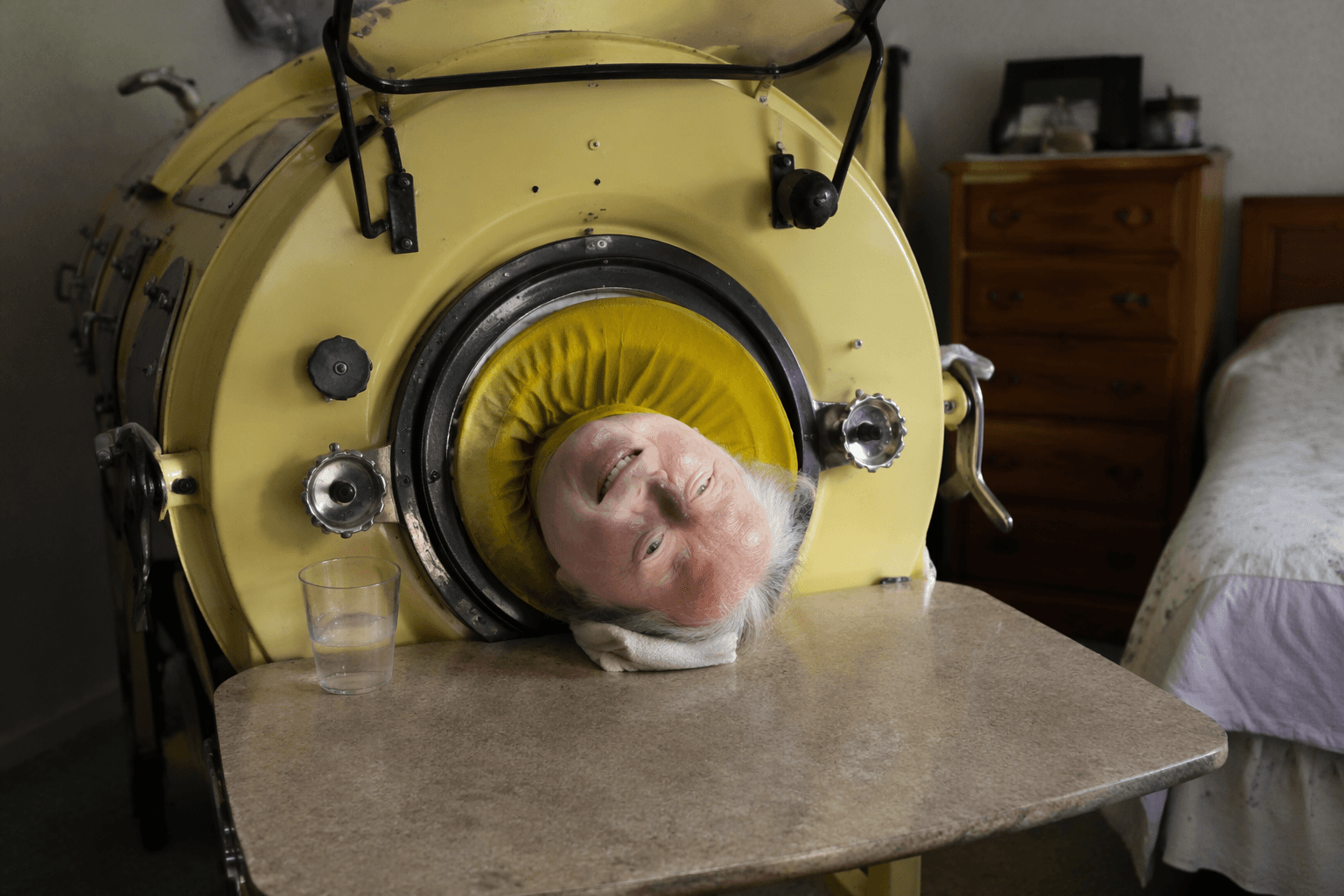
Her death closes a chapter that stretches from the height of the polio era to a time when vaccine memory has faded for many Americans. The CDC says inactivated polio vaccine was introduced in 1955 and oral polio vaccine in 1963, after which U.S. cases fell rapidly to fewer than 100 in the 1960s and fewer than 10 in the 1970s. Wild poliovirus has been eliminated in the United States for more than 30 years, but Lillard’s life showed how fully the disease once shaped disability, medical dependence and family survival.
Martha Ann Lillard’s story also exposed how fragile long-term care can be when a condition becomes rare. An iron lung is not a relic so much as a life-support system, and her struggle to keep it running in Shawnee underscored how people living with severe disability can be left searching for specialized help long after the public has stopped seeing the disease that changed their lives.
This article was produced by Prism’s automated news system from verified source data, official records, and press releases, then run through automated quality and moderation checks before publishing. The system is built and supervised by the people who set the standards it runs under. Read our full AI policy.
Did this article answer your question?