Lawmakers urge Pentagon to halt Ecuador anti-drug operations over rights concerns
About 20 lawmakers pressed the Pentagon to stop anti-drug missions in northern Ecuador after reports of civilian facilities hit and potential rights abuses.

A group of U.S. lawmakers urged the Pentagon to halt joint anti-drug operations with Ecuadorian forces in northern Ecuador, warning that the mission may have crossed into human-rights violations and was never clearly authorized by Congress. The letter, sent to Defense Secretary Pete Hegseth, was led by Democrats Chuy García, Greg Casar and Sara Jacobs and signed by roughly 20 lawmakers, most of them from the party’s progressive wing, including Alexandria Ocasio-Cortez and Ro Khanna.
Their complaint centered on two issues: the legal basis for U.S. involvement, and what happened on the ground. The lawmakers said Congress and the public had not been given a clear explanation of how far U.S. forces had gone in Ecuador, while reports pointed to serious rights abuses and what appeared to be civilian facilities bombed during the operation. They argued that the scope of the mission remained opaque even as U.S. military activity in Ecuador became harder to ignore.
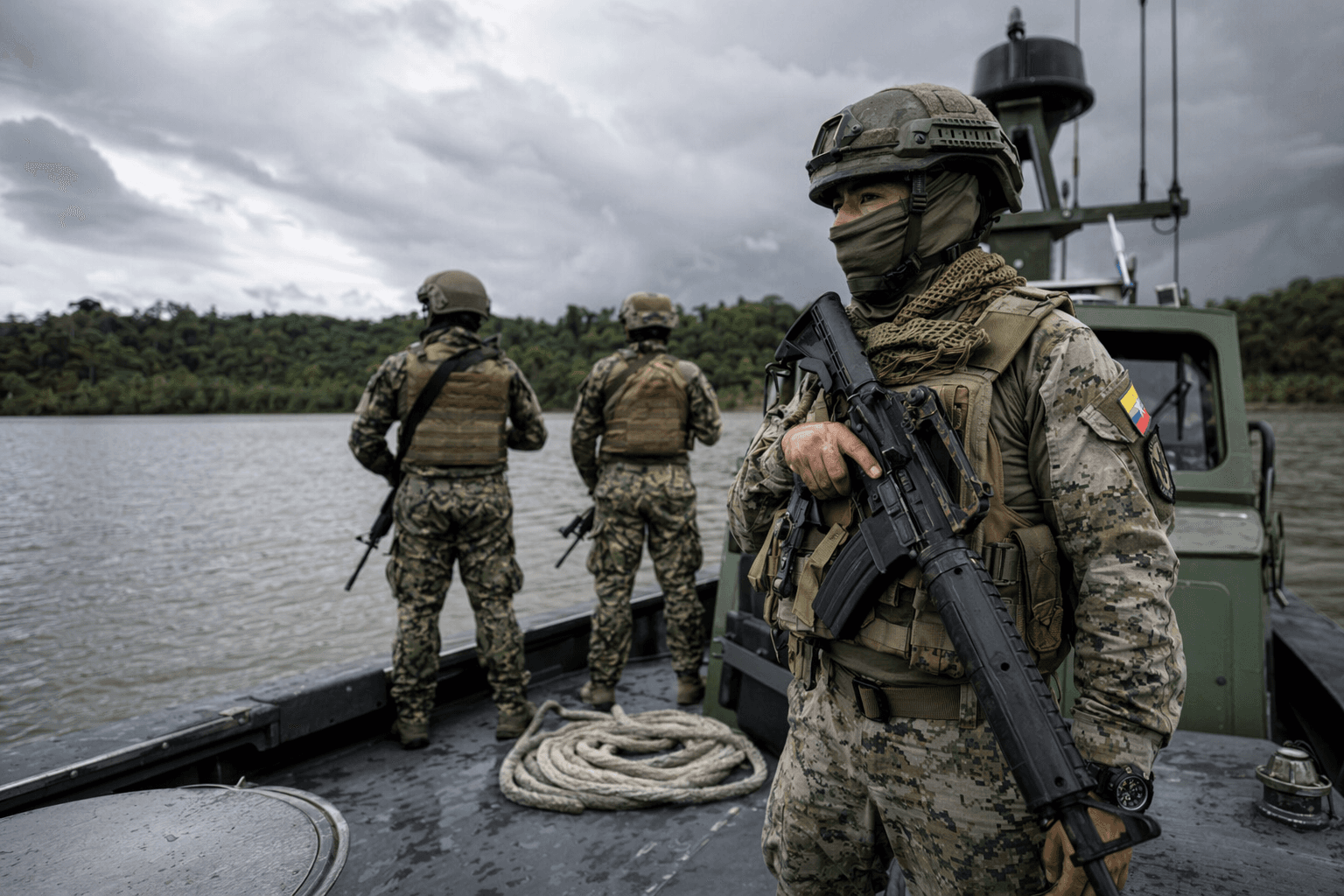
The letter landed at a politically sensitive moment. Ecuadorian President Daniel Noboa was in Washington for a two-day visit and was scheduled to meet Vice President J. D. Vance and OAS Secretary General Albert Ramdin. That made the dispute more than a procedural fight in Congress; it became a live test of how much Washington was willing to tolerate from a security partner in the name of counternarcotics cooperation.
The timeline has only deepened the confusion. SouthCom announced a joint operation on March 3 against designated terrorist organizations in Ecuador. Three days later, Trump informed Congress that U.S. forces had participated in military actions there on March 6. But a senior Pentagon official, Joseph Humire, told the House Armed Services Committee that the Pentagon had supported bilateral kinetic actions at Ecuador’s request, a description that raised new questions about whether the U.S. role was advisory, operational or something in between.
For the lawmakers, that ambiguity is the point. They are pressing for a response within 10 days, setting up the possibility of a fast-moving clash over executive power, congressional oversight and the expanding reach of anti-cartel policy under Trump. The episode also highlighted a recurring fault line in U.S. foreign policy: the tension between security partnerships in Latin America and demands for human-rights accountability when operations on the ground appear to blur the line between cooperation and complicity.
This article was produced by Prism’s automated news system from verified source data, official records, and press releases, then run through automated quality and moderation checks before publishing. The system is built and supervised by the people who set the standards it runs under. Read our full AI policy.
Did this article answer your question?

