Ottawa, Alberta agree to soften industrial carbon pricing target
Ottawa agreed to a slower climb to Alberta’s industrial carbon price, to $130 a tonne by 2040, in return for pipeline and carbon-capture commitments.
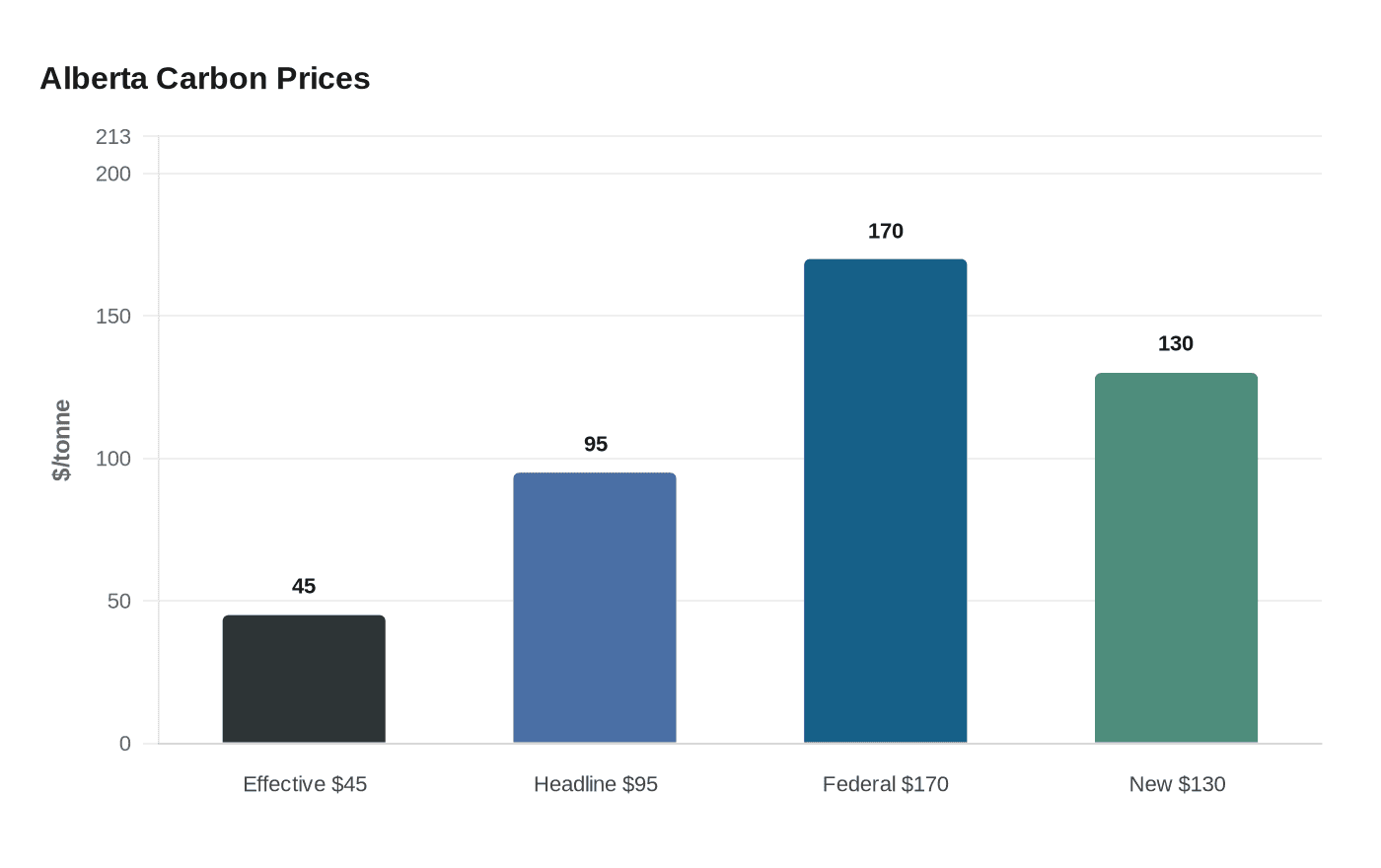
Ottawa has agreed to let Alberta move much more slowly on industrial carbon pricing, a concession that marks another retreat in Prime Minister Mark Carney’s climate agenda and ties federal policy more tightly to a pipeline bargain. Under the emerging deal, Alberta’s effective industrial carbon price would rise to $130 per tonne by 2040, well below the path the federal government had previously set.
That is a sharp give on Ottawa’s side. Alberta’s headline industrial carbon price is now $95 per tonne, and under the federal schedule it had been supposed to reach $170 per tonne by 2030. But the real price paid by many firms has been far lower, because companies can buy credits on an open market, leaving Alberta’s effective rate around $45 per tonne. The new framework would still move the province upward, but at a pace that gives heavy emitters more room and pushes the federal target farther into the future.
The tradeoff is tied to the broader energy understanding Prime Minister Mark Carney and Premier Danielle Smith signed on November 27, 2025. That memorandum linked carbon-pricing changes to a proposed new bitumen pipeline to the British Columbia coast and to a major carbon-capture project involving Pathways Alliance oilsands companies. The pipeline framework is meant to be privately financed and, under earlier terms of the broader discussion, could move 300,000 to 400,000 additional barrels per day directly to Asian markets.
The Alberta deal had been overdue. Ottawa and the province set themselves an April 1, 2026, deadline for a new industrial carbon pricing framework and missed it. Smith then said on May 8 that she was feeling more confident after meeting Carney and that Albertans needed to see that “Canada can work.” Carney was expected to travel to Calgary to announce the industrial carbon pricing deal.
The political risks are already clear. Liberal MP Steven Guilbeault resigned from cabinet over the Alberta energy deal, a sign of resistance inside Carney’s own party to any arrangement seen as diluting climate commitments. Environmental advocates have warned that weakening methane and carbon rules for Alberta’s oil and gas sector would be unwise, while business groups and industry have argued that a firmer price is necessary to give investors certainty.
For Carney, the bargain may help advance a pipeline framework and unlock provincial cooperation. It also raises a harder question: whether Ottawa is building a lower-emissions future or simply buying time by softening the rules that were supposed to force it.
This article was produced by Prism’s automated news system from verified source data, official records, and press releases, then run through automated quality and moderation checks before publishing. The system is built and supervised by the people who set the standards it runs under. Read our full AI policy.
Did this article answer your question?

