Leeds fans await Chelsea FA Cup semi-final as old rivalries resurface
Chelsea brings back old wounds for Leeds: a 1970 replay watched by 28.5 million, a 39-year semi-final wait, and a Wembley date that feels bigger than football.
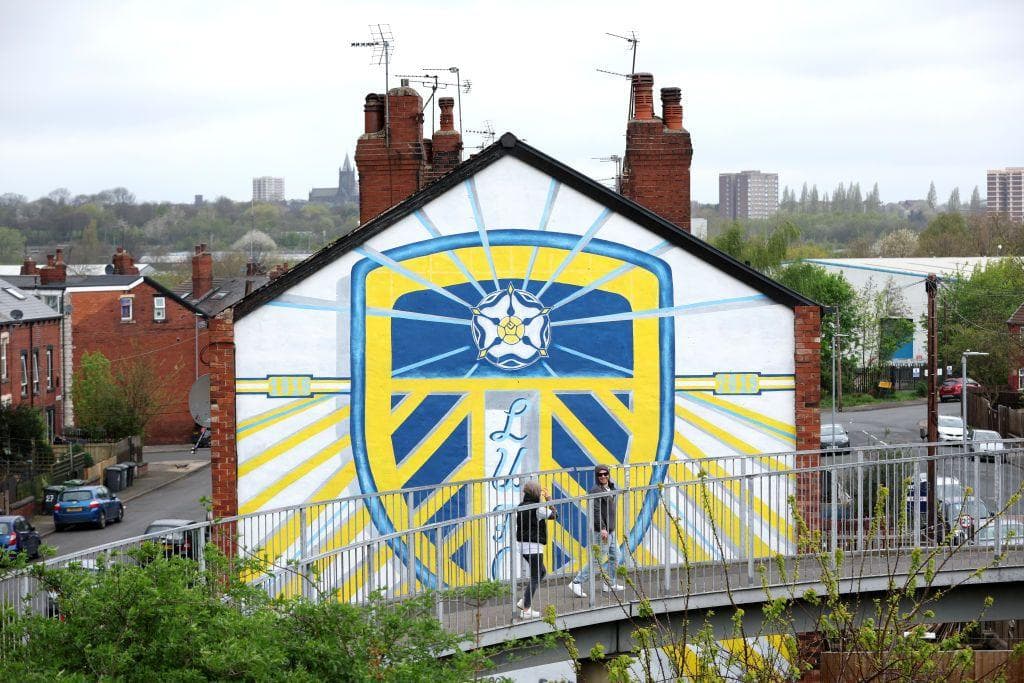
A semi-final with the weight of memory
Leeds United’s Wembley date with Chelsea is not being experienced like an ordinary cup tie in West Yorkshire. It lands on top of a long collective memory of near-misses, decline and frustration, which is why the semi-final feels emotionally outsized to supporters who have waited 39 years for this stage of the FA Cup.
That feeling is rooted in absence as much as anticipation. Leeds have not reached an FA Cup final since 1973, while Chelsea have played in 13 finals in the years since. For Leeds fans, the semi-final against a familiar rival is not just a chance to end a drought. It is a reminder of how long the club has lived without the sort of Wembley success that once helped define its place in English football.
Why Chelsea still stirs the old rivalry
Chelsea and Leeds carry one of the sport’s most durable cup memories because their history in the competition stretches back to the 1970 final. That match finished 2-2 at Wembley before Chelsea won the replay 2-1 at Old Trafford 18 days later, and the replay was watched by a reported UK television audience of 28.5 million. The figure remains part of English football folklore, a reminder of how a cup tie between West London and Yorkshire once drew the country into the same conversation.
This is not a rivalry built only on nostalgia. Chelsea have won all six of their previous FA Cup ties against Leeds, including the 2023/24 fifth round, and their only previous FA Cup semi-final meeting came in 1967 at Villa Park, when Tony Hateley scored the only goal for Chelsea. Those details matter because they deepen the sense that Leeds arrive at Wembley not just against a strong opponent, but against a club that has repeatedly denied them in this competition.
For supporters, that history turns the semi-final into something larger than a match-up of standings or form. It becomes a test of inherited sports memory: what older fans remember from the 1970 final, what younger fans have absorbed through family stories, and what each generation has learned about Leeds through years of almosts, setbacks and hard-earned loyalty.
The road to Wembley after West Ham
Leeds earned the right to relive that history with a dramatic quarter-final victory over West Ham United at the London Stadium on 5 April 2026. They led 2-0 late in normal time, were pulled back to 2-2, and then prevailed 4-2 on penalties to reach the semi-finals for the first time since 1987, when they lost to eventual winners Coventry City.
The detail of that comeback matters. Leeds did not simply scrape through; they survived a collapse in control before rediscovering composure in the shootout. Lucas Perri’s save from Jarrod Bowen helped settle the contest, and the result gave Leeds their first appearance in the last four after 39 years. In emotional terms, that is not a small statistic. It marks the point at which a generation of supporters can finally look at the cup and see Wembley rather than disappointment.
Daniel Farke now stands on the brink of joining rare company. He could become only the second manager to lead Leeds to an FA Cup final, after Don Revie. That link to Revie is especially potent because it folds present-day ambition back into the club’s most resonant era, when Leeds were a force with national significance rather than a team defined by waiting.
The date delay and what it revealed
The semi-final was later confirmed for Sunday 26 April 2026 at Wembley, but the delay in naming the date angered many Leeds supporters. The Leeds United Supporters’ Trust called it “not acceptable” and said thousands of fans were left in limbo over travel and accommodation.
That response tells its own story about the modern economics of football support. Wembley trips are expensive, time-sensitive and hard to improvise, especially for fans travelling from Yorkshire and West Yorkshire into London. The uncertainty was made sharper by the fact that Leeds were also dealing with a rearranged Premier League match at Bournemouth four days earlier and the London Marathon, which complicated travel and accommodation across the capital.
Leeds were expected to receive around 30,000 tickets for the semi-final, a sizeable allocation but still one that forces many supporters to balance demand, distance and cost. In a game where the emotional temperature is already high, the logistical strain becomes part of the story. It underlines how major fixtures now carry civic and financial consequences as well as sporting ones.
What the semi-final says about English football
There is a reason this tie resonates beyond Leeds and Chelsea. English football still gives extraordinary cultural weight to a handful of fixtures because they connect class identity, geography and memory in ways the league table cannot. Leeds against Chelsea has long symbolized that tension: Yorkshire against West London, older industrial pride against the pull of a wealthier, more cosmopolitan capital club.
That meaning has not faded with time. If anything, the scarcity of Leeds success in the FA Cup has made the semi-final feel more charged, because fans measure the occasion against decades of decline, false dawns and the memory of stronger teams that never quite made it back. The club’s journey to Wembley offers a rare public moment when those long years of frustration can be converted into hope.
And there is still something distinctly English about the scale of the occasion. A replay once drew 28.5 million television viewers. Now the same rivalry returns to Wembley in a different era, but with the same emotional currency: a great club memory, a divided football map, and the sense that the cup can still give old stories new life.
What comes next at Wembley
The winner will face either Manchester City or Championship side Southampton in the final, a reminder that the semi-final is only one step in a larger path to silverware. But for Leeds, the significance of the day already extends beyond the result. Reaching Wembley after 39 years has reopened a connection to the club’s past, and facing Chelsea has sharpened the stakes by reviving a rivalry loaded with history.
For Leeds supporters, this is not merely about who advances. It is about whether a club shaped by long disappointment can briefly reclaim the sense of national relevance that once seemed taken for granted. Wembley will decide the football outcome, but the emotional significance was sealed long before kick-off.
This article was produced by Prism’s automated news system from verified source data, official records, and press releases, then run through automated quality and moderation checks before publishing. The system is built and supervised by the people who set the standards it runs under. Read our full AI policy.
Did this article answer your question?

.jpg&w=1920&q=75)
