London Marathon Quiz Tests Knowledge of Record-Breaking Race History
A London Marathon quiz is really a crash course in scale, speed and endurance. The race has grown from a 1981 debut into a record-setting global spectacle.
Why this quiz matters
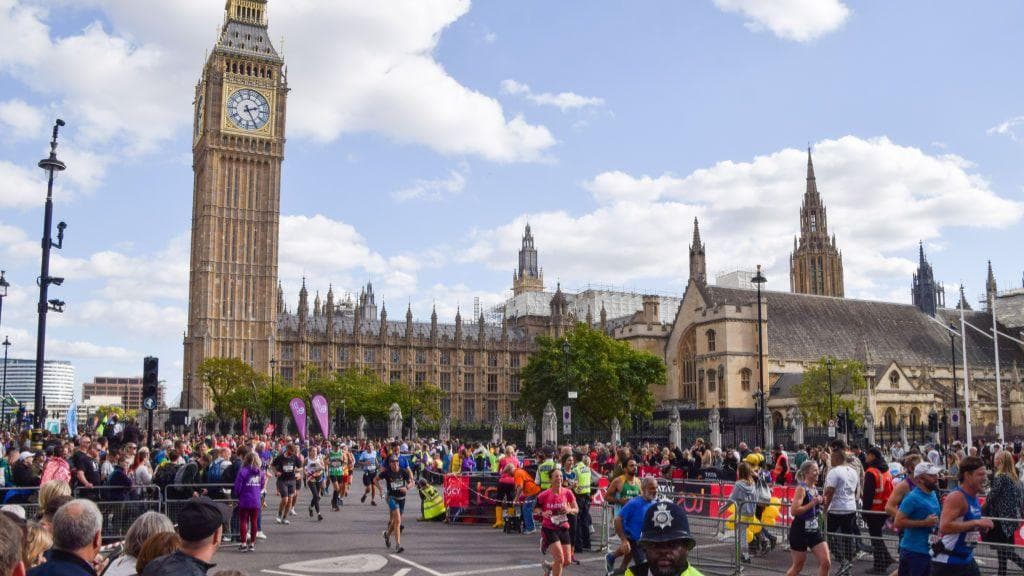
The London Marathon is not just a race with trivia attached. In 2025, it drew a record 840,318 ballot entries and produced 56,640 finishers, the biggest marathon ever by finishers, which is why even a simple quiz can feel like a test of cultural literacy. The numbers show how the event now sits at the intersection of elite sport, mass participation and major civic visibility.
That scale also explains its wider appeal. A question about the London Marathon can lead from the history of fast course records to the unusual longevity feats of older runners, and then onward to the race’s role as a global broadcast event watched far beyond the streets of London.
From a city race to a global fixture
The first London Marathon was held on 29 March 1981, and it has since become one of the best-known endurance events in the world. Its entry into the World Marathon Majors in 2006 cemented that status, placing it alongside the sport’s most prestigious city marathons.
By 2025, the race had reached its 45th edition, and Guinness World Records said its collaboration with the London Marathon had lasted 18 consecutive years. That partnership helped turn the event into a reliable record-setting stage, where spectacle, competition and public curiosity reinforce one another year after year.
The marathon’s growth matters because it changed the meaning of the race itself. What began as a single London event now functions as a civic ritual with international reach, one that attracts elite athletes, tens of thousands of everyday runners and a huge audience watching the drama unfold.
The appeal of age-defying marathon stories
Some of the most memorable London Marathon quiz questions come from runners who turned age into part of the story. Guinness World Records lists Dimitrion Yordanidis as the oldest man to complete a marathon, finishing in Athens on 10 October 1976 at age 98. On the women’s side, Mathea Allansmith is listed as the oldest woman to complete a marathon, finishing the Honolulu Marathon on 11 December 2022 at 92 years and 194 days old.
Fauja Singh added another layer to that legend. He is widely described as the world’s oldest marathon runner and completed a marathon at age 100, a feat that gave the sport a rare kind of universal appeal: the sense that endurance can be redefined late in life.
Singh’s death in July 2025, at the age of 114, underscored how strongly these stories linger in the public imagination. They are part of why the London Marathon resonates well beyond the finish line, because the event is not only about speed, but about persistence, identity and what people think is possible at every stage of life.
A fast course with a serious record book
The London Marathon has also built a reputation as one of the fastest stages in the sport. According to Olympics.com, world records have been broken six times at the event, beginning with Grete Waitz’s breakthrough in 1983. That history gives the race a dual identity: it is both a mass-participation celebration and a venue where the very best runners chase history.
Two modern course records stand out. Eliud Kipchoge’s men’s London Marathon course record is 2:02:37, set in 2019, while Mary Keitany’s women’s course record is 2:17:01, set in 2017. Those marks help explain why the quiz is not just about novelty facts, but about elite performance at the sharp end of marathon running.
The record book matters because it shapes expectation. Each London Marathon arrives with the possibility that the day will produce another defining time, another breakthrough and another entry in a history that already stretches from Grete Waitz to Kipchoge and Keitany.
Why the race became a civic event
The London Marathon’s audience is part of its identity. World Marathon Majors says it is viewed in more than 196 countries worldwide and watched by between four and five million viewers in the United Kingdom, a reach that puts it well beyond the scale of a standard city race. That audience turns the course into a public stage and gives the event the feel of a shared national moment.
Its popularity also helps explain why the marathon functions as a powerful charitable platform. With tens of thousands of runners, giant crowds and a built-in storytelling engine, the event blends competitive sport with personal causes and public generosity in a way few annual fixtures can match.
That is the real answer behind any London Marathon quiz. The race is memorable not simply because it is old or fast, but because it combines record-breaking performance, age-defying participation and civic spectacle in a single day that now belongs to London, and to a global audience, at once.
This article was produced by Prism’s automated news system from verified source data, official records, and press releases, then run through automated quality and moderation checks before publishing. The system is built and supervised by the people who set the standards it runs under. Read our full AI policy.
Did this article answer your question?

.jpg&w=1920&q=75)
