Local elections, bond yields and jet fuel shortages dominate Wednesday papers
Gilt yields hit a 28-year high as 4,850-plus English council seats and six mayoralties head to Thursday's vote. Jet fuel costs are threatening summer flights.
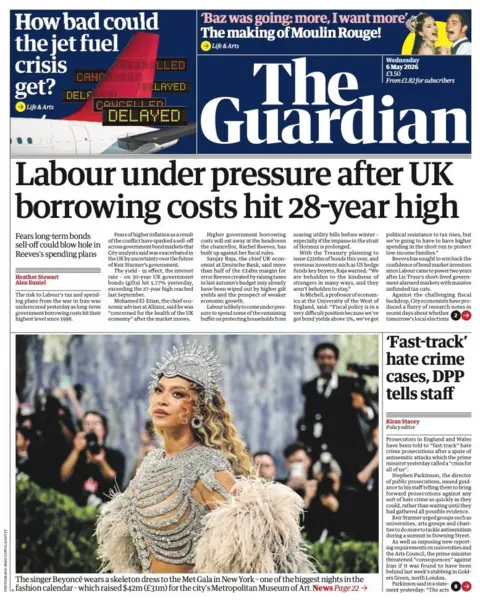
Borrowing costs, council contests and summer flight disruption gave Wednesday’s front pages a common thread: pressure on household budgets and anxiety about how much worse it could get. With England’s largest set of local elections in three years due on Thursday, 7 May 2026, the papers treated the vote not just as a political test, but as a measure of voter frustration.
More than 4,850 council seats are being contested across 136 English local authorities, with some counts putting the number of councillors at 5,066. Six directly elected mayors are also on the ballot. Polling and seat projections have pointed to strong showings for Reform UK and the Greens, while Labour faces heavy losses in some forecasts. The contests have become a real examination for Keir Starmer, Nigel Farage, Kemi Badenoch and Ed Davey, with the results likely to shape the political atmosphere well beyond Thursday night.
At the same time, Britain’s borrowing costs have climbed sharply. The yield on 30-year UK government bonds rose to about 5.798% on Tuesday, a 28-year high, after jumping 0.14 percentage points. Rising gilt yields mean it costs more for the government to borrow from financial markets, and the latest move has been linked to inflation worries and political uncertainty. For Rachel Reeves and HM Treasury, that matters because every extra notch in long-term borrowing costs eats into the fiscal headroom available for spending plans and tax decisions.
The economic story was not confined to Westminster. Jet fuel shortages have turned into a summer travel problem, with the UK government temporarily allowing airlines to cancel or merge flights earlier than usual and to surrender some takeoff and landing slots without penalty. The aim is to reduce last-minute cancellations and preserve passengers’ plans, even as airlines warn that higher fuel prices could force some summer schedules to be cut back.
Those fuel pressures are being tied to instability in the Middle East and to the closure of the Strait of Hormuz, one of the world’s most sensitive energy chokepoints. Airline operators say the cost shock has been swift enough to reshape planning for the busiest travel months of the year.
Taken together, the headlines point to the same underlying mood: voters are heading into Thursday’s poll against a backdrop of higher government borrowing costs, more fragile travel plans and a sense that economic shocks are no longer abstract.
This article was produced by Prism’s automated news system from verified source data, official records, and press releases, then run through automated quality and moderation checks before publishing. The system is built and supervised by the people who set the standards it runs under. Read our full AI policy.
Did this article answer your question?