Lucid dreaming, how scientists study the mind awake asleep
Lucid dreaming is real, measurable, and still overpromised; the best evidence supports nightmare relief, not a shortcut to controlling your life.
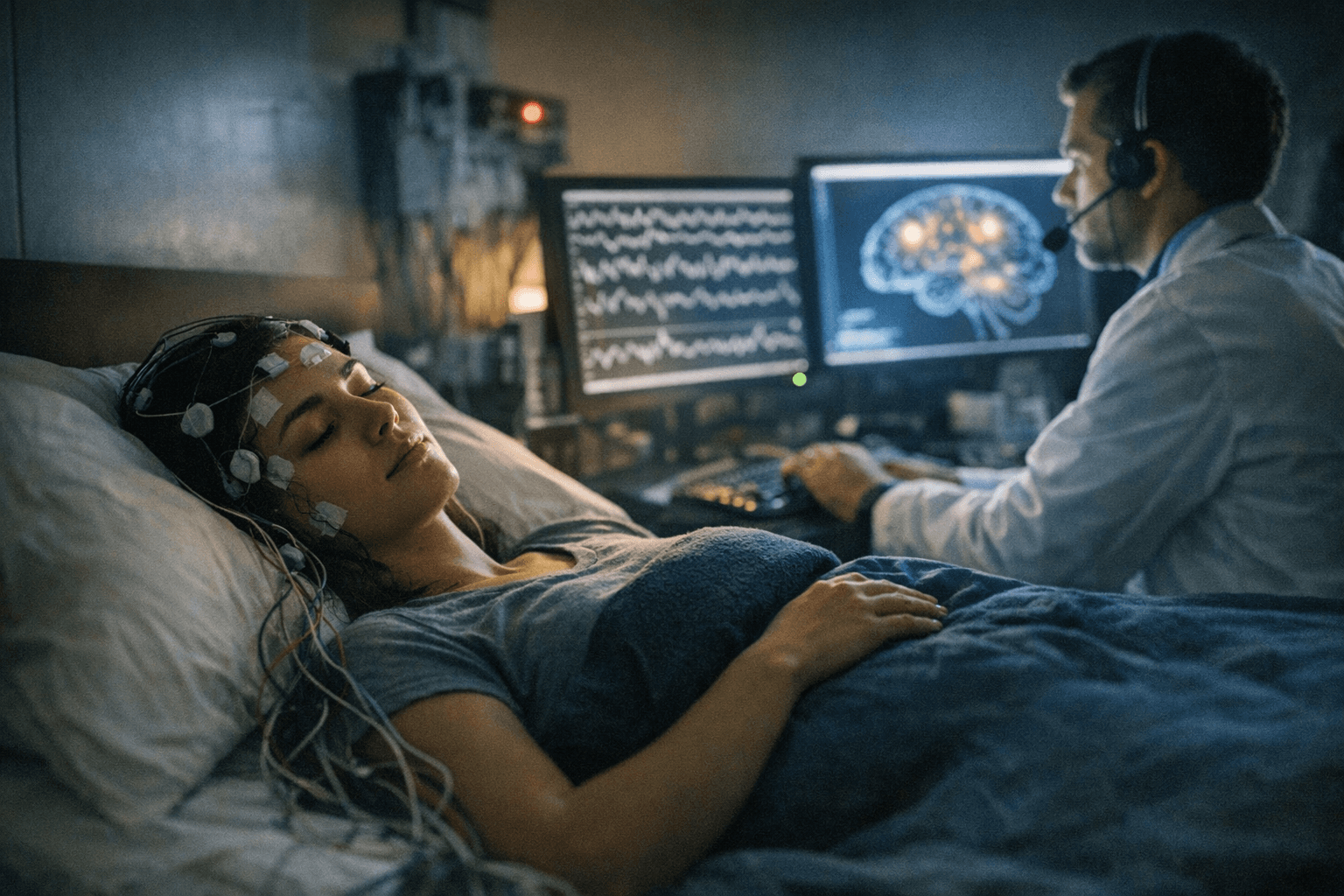
Lucid dreaming is one of the rare places where sleep becomes self-aware. The sleeper realizes a dream is happening and may be able to steer the scene, change behavior, or simply notice the dream without waking up.
What lucid dreaming actually is
Scientists describe lucid dreaming as awareness during sleep that one is dreaming, sometimes paired with limited control over the dream or one’s own actions. Most of the time it appears during REM sleep, the stage that usually begins about 90 minutes after sleep onset, when brain activity is especially vivid and internally generated.
That timing matters because it helps separate myth from mechanism. Lucid dreaming is not a mystical extra sense or a talent available only to a tiny elite. It is a measurable sleep-state phenomenon, and some researchers think it represents a hybrid condition with features of both REM sleep and wakefulness.
How the science earned credibility
The field did not become credible by accident. Dream research changed in 1953, when rapid eye movements were linked to dreaming, giving scientists a physical signal to track sleep. Decades later, lucid dreaming gained scientific legitimacy in the late 1970s when researchers showed that dreamers could send prearranged eye-movement signals from inside REM sleep.
That breakthrough turned an internal experience into something laboratories could verify. It also opened the door to modern work by researchers such as Ken Paller, Karen Konkoly, Christopher Mazurek, Deirdre Barrett, Benjamin Baird, Sergio A. Mota-Rolim, Martin Dresler, Chris A. Roe, Graham Smith, Helen Clegg, Remington Mallett, Laura Sowin, Rachel Raider, and David T. Saunders, who have helped move the topic from proof toward application.
How common it is, and who is more likely to experience it
Lucid dreaming is not common in the sense of a nightly skill, but it is not vanishingly rare either. A 2016 meta-analysis of 34 studies estimated that about 55% of people have had at least one lucid dream in their lifetime, while about 23% experience one or more lucid dreams per month.
The pattern is uneven. Britannica notes that lucid dreaming appears more common in children than in teens or adults, and it is especially frequent among people with narcolepsy. One study cited there found that more than 77% of narcoleptic patients reported lucid dreams, which makes the phenomenon relevant not just to curiosity about consciousness but to sleep medicine and neurological care.
What scientists can do with it now
Modern research has moved far beyond asking whether lucid dreams exist. Scientists are now exploring communication across the dream-wake boundary, refining induction methods, mapping individual differences, and testing clinical uses. In 2021, NSF-supported researchers reported two-way communication with lucid dreamers during REM sleep, including a real-time exchange in which a subject answered a math question from inside the dream: “eight minus six... two.”
That result matters because it suggests the dreaming brain can process information in ways that are partly reachable from the outside, while still asleep. It also helps explain why the field attracts both neuroscientists and psychologists. The question is no longer simply whether a dreamer knows the dream is fake; it is how much the sleeping mind can perceive, respond, and remember across a shifting boundary.
What the evidence supports, and what it does not
The strongest practical case for lucid dreaming today is nightmare reduction. A 2022 analysis found that lucid dreams can end nightmares, and recent reviews say the approach may help reduce nightmare recurrence. That is meaningful for people whose sleep is repeatedly disrupted by fear, trauma, or chronic distress, because nightmares can affect daytime mood, concentration, and overall functioning.
But the science is not a blank check for self-optimization. The same reviews warn that trying to force lucid dreams can backfire, especially when induction fails or dream control is weak. Reported negative experiences include sleep paralysis, restlessness, and dysphoric dreams, the kind that feel unsettling rather than empowering.
That is where the cultural hype starts to outrun the evidence. Lucid dreaming is often sold like a life hack for creativity, productivity, or emotional mastery, but the research is still too limited to justify that kind of promise. The long-term effects of deliberate induction remain under-studied, and experts caution that the therapeutic potential is real while the risks still need clearer study.
Why the caution matters for public health
The stakes are larger than personal curiosity. Sleep problems are already shaped by access to care, trauma exposure, and neurological illness, which means the benefits and risks of lucid dreaming will not fall evenly across communities. A person with narcolepsy, frequent nightmares, or restless sleep may be looking for relief, not a performance trick, and any intervention needs to be judged by whether it improves safety, sleep quality, and daily functioning.
That is also why equity matters in the way this science gets translated. If lucid dreaming is framed only as a wellness achievement, people with serious sleep disorders can be left with advice that is entertaining but not clinically useful. A more responsible approach treats it as a possible therapeutic tool, one that belongs in careful conversation with sleep medicine, mental health care, and trauma-informed support.
How to think about lucid dreaming without the hype
The most honest way to read the science is simple: lucid dreaming is real, some people have it naturally, and researchers can now detect and sometimes communicate with it. The evidence is strongest for understanding consciousness and for helping with nightmares, not for turning sleep into a controllable productivity platform.
That distinction is important because it protects people from overpromised self-help and from the false idea that every dream should be mastered. Sleep is not a performance space, and the best research so far suggests that lucid dreaming is most valuable when it is treated with the same discipline as any other intervention: useful in some cases, uncertain in others, and never separated from the body, the mind, and the social conditions that shape both.
This article was produced by Prism’s automated news system from verified source data, official records, and press releases, then run through automated quality and moderation checks before publishing. The system is built and supervised by the people who set the standards it runs under. Read our full AI policy.
Did this article answer your question?