Lula Fails to Secure Early Climate Deal, Summit Heads Into Final Days
Host President Luiz Inácio Lula da Silva intensified diplomacy on the penultimate days of COP30 in Belém, seeking an early package on a fossil fuel phase down roadmap and fresh climate finance for vulnerable countries, but a revised draft did not arrive. The delay exposes deep divisions over how prescriptive the roadmap should be and how to mobilize billions for adaptation and loss and damage, leaving markets and vulnerable economies watching for substantive signals.
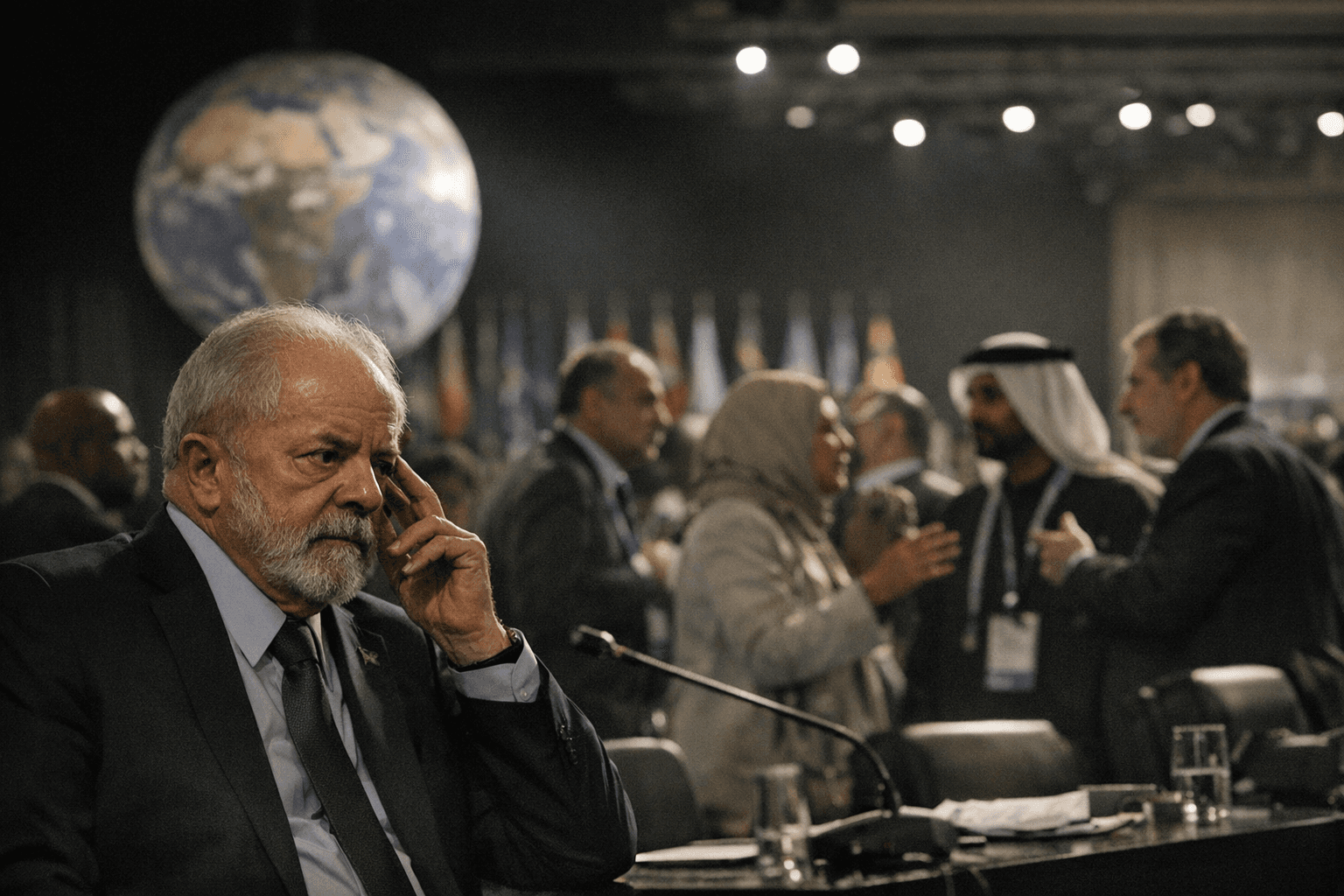
In Belém, Brazil, the COP30 negotiating process stretched into its final days as host President Luiz Inácio Lula da Silva pressed delegates for an early political package on two of the most contentious items, a roadmap for phasing down fossil fuels and new cash for vulnerable nations. A revised negotiating text that many had expected earlier in the week did not materialize, prolonging talks and underscoring the scale of disagreement among parties.
Negotiators said the core dispute centers on the degree of prescription in any fossil fuel roadmap and the mechanisms for delivering new finance for adaptation and loss and damage. Oil producing states and several large emitters have resisted language that would commit nations to specific timelines or mandatory phase down pathways, preferring voluntary approaches and nationally determined plans. Developing countries have pushed for concrete commitments on funding, arguing that current flows fall short of growing needs.
The finance debate remains tied to long standing grievances about the unfulfilled promise by developed countries to mobilize $100 billion annually for climate action in developing nations. Delegations from vulnerable states contend that adaptation costs and loss and damage exposures are already running into the hundreds of billions of dollars a year and that ad hoc pledges are insufficient to protect communities and stabilize investment climates. Developed country delegations have shown reluctance to endorse open ended commitments that could require large and recurring budget allocations without clear delivery mechanisms.
The impasse carries implications beyond diplomacy. Markets and investors are watching COP30 for policy signals that would affect capital allocation across energy, infrastructure and insurance sectors. A firm roadmap that clearly signals a decline in fossil fuel demand would accelerate reallocation of capital toward renewable generation, grid upgrades and storage, while increasing the risk premium on long lived assets tied to oil and gas. Conversely, a weak or vague outcome would prolong policy uncertainty, potentially slowing private investment in low carbon infrastructure and leaving higher transition risks on the balance sheets of banks and insurers.
For emerging and low income countries, the outcome will shape borrowing costs and fiscal choices. Without reliable, scaled finance for adaptation and loss and damage, governments face higher insurance and recovery costs, and investors may demand larger risk premia for sovereign debt. That in turn could crowd out public spending on development priorities.
COP30’s trajectory highlights a structural pattern in the climate negotiation era, where ambitious summit rhetoric often collides with entrenched economic interests and geopolitical inertia. The next 48 hours in Belém will test whether leaders can convert diplomatic momentum into concrete provisions that allocate resources and create clear policy pathways. If they fail, markets are likely to interpret the stalemate as a signal that large scale policy driven transition is still contested, prolonging uncertainty for both emitters and vulnerable nations reliant on external finance.
This article was produced by Prism’s automated news system from verified source data, official records, and press releases, then run through automated quality and moderation checks before publishing. The system is built and supervised by the people who set the standards it runs under. Read our full AI policy.
Did this article answer your question?