Luxury brands revive Grasse, France’s historic perfume capital and flower fields
Luxury houses are treating Grasse’s flower fields as a supply-chain asset, not nostalgia. The revival now depends on heritage labor, scarce land, and climate-proof farming.
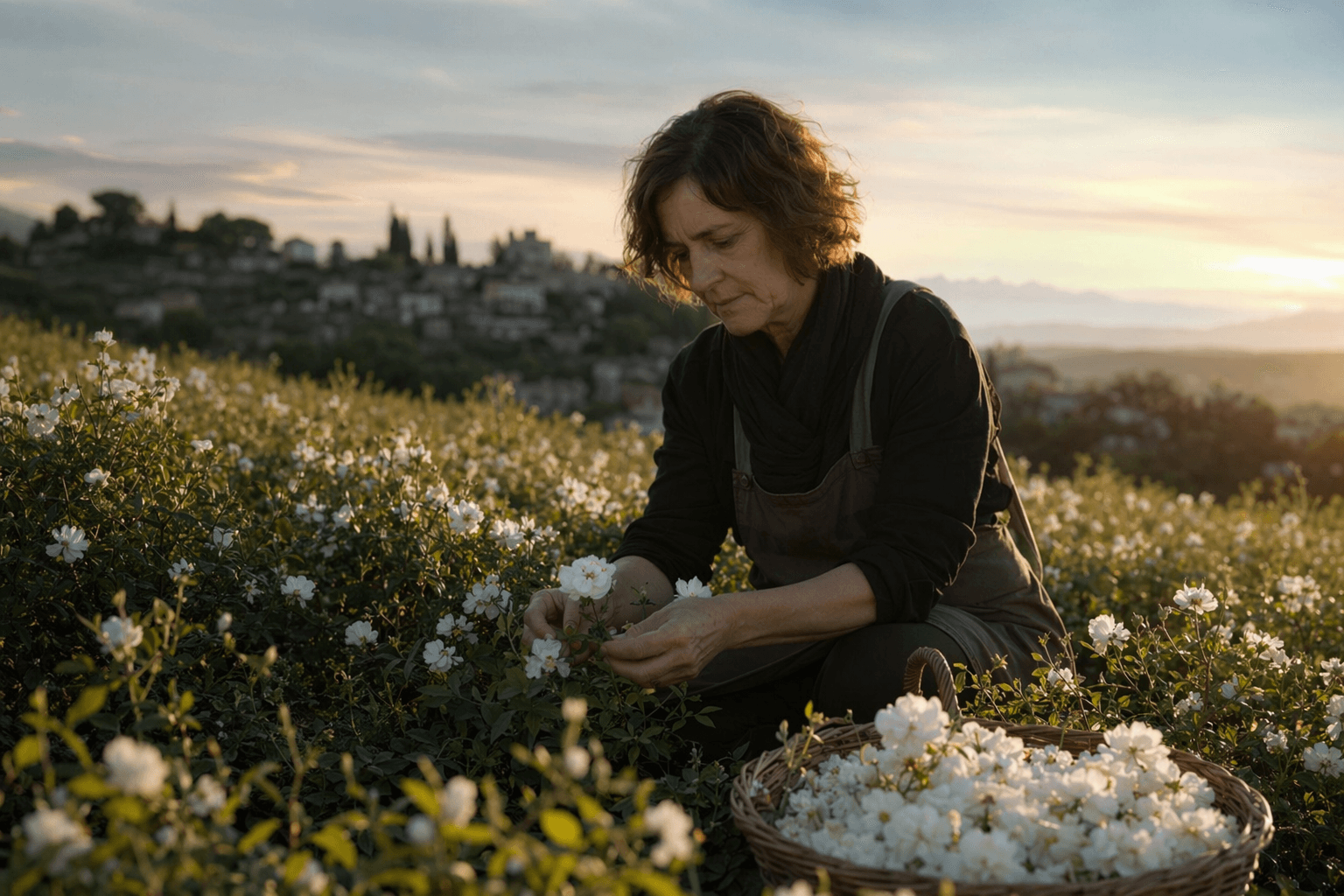
A perfume supply chain built on place
Grasse has never been just a pretty backdrop for fragrance. The town’s perfume tradition dates to at least the 16th century, when leather tanners began scenting gloves with local flowers to cover the smell of dead animals, turning a practical fix into a craft that shaped the town’s identity. That lineage still matters because the flowers are not decorative extras; they are the raw material behind some of the world’s most valuable perfumes.
UNESCO recognized that living system in 2018, inscribing the skills related to perfume in Pays de Grasse on its Representative List of the Intangible Cultural Heritage of Humanity. The designation covers three linked practices: cultivating perfume plants, processing natural raw materials, and composing perfume. Together, they define Grasse as a place where agriculture, labor, and artistic knowledge are inseparable.
Why luxury brands are coming back
The renewed investment in Grasse is not simply a tribute to history. For luxury brands, heritage sourcing has become a business asset because it signals authenticity, continuity, and control over a supply chain that depends on exacting quality. Chanel says it has sourced flowers from Grasse for more than 100 years and has been supporting sustainable farming of jasmine and rose in the region since 1987.
That long relationship now sits inside a broader corporate strategy. Chanel says its sustainability ambition includes restoring nature, protecting climate, and reaching net-zero greenhouse gas emissions across its value chain by 2040. In other words, the company is treating the flower fields not only as part of its brand story, but as infrastructure that must remain viable if the fragrance business is to stay credible and resilient.
What grows in the fields
Chanel’s Grasse fields grow May rose, jasmine, geranium, iris, and tuberose, a mix that ties the house’s fragrances to a specific landscape rather than to a generic global commodity market. On one family farm in the Pégomas area, the partnership with Chanel has existed since 1987, showing how these arrangements are built over decades rather than seasons. The farm is run by Joseph Mul and his family, and the work is highly seasonal, precise, and labor-intensive.
The jasmine harvest there runs from August to October each year. Each picker gathers about 350 grams of flowers an hour, and roughly 8,000 jasmine flowers are needed to produce 1 kilogram of raw material. Those numbers reveal the economics of authenticity: every bottle or batch that leans on Grasse’s identity depends on a huge volume of hand work, making the supply chain slower, more expensive, and more vulnerable than industrial substitutes.
What was lost, and why that matters now
The revival also makes sense only when placed against the scale of what disappeared. CBS News reported that in the early 1900s, the Grasse region had about 12,000 acres of flower fields. That figure underscores how much land has been absorbed by other uses over time, and how fragile the remaining agricultural footprint has become.
That land pressure is central to the business story. A perfume house cannot simply declare itself rooted in heritage; it must secure land, water, labor, and plant material in a region where farming competes with other, often more lucrative uses. The return to Grasse shows that luxury companies are willing to pay for place-based sourcing, but it also exposes how expensive and difficult it is to keep that place productive once real estate values rise and farmland shrinks.
A rural economy, not a museum piece
What survives in Grasse is not only a crop list or a heritage label. It is a working rural economy built on seasonal labor, intergenerational know-how, and the coordination of growers and perfumers who understand that quality begins in the field. Local identity is wrapped into that arrangement, because the region’s reputation rests on people who know how to cultivate, harvest, and transform flowers without flattening the specificity that makes them valuable.
That is why the revival has social meaning beyond the luxury sector. If flower cultivation disappears, the loss is not limited to fragrance ingredients. It affects livelihoods, local expertise, and the chain of small decisions that keep agricultural land in use, from planting cycles to harvest timing to the training of pickers who can work quickly enough to preserve delicate blossoms.
Can the revival survive climate pressure?
The answer depends on whether the industry can protect the ecological conditions that make Grasse useful in the first place. Chanel’s own focus on restoring nature and cutting greenhouse gas emissions reflects a recognition that climate instability threatens the consistency of crops that are already highly seasonal and labor-dependent. In a region defined by specialty plants rather than scale farming, climate resilience is not abstract messaging; it is a condition of supply.
Grasse’s revival is therefore less a nostalgic return than a high-stakes test of whether luxury can support agriculture without hollowing it out. The town’s perfume future will rest on whether brands keep investing in land, labor, and ecological repair with the same seriousness they bring to product development. If they do, Grasse can remain both a living heritage site and a productive engine for fragrance.
Know something we missed? Have a correction or additional information?
Submit a Tip