Macron, Starmer and Merz meet Zelenskiy in London on Ukraine war
Macron, Starmer and Merz met Zelenskiy in London as Europe tried to keep Ukraine central while U.S. attention drifted toward Iran.

France, Britain and Germany used the London meeting with Volodymyr Zelenskiy to show that Europe still has leverage on Ukraine, even as worries grow that Washington’s attention is drifting elsewhere. Emmanuel Macron, Keir Starmer and Friedrich Merz met the Ukrainian president in a display of coordination meant to keep pressure on Moscow and reassure Kyiv that European backing has not frayed.
The Elysee said the talks were part of an effort to deepen European support for Ukraine and intensify pressure on Russia’s war effort, which Paris described as failing militarily, economically and strategically. That message reflected the central dilemma now facing Europe’s main powers: they can sustain aid, shape negotiating positions and keep Ukraine’s cause on the agenda, but they cannot compel the Kremlin to accept terms.
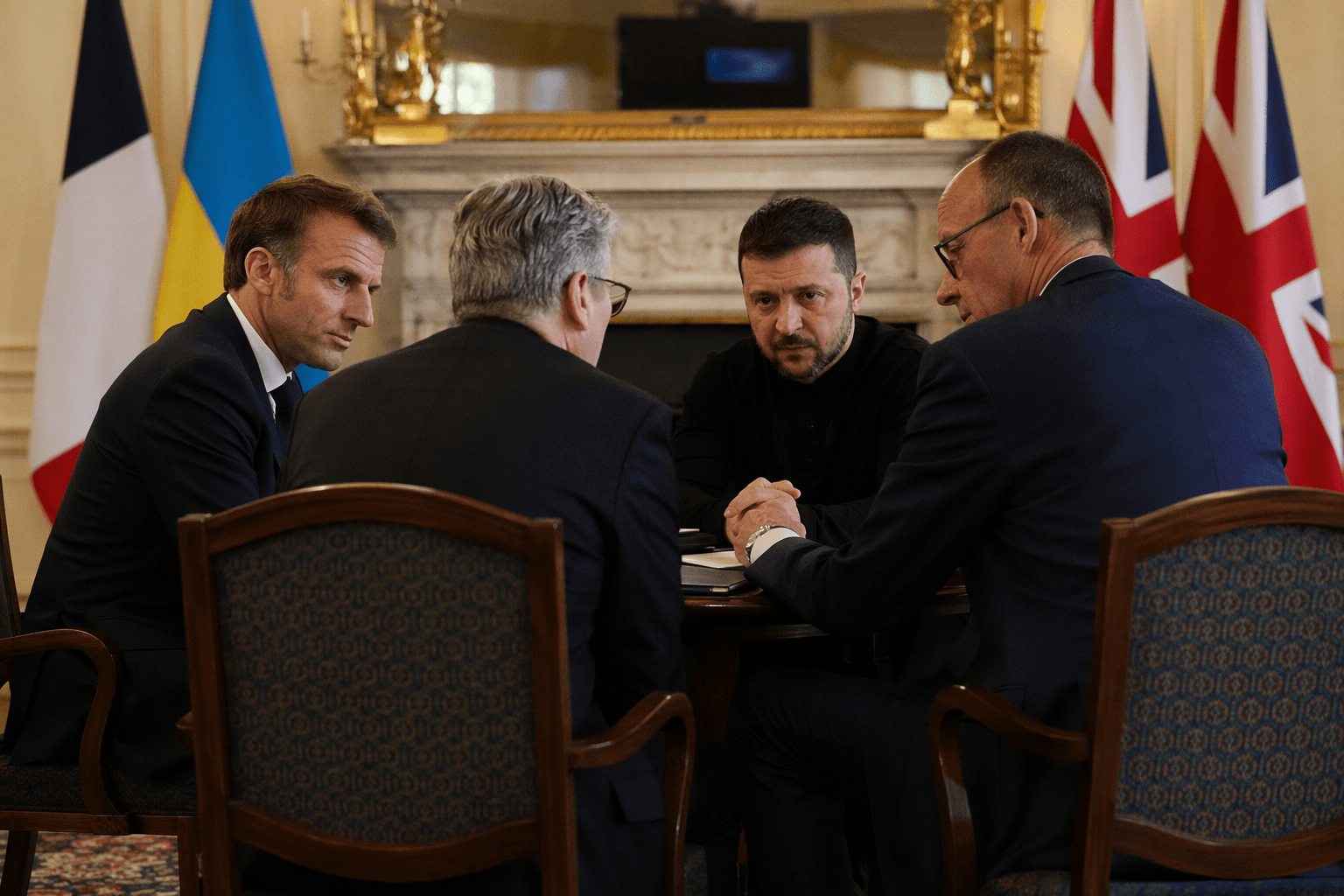
The timing carried its own warning. Zelenskiy has been pressing European leaders to do more to help bring the war to an end, while also fearing that Donald Trump may be distracted by the crisis over Iran. In that context, the London gathering was less about ceremony than about proving that Europe can keep a coalition together if American commitment weakens.
Zelenskiy sharpened the diplomatic push on Thursday by publishing an open letter urging Vladimir Putin to meet him and agree to end the war. The Kremlin said Putin had been briefed on the letter, a reminder that the channels around the conflict remain open even as the battlefield stalemate continues. The exchange underlined the gap between gestures and results: Europe can encourage talks, but neither Macron nor Merz can make the Russian president sit down or make concessions.
Macron struck a more direct note, saying Europe has always favored direct negotiations between Kyiv and Moscow and that it is Ukraine and Russia who can build both a ceasefire and a peace plan, with Europeans helping from the sidelines. Merz was blunter still, saying that “what is missing is Putin’s willingness.” For European diplomats, that sentence captures the limit of the moment: there is no shortage of summitry, but the war’s next phase still depends on whether Moscow sees enough reason to bargain.
The London meeting therefore carried a larger strategic test. If Europe wants to be taken seriously as a guarantor of Ukraine’s future, it must show it can do more than issue statements. It must coordinate sustained military backing, keep diplomatic pressure on Russia and prove that its own strategy can outlast shifting attention in Washington.
This article was produced by Prism’s automated news system from verified source data, official records, and press releases, then run through automated quality and moderation checks before publishing. The system is built and supervised by the people who set the standards it runs under. Read our full AI policy.
Did this article answer your question?