Macron travels to Beijing as Europe balances rivalry and reliance
President Emmanuel Macron will visit Beijing from December 3 to December 5 as the European Union navigates a fraught mix of economic dependence and strategic competition with China. The trip matters because it will test whether European leaders can secure market access and technology cooperation while advancing new trade and economic security measures aimed at protecting critical industries.
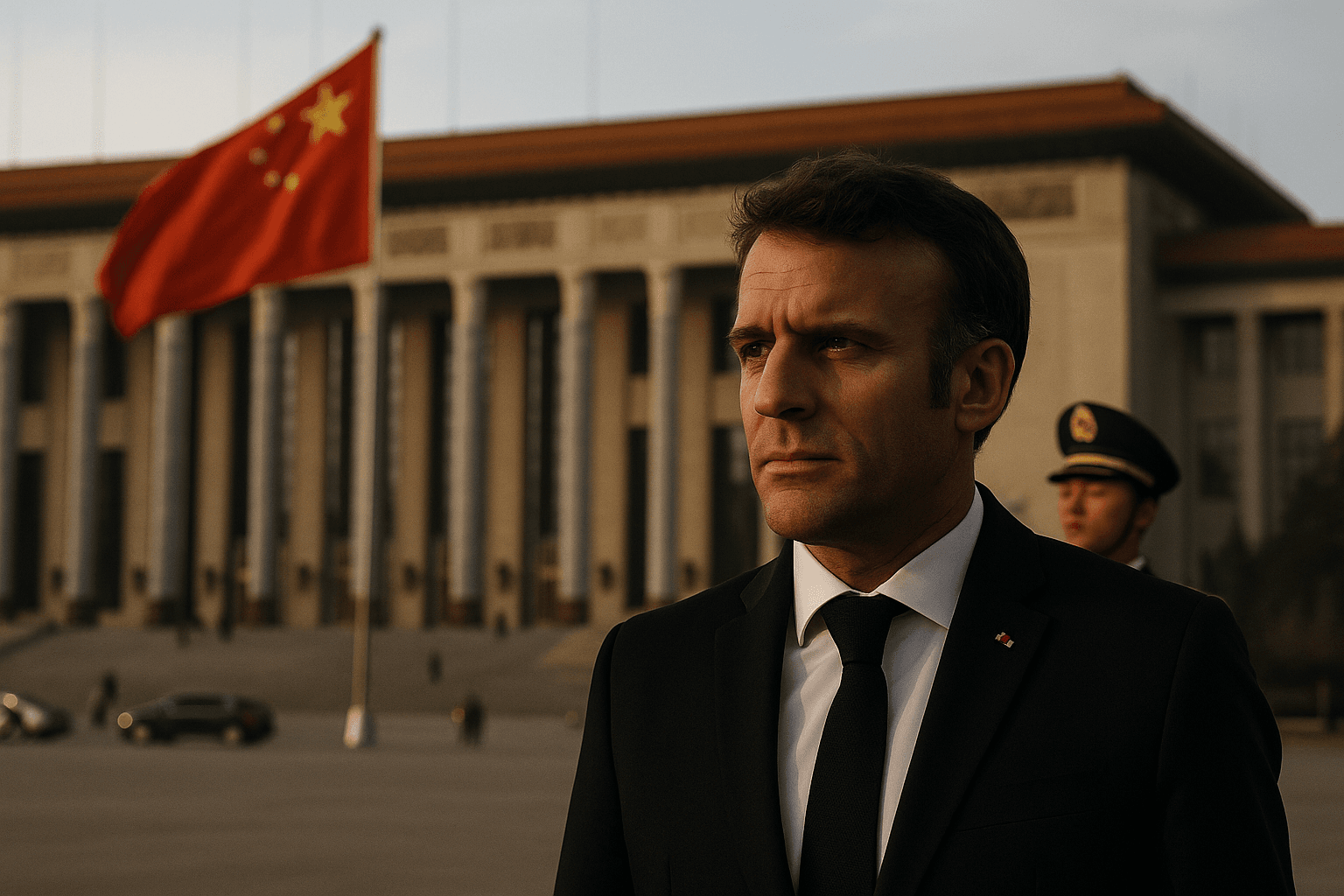
Emmanuel Macron will travel to Beijing this week for a state visit that will thrust Europe’s widening debate over China into the diplomatic spotlight. Macron will press Chinese leaders for greater access to technology and markets while urging restraint over Taiwan, in an effort to square Europe’s economic imperatives with mounting security concerns.
The timing is consequential. European institutions and capitals have spent 2024 and 2025 negotiating tougher trade responses and what officials call economic security doctrines, aimed at curbing unfair competition, screening sensitive investments and protecting supply chains for critical goods. Those discussions have coincided with intensified Chinese competition in strategic sectors from electric vehicles to rare earth processing, where Beijing retains dominant positions that underpin global supply chains.
Analysts say Macron will attempt to speak firmly about those competitive pressures while avoiding a rupture with a country that remains a crucial trade partner. China is the European Union’s largest trade partner in goods, and European exporters from luxury goods to aerospace and machinery depend on market access. At the same time, China controls a disproportionate share of processed rare earths and much of global battery component manufacturing, a concentration that European policymakers now identify as a strategic vulnerability.
The French agenda will seek practical trade outcomes alongside political signals. Officials expect Paris to press for more transparent rules on market access for European tech firms and for assurances on investment reciprocity. European capitals are increasingly concerned about state subsidies and industrial policy that tilt competition. That has animated proposals ranging from strengthened anti-subsidy tools to more robust investment screening and conditionality on state backed acquisitions of sensitive assets.
Markets will watch for concrete commitments. A European move toward protective measures could reshape competitive dynamics in autos and batteries, sectors where Chinese producers have expanded exports and vertical integration. Any sign of escalating trade restrictions would likely force European carmakers and battery suppliers to accelerate re configuration of supply chains and to increase investment in domestic and allied sources of critical inputs. That in turn could lift prices for some components and reshape capital flows into battery and semiconductor projects in Europe.
Macron’s balancing act reflects a broader strategic choice for the EU. Policymakers must decide whether to pursue selective decoupling in areas deemed essential for security, while maintaining cooperation in climate, trade and global governance where mutual interests remain. The European Commission’s deliberations this year have emphasized targeted measures, designed to protect sensitive sectors without triggering full economic disengagement.
Longer term, the outcome will influence investment decisions and industrial strategy across Europe. If Macron secures incremental market concessions and clearer rules from Beijing, European firms may keep significant exposure to Chinese demand. If not, expect a stepped up push for diversification, domestically produced capabilities and closer industrial alignment with like minded partners. For now Macron will try to thread a narrow diplomatic needle, aiming to preserve economic ties while strengthening Europe’s ability to withstand strategic competition.
This article was produced by Prism’s automated news system from verified source data, official records, and press releases, then run through automated quality and moderation checks before publishing. The system is built and supervised by the people who set the standards it runs under. Read our full AI policy.
Did this article answer your question?


