Magyar signals tougher line on Putin after Hungary election upset
Péter Magyar said he would answer a call from Vladimir Putin and urge an end to the war, a sharp break from Viktor Orbán after a landslide upset.
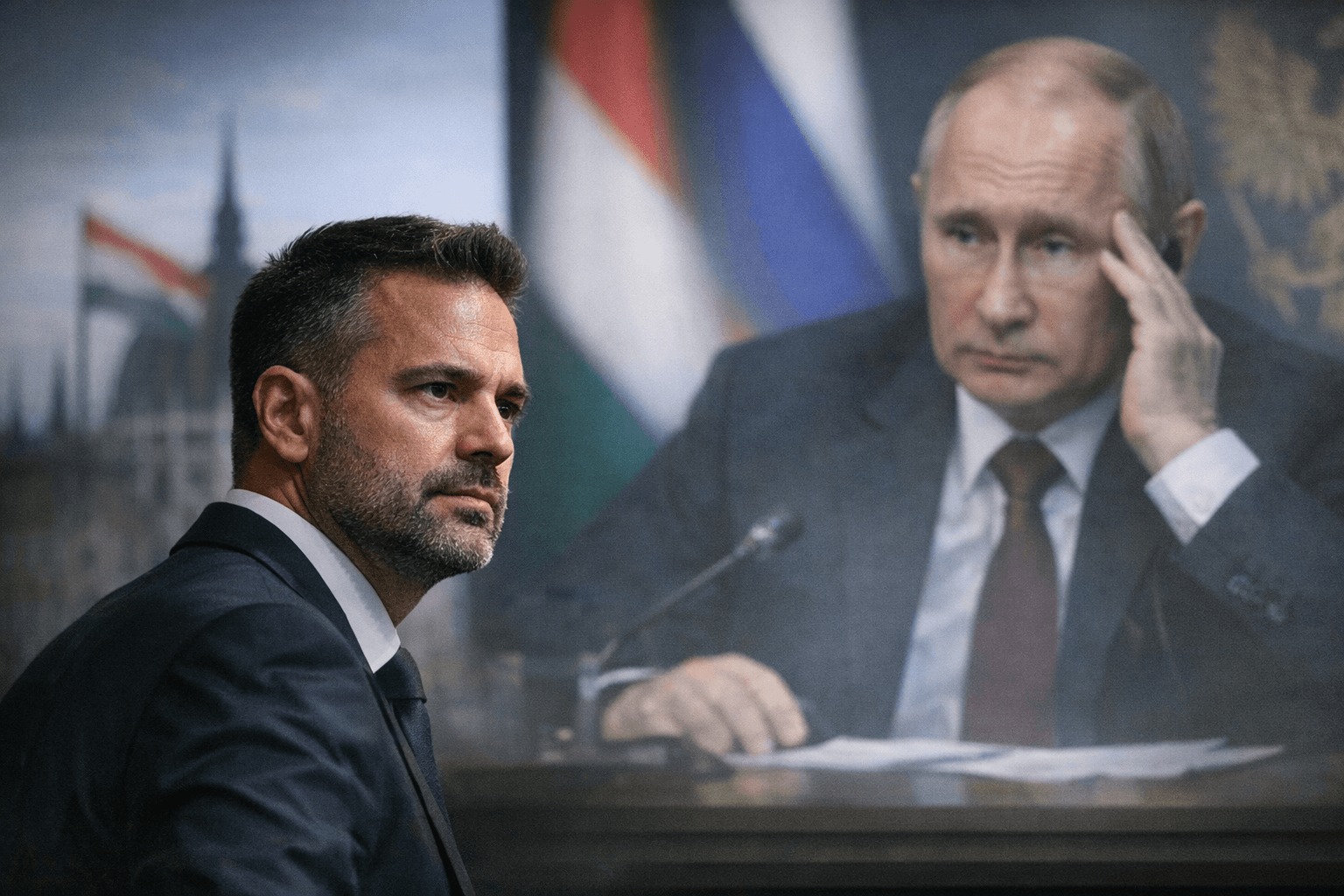
Péter Magyar signaled an immediate break with Viktor Orbán’s Kremlin-friendly posture on Monday, saying he would speak with Vladimir Putin if the Russian president called first and would use that conversation to press for an end to the war in Ukraine. Magyar made the remarks at his first news conference after his Tisza party’s landslide victory, a result that ended Orbán’s 16 years in power and opened the possibility of a rapid handover in Budapest.
The message was carefully calibrated. Magyar said he would not initiate contact with Putin, but he would answer a call if one came. He framed the issue in stark terms, saying he would tell Putin to stop the war and the killing. That is a different tone from Orbán’s highly personalized foreign policy, which made Hungary one of the European Union’s most Moscow-friendly governments and left Kyiv fighting not only Russia but also repeated obstruction from inside Brussels.
The shift matters well beyond rhetoric. Hungary had been blocking an EU plan for a 90 billion euro, about $105 billion, loan to Ukraine, money Kyiv says it urgently needs to fund the war. Magyar has signaled that his government would drop that opposition, a move that could help break one of the EU’s most persistent internal deadlocks over aid to Ukraine and sanctions pressure on Russia. If parliament moves quickly, he said, a new government could take office as early as May 5.
Ukraine moved fast to welcome the result. President Volodymyr Zelensky congratulated Magyar and said Kyiv was ready to deepen cooperation with Hungary. For Ukraine, the defeat of Orbán removed what had been one of its harshest foes inside the EU. For Brussels, it raised the possibility that Budapest might stop acting as a spoiler on sanctions, financial support and rule-of-law fights that have strained Hungary’s ties with European partners.
Even so, Magyar’s remarks still looked like an opening signal rather than a finished policy reset. He also said Hungary cannot ask any country to give up its territory, a line that places him closer to standard European sovereignty arguments than to Orbán’s transactional style. Whether that tonal shift becomes durable policy will depend on how much control Magyar can consolidate at home, and whether his new government can rebuild trust with the European Commission, secure leverage inside the EU, and turn a post-election rupture into an actual change in Hungary’s approach to Russia and Ukraine.
This article was produced by Prism’s automated news system from verified source data, official records, and press releases, then run through automated quality and moderation checks before publishing. The system is built and supervised by the people who set the standards it runs under. Read our full AI policy.
Did this article answer your question?

