Malinin's five quads clinch U.S. team skating gold as Norway surges
Ilia Malinin's decisive free skate lifted the U.S. to a 69-68 team victory over Japan; official pages note Norway piling up early gold medals at Milano–Cortina.

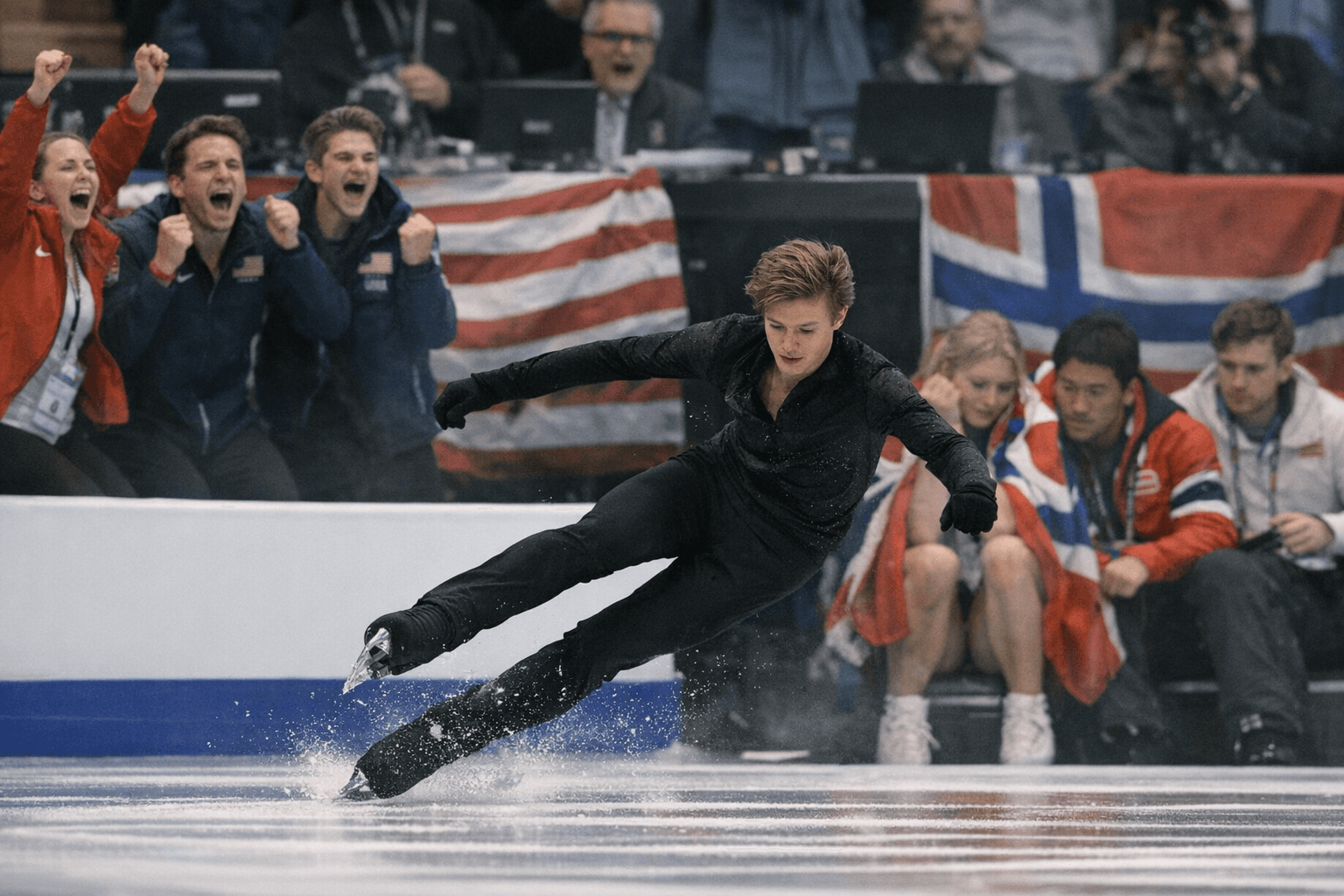
The United States successfully defended its Olympic figure skating team title in a dramatic finale at the Forum di Milano, with Ilia Malinin delivering the decisive performance that edged Japan 69-68 and left Italy with bronze on 60 points. With teams tied after seven of eight segments, the outcome came down to the last men's free skate, where Malinin landed five quadruple jumps and posted a 200.03 score that sealed victory.
Malinin, 21 and widely dubbed the "Quad God," atoned for a subpar short program by skating with the calm of a closer and producing the margin the Americans needed. His line summed up the pressure: "I was like, 'Okay, I'm the deciding factor. I need to just, you know, do what I need to do.'" Shun Sato of Japan followed and landed three quadruple jumps for 194.86, good for second in the segment but one point short in the team tally.
The head-to-head finish underscored both the sport's technical escalation and the razor-thin arithmetic of the team format, which assigns points across men's and women's singles, pairs and ice dance. NBC observed the event's denouement and the quick turnaround that followed: medals were hung around the necks of the seven U.S. skaters who participated barely 30 minutes after the competition ended at what NBC called the Milan Ice Skating Arena. AP captured the poignancy of the moment, noting, "It seemed only fitting that Ilia Malinin was the first one to get his Olympic gold medal after the U.S. successfully defended its team title."
Team USA's margin reflected contributions across disciplines. Pairs skaters Ellie Kam and Danny O'Shea delivered a near-flawless free skate with only two minor errors and a career-best total that provided crucial points; O'Shea, also serving as U.S. captain, admitted the nerves watching Malinin: "I was more nervous watching Ilia than I was skating myself." Ice dancers Madison Chock and Evan Bates won both of their programs, anchoring the team's rhythm and artistic scores. In the women's ranks, Amber Glenn, a late replacement for Alysa Liu in the free skate, stumbled to third in her segment, but the team's depth held. Italy's Matteo Rizzo offered "one of the best free skates of his career," according to ESPN, which helped the host nation secure bronze. Georgia finished fourth with 56 points; ESPN noted Georgia has never medaled at a Winter Games.
Beyond the immediate podium, the result has broader implications for the sport and the Olympics. Malinin's five quads reaffirm the premium on technical ambition, pushing federations and coaches to prioritize quad development at younger ages. That arms race raises questions about long-term athlete welfare, training investment and how programs balance risk with performance artistry. The tight finish also plays well commercially: a cliffhanger ending and star athletes in attendance, NBC noted Novak Djokovic among the crowd, amplify broadcast value and sponsor interest at a Games hungry for memorable, marketable moments.
The team event ran Feb. 6-8 and is among the earliest showcases of Olympians working in national ensembles rather than individual entries. It also carries a recent historical shadow: reallocation of medals from the 2022 team event after a doping disqualification altered standings and raised scrutiny over adjudication and athlete accountability. Official Milano–Cortina pages recorded a busy Day 2 and noted Norway continued to pile up early gold medals, a reminder that while figure skating delivered a headline-grabbing finale, the wider medal narrative at these Games remains in motion.
This article was produced by Prism’s automated news system from verified source data, official records, and press releases, then run through automated quality and moderation checks before publishing. The system is built and supervised by the people who set the standards it runs under. Read our full AI policy.
Did this article answer your question?