Mamdani's budget win relied on Albany help, savings and staffing cuts
Mamdani’s budget looked clean online, but the real work came from Albany aid, savings and staffing maneuvers that kept the deal together.

The viral headline did not tell the whole story
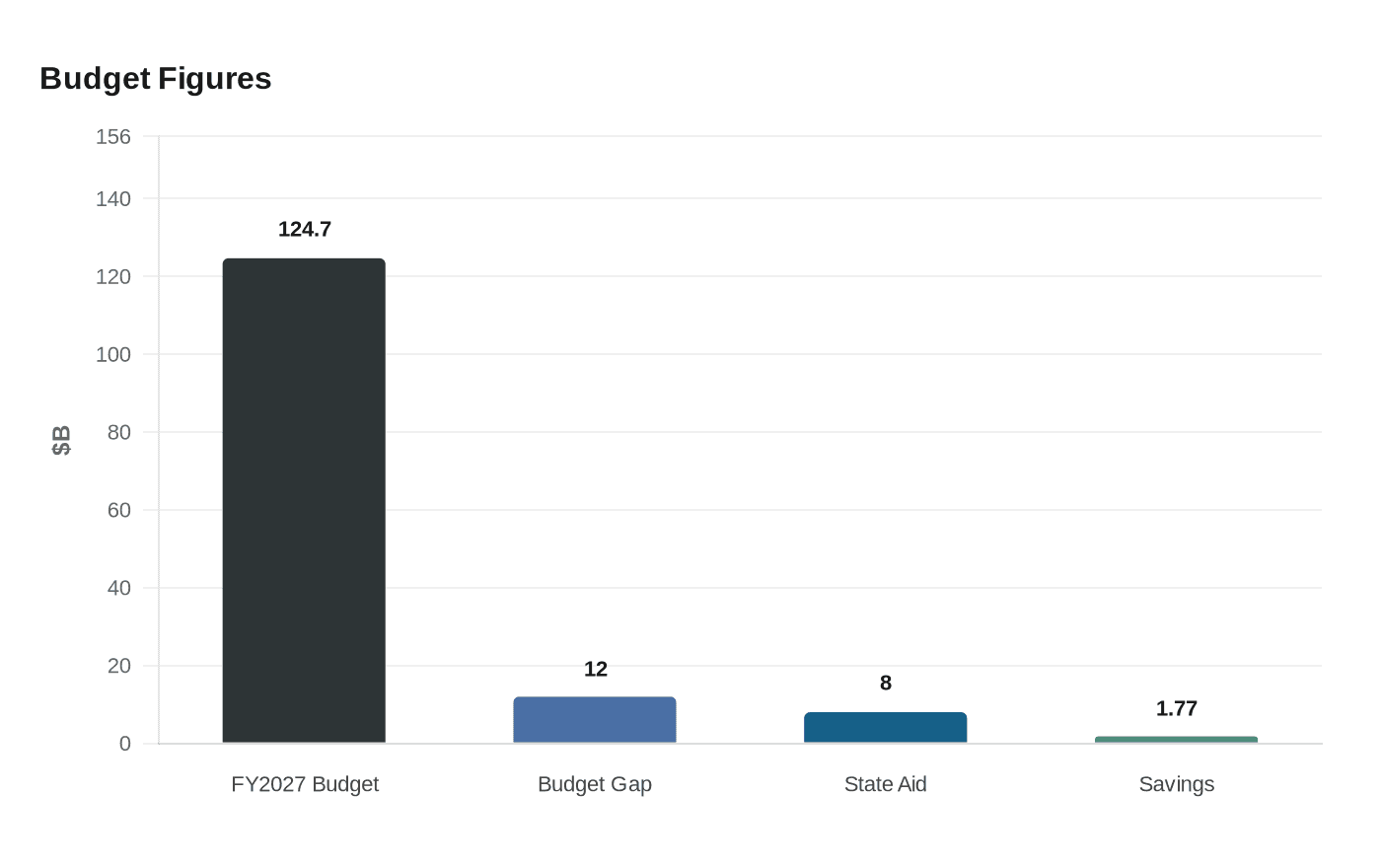
Zohran Mamdani’s $124.7 billion Fiscal Year 2027 Executive Budget landed like a political triumph online, but the polished image hid a more complicated municipal bargain. City Hall said it closed a historic $12 billion budget gap without raising property taxes, cutting services or drawing down long-term reserves. That is the surface-level story that traveled fastest on social media; the harder reality is that the budget balance depended on state help, internal savings and choices about staffing that are far less dramatic than a viral post.
The mayor’s office framed the budget as proof that Mamdani had protected services working people rely on. That message was simple, easy to repeat and politically resonant. But the actual budget process, with its dependency on Albany and its reliance on savings measures, shows how much of city budgeting is about negotiation, timing and tradeoffs rather than a single clean breakthrough.
Albany was central, not peripheral
The most important missing context is the scale and timing of state support. Gov. Kathy Hochul and state lawmakers announced an additional $4 billion in gap-closing aid on May 12, 2026, the same day Mamdani unveiled the executive budget. That brought total new state assistance to nearly $8 billion across two years, a level of help that made the final balance possible and underscored how much the city was still leaning on Albany.
That matters because the budget’s apparent neatness was not produced by city action alone. The administration could point to fiscal discipline, but the state contribution arrived just hours before the budget rollout, making it impossible to separate the city’s headline from the broader intergovernmental deal underneath it. In practical terms, the budget was not just a mayoral achievement; it was a negotiated settlement between City Hall and state government.
Savings and staffing changes did a lot of the work
City Hall also leaned heavily on savings initiatives. Officials said those efforts would save $1.77 billion across two fiscal years, and the mayor’s office emphasized an Executive Order requiring each city agency to designate a Chief Savings Officer. That is a significant administrative change, because it pushes every department to identify reductions and efficiencies rather than assuming the central budget office will find the money alone.
Just as important, the balance depended in part on not filling vacant positions. That is a common but often invisible budget tool, and it can look cleaner on paper than a direct service cut because it avoids immediate layoffs or program eliminations. Still, vacancies left unfilled are not free money in the long term. They can slow down agencies, leave service demand unmet and create pressure that returns in future budget cycles.
The budget cycle began in a far messier place
The executive budget did not emerge from calm conditions. Mamdani’s preliminary FY 2027 budget was released on February 17, 2026, only six weeks after he took office, and the city’s fiscal picture was already under strain. The New York City Independent Budget Office said the process was shaped by significant federal changes, ongoing New York State budget negotiations and questions about how accurately city expenses were being budgeted.
That context helps explain why the final budget cannot be read as a simple story of one administration cleaning up after another. Comptroller Mark Levine said the preliminary budget was more transparent and honest than the Adams-era approach, but he also warned that the city was under the greatest fiscal strain since the Great Recession. The message from the comptroller’s office was not that the problem was solved; it was that the city had started by acknowledging the scale of the challenge more directly than before.
What looked politically attractive and what actually matters
Some parts of the budget are built for social media, while others determine whether the city can function. The politically resonant pieces are easy to identify: no property-tax increase, no long-term reserve drawdown, no headline service slashing and a claim of restored fiscal health. Those elements communicate control and reassure voters that the administration is protecting day-to-day life.
The operational reality is more demanding. City services depend on whether savings targets are real, whether vacancies stay vacant, whether agencies can manage staffing reductions without breaking service delivery and whether Albany continues to close gaps when the city runs short. A budget that balances through aid and savings can still leave unresolved tensions about future years, especially if the underlying expense base remains hard to predict.
Why the framing matters beyond one budget
The broader lesson is that New York City budgeting has long involved underbudgeting expenses, leaning on state assistance and using short-term fixes to close recurring gaps. The Independent Budget Office and the comptroller both pointed to chronic expense underestimation under prior administrations, and the city’s own FY 2027 materials describe a major effort to re-estimate costs and find internal efficiencies. In other words, Mamdani’s budget is part of a familiar New York pattern, not a break from it.
That is why the online narrative can be misleading. A balanced executive budget looks decisive, but municipal governance is usually a sequence of compromises: with Albany, with agency staffing, with reserves and with the assumptions that shape future spending. The real test is not whether the budget can be declared balanced in a single news cycle, but whether those savings hold, whether services remain intact and whether the city has actually done enough to reduce the structural pressure that made a $12 billion gap possible in the first place.
Mamdani’s win was real, but it was also assembled from the oldest tools in New York budgeting. Albany helped pay the bill, savings closed part of the gap and staffing actions kept the numbers in line. What looked like a clean political moment was, in fact, a working demonstration of how city government survives: through negotiation, restraint and enough help from outside the five boroughs to keep the system moving.
Know something we missed? Have a correction or additional information?
Submit a Tip