Man sentenced to life plus seven years for Trump assassination attempt
Ryan Wesley Routh was sentenced to life plus 84 months for attempting to assassinate Donald Trump, underscoring security, legal and political ramifications.
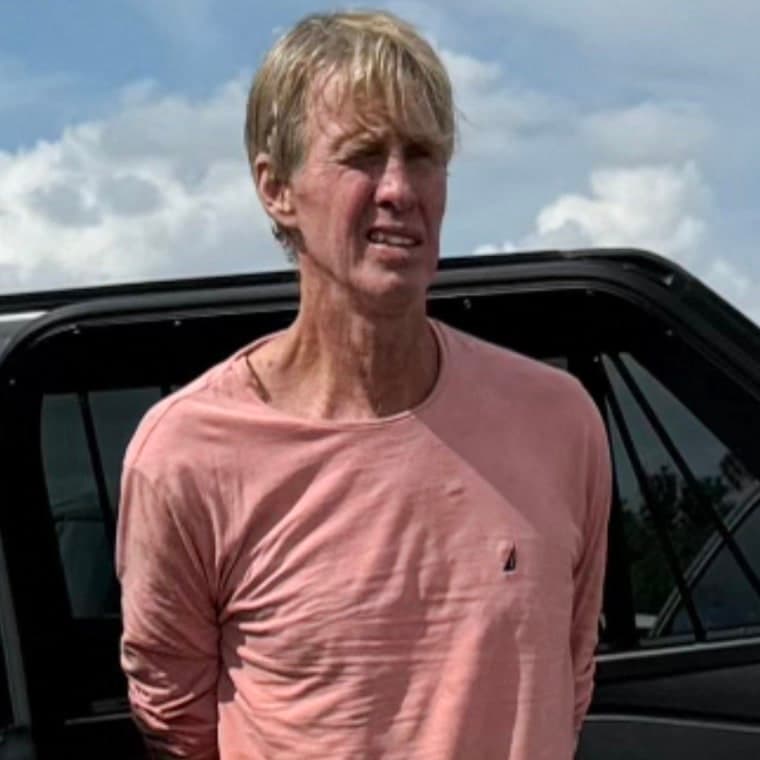
A federal judge sentenced Ryan Wesley Routh, 59, to life in prison plus 84 months on Thursday after a jury convicted him of attempting to assassinate then-presidential candidate Donald J. Trump and related firearms and violent-offense charges. The sentence, imposed by U.S. District Judge Aileen M. Cannon in Fort Pierce, Florida, follows a trial that produced what prosecutors called overwhelming evidence of a narrowly averted attack at Trump International Golf Club in West Palm Beach.
Court and prosecutorial filings recount that on Sept. 15, 2024 a U.S. Secret Service agent observed a rifle barrel protruding from bushes near the fifth hole. The agent fired, sending Routh fleeing the scene; he was arrested nearby. A federal jury later convicted Routh on all five counts in the indictment, including attempted assassination of a major presidential candidate and assaulting a federal law enforcement officer, along with multiple firearms offenses. The jury returned its guilty verdict on Sept. 23, court records show.
The Department of Justice said the sentence was life plus 84 months; court documents characterize the additional term as seven years on a gun charge, with other prison terms imposed for related offenses. Judge Cannon, in a sentencing memorandum, wrote that Routh “took steps over the course of months to assassinate a major Presidential candidate, demonstrated the will to kill anybody in the way, and has since expressed neither regret nor remorse to his victims,” language quoted from the court record.
Prosecutors framed the case as an attack on democratic process. Assistant U.S. Attorney John Shipley told the court, “American democracy does not work when individuals take it into their own hands to eliminate candidates. That’s what this individual tried to do.” The Department of Justice, through Attorney General Pamela Bondi, said in a press release that Routh’s “heinous attempted assassination of President Trump was not only an attack on our President - it was a direct assault against our entire democratic system. Thanks to our prosecutors in the National Security Division and the Southern District of Florida, Routh will never walk free again.”
Routh represented himself for much of the trial after dismissing attorneys, a strategy that produced erratic courtroom conduct and provocative statements. At trial he told jurors he was “incapable of pulling the trigger” and argued, “To merely have a weapon in the presence of another is not intent,” a line he used to portray his actions as a protest and to argue for leniency. After the jury returned its guilty verdict, Routh attempted to stab himself in the neck with a pen in the courtroom and was removed by U.S. marshals.
Defense counsel urged a reduced term at sentencing, arguing that a 27-year sentence would be sufficient because no one was physically injured in the incident. Court filings indicate the defense plans to appeal; attorney Martin Ross said he intends to pursue appellate review of the conviction and sentence.
Beyond the courtroom, the case highlights broader operational and fiscal consequences for campaign security and federal protection details. High-profile attempts on candidates typically prompt reassessments of Secret Service deployments and can raise the costs of protective measures for future campaigns and public events. For now, prosecutors framed the sentence as a deterrent and an affirmation of legal recourse against attacks on the political process.
This article was produced by Prism’s automated news system from verified source data, official records, and press releases, then run through automated quality and moderation checks before publishing. The system is built and supervised by the people who set the standards it runs under. Read our full AI policy.
Did this article answer your question?