Maricopa County power struggle fuels Arizona election fears before 2026 vote
A court fight over Maricopa County election control has collided with new voter-scrutiny tactics, rattling confidence in Arizona’s biggest county before the 2026 vote.
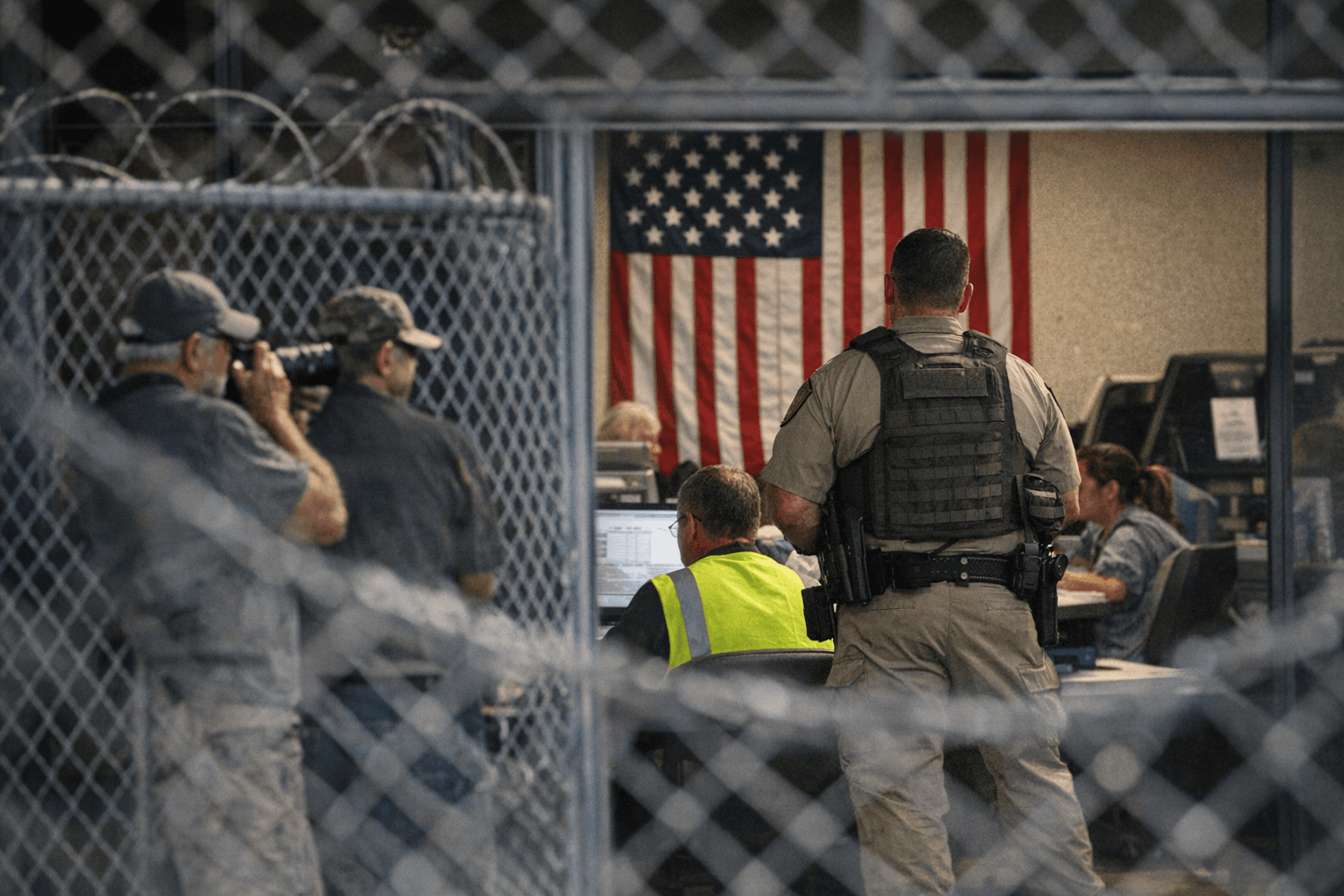
Maricopa County’s election machinery is now at the center of a high-stakes power struggle that reaches far beyond Arizona. With 4,689,558 residents as of July 1, 2025, the county is by far the state’s largest and includes Phoenix, making control of its vote-counting system a national proxy fight heading into the 2026 midterms.
The clash has sharpened as Arizona’s primary election approaches on July 21, 2026, followed by the general election on November 3. Republican Recorder Justin Heap, elected after campaigning as an election skeptic, has moved aggressively to expand his office’s role, while the Maricopa County Board of Supervisors has pushed back, arguing that Arizona law splits authority and preserves checks and balances.
On April 16 or 17, a Superior Court judge ruled in Heap’s favor and rejected the board’s claim of “plenary” authority over election administration as inconsistent with Arizona law. In Heap’s statement, the order would require the board to return control of IT staff, servers, databases, software and election systems, or pay to replace them. That decision escalated a fight that had already turned administrative questions into courtroom combat.
The dispute is unfolding alongside Heap’s efforts to tighten scrutiny of mail ballots and voter rolls. He has installed a controversial system for checking signatures on mail ballots and used a federal database to search for possible noncitizens in voter records. Local reporting on March 17 said Heap planned to refer suspected noncitizen voters identified through the federal system to law enforcement and change their registration status, a plan that election lawyers and experts said raised questions about whether his office was following the correct legal process.
Records also showed Heap directly corresponded with U.S. Department of Justice officials about election records and litigation, including communications that suggested support for the Trump administration’s investigation into Maricopa County’s elections. That has deepened the sense that the county is again being pulled into the national post-2020 fight over who controls election machinery, what records can be demanded, and how far local officials can go in the name of election integrity.
Arizona law adds another layer of complexity. Under A.R.S. § 16-407, certain county election personnel must be certified by the Arizona secretary of state before performing election duties, underscoring that even in a local dispute, the rules are tightly regulated at the state level.
State Sen. Lauren Kuby said the infighting is sowing confusion and distrust, warning that voters could reasonably feel uneasy when the officials responsible for elections are fighting each other. That concern is especially acute in Maricopa County, long treated as the epicenter of election conspiracy theories after the 2020 and 2024 controversies.
The stakes are broader than one county office. Arizona is expected to have at least two competitive U.S. House races in November, while Democrats are defending the governor’s office, the attorney general’s office and the secretary of state’s office. In a state where election administration can shape trust in the entire system, the Maricopa County fight has become a warning sign for how routine management disputes can become partisan flashpoints before a decisive election year.
This article was produced by Prism’s automated news system from verified source data, official records, and press releases, then run through automated quality and moderation checks before publishing. The system is built and supervised by the people who set the standards it runs under. Read our full AI policy.
Did this article answer your question?

