Markets steady after AI‑driven rout as thin holiday trading soothes volatility
Global stocks steadied after a late‑week AI‑linked selloff, with light holiday trading and easing inflation data calming nerves. Market snapshots differ by reporting time.
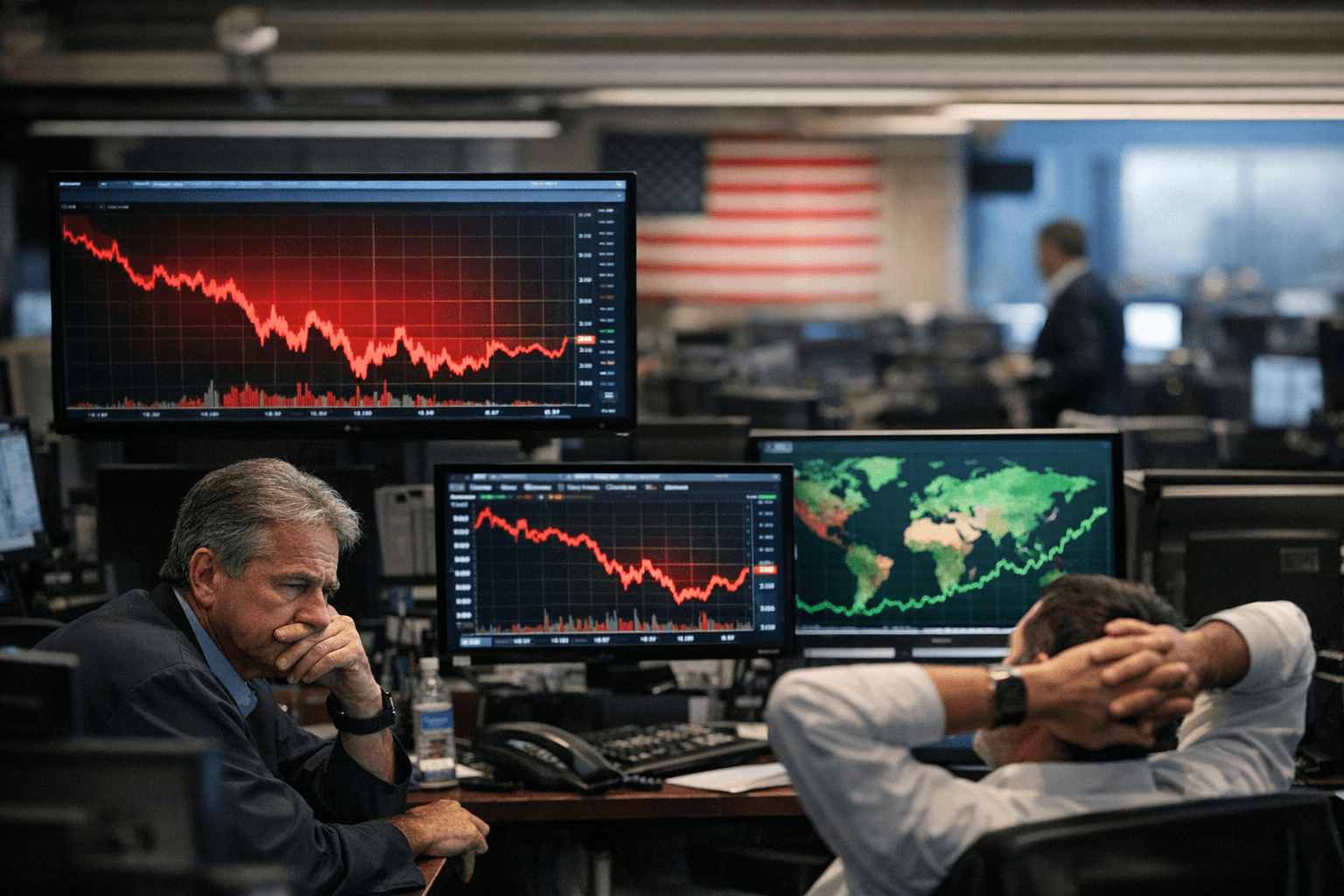
Global equity markets steadied Monday after a sharp selloff late last week that investors tied to worries about artificial intelligence and its regulatory fallout. Trading volumes were light because several markets were in seasonal or holiday thinness, a factor that traders said amplified swings and helped produce differing intraday snapshots.
U.S. markets showed a mixed but calmer profile after an encouraging inflation update. One read of Friday’s action described the S&P 500 as barely budging, the Dow Jones Industrial Average rising about 48 points, or 0.1 percent, and the Nasdaq slipping roughly 0.2 percent. An alternate early‑morning snapshot from the same session showed the S&P down 0.1 percent, the Dow off 76 points, or 0.2 percent, and the Nasdaq lower by roughly 0.3 percent. Traders pointed to the timing of those reads to explain the variations; the prior day’s selloff was more abrupt, with the S&P plunging about 1.6 percent and the Nasdaq falling about 2 percent in one measure.
Market sentiment improved after data showed inflation slowed more than economists expected: consumer prices were reported about 2.4 percent higher year‑on‑year. Treasury yields eased in one sequence of readings, with the 10‑year yield slipping to about 4.06 percent from 4.09 percent and the two‑year dropping to roughly 3.41 percent from 3.47 percent. Economists and portfolio managers said slower inflation could give the Federal Reserve more leeway to cut interest rates later in the year, though officials have paused cuts for now because lower rates could rekindle inflation.
The selloff targeted firms perceived as most vulnerable to AI disruption, producing sharp moves in individual names. AppLovin lost nearly a fifth of its value on Thursday despite reporting stronger‑than‑expected profit; its reported Friday rebound varied by read, cited as a 6.4 percent climb in one snapshot and a 1.3 percent gain in another. Trucking and freight stocks tumbled after a small company said its AI platform “helps customers scale freight volumes by up to 400% ‘without a corresponding increase in operational headcount.’” C.H. Robinson plunged 14.5 percent on Thursday and was reported to have recovered either 4.9 percent or 1.7 percent on Friday in different snapshots. Cisco fell about 12.3 percent despite beating quarterly expectations, and SoftBank dropped 8.9 percent even after reporting a $1.6 billion quarterly profit tied in part to its OpenAI‑related investments.
European markets opened broadly steady. The FTSE 100 opened at about 10,411.16, up 0.1 percent, while the FTSE 250 rose roughly 0.2 percent. Paris and Frankfurt showed marginal moves, with the CAC 40 cited as down roughly 0.2–0.3 percent and the DAX broadly flat to up slightly. Relx reported higher 2025 revenue and profit, lifted its dividend and committed to further buybacks, with Chief Executive Erik Engstrom saying AI “is enhancing, rather than threatening, the company's data analytics and software offerings by enabling greater functionality and cost discipline.” Smaller U.K. names saw sharper swings; SkinBioTherapeutics plunged after its CEO resigned amid an investigation.
Asia ex‑U.S. also felt the shock: Hong Kong’s Hang Seng fell about 1.7 percent to near 26,567, Shanghai slid about 1.3 percent, and Tokyo’s Nikkei eased roughly 1.2 percent. Australia’s S&P/ASX 200 and India’s Sensex each traded more than 1 percent lower. Observers noted that the week’s moves reflected a market “shoot first, ask questions later” mentality toward AI risk, underscoring that volatility may persist even as lighter holiday trading temporarily calms price action.
This article was produced by Prism’s automated news system from verified source data, official records, and press releases, then run through automated quality and moderation checks before publishing. The system is built and supervised by the people who set the standards it runs under. Read our full AI policy.
Did this article answer your question?