OpenAI vows revisions to Pentagon deal after staff protests and app uproar
OpenAI said it will amend a Friday Pentagon agreement on Monday, March 3, adding explicit bans on domestic surveillance and excluding intelligence agencies unless modified.
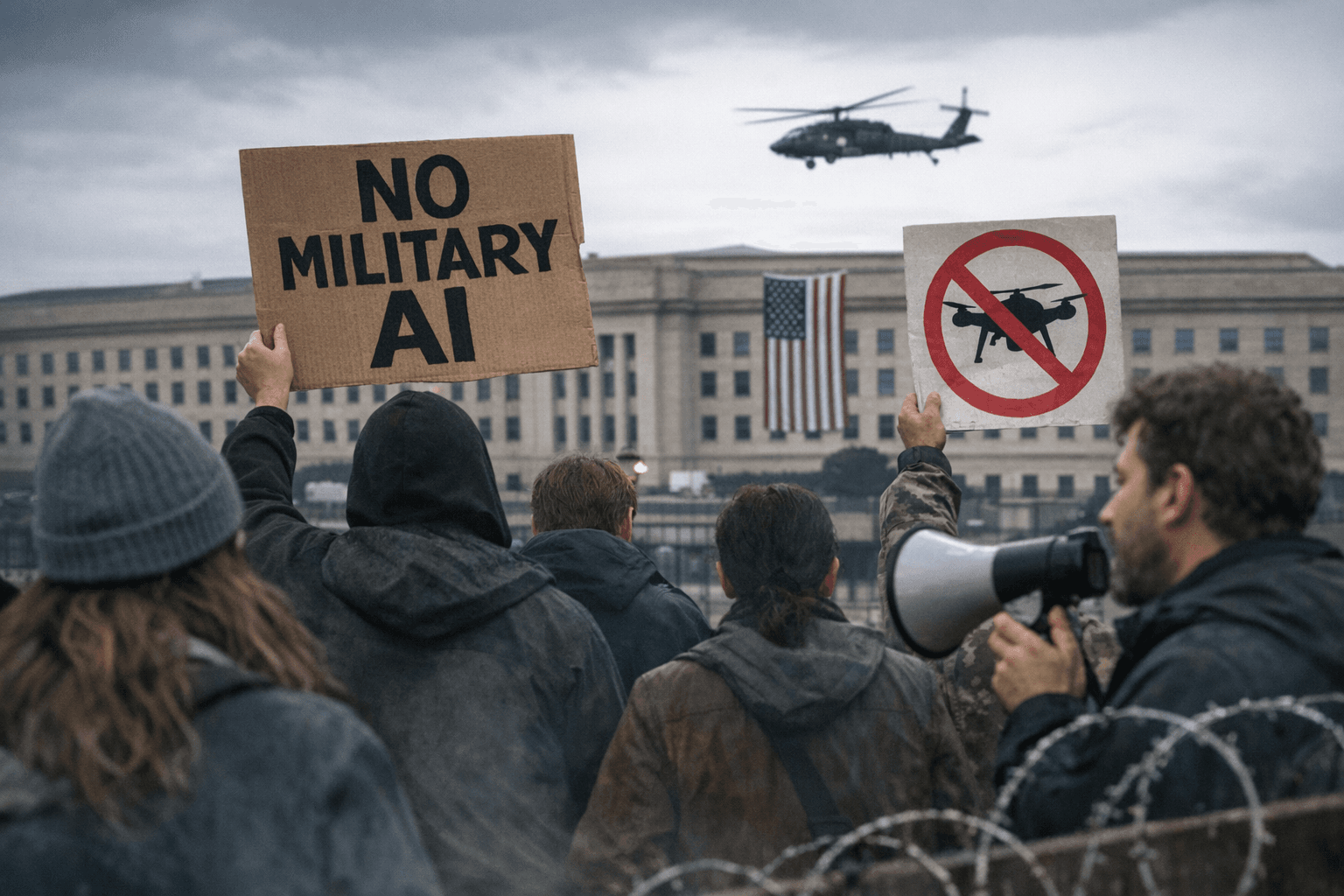
OpenAI announced on Monday that it would rewrite parts of a recently disclosed agreement with the Pentagon after intense staff protests, public demonstrations and a sharp spike in user anger that reportedly drove a 295% day-over-day jump in ChatGPT mobile app uninstalls over one weekend. The company said it will add explicit prohibitions on domestic surveillance of U.S. persons and restrict defense intelligence use without a further contract modification.
The original agreement, disclosed on a Friday, would have placed OpenAI models on classified military networks after Anthropic was dropped amid a dispute over surveillance and autonomous weapons. Sam Altman, OpenAI's chief executive, acknowledged the rollout had been rushed. In a memo reposted on X, Altman wrote, “We have been working with the DoW to make some additions in our agreement to make our principles very clear.” He told staff, “We shouldn't have rushed to get this out on Friday. The issues are super complex, and demand clear communication. We were genuinely trying to de-escalate things and avoid a much worse outcome, but I think it just looked opportunistic and sloppy.”
Internal documents reposted by Altman include new contract wording that one line reads: “the AI system shall not be intentionally used for domestic surveillance of U.S. persons and nationals.” Another passage in the amended language says, “For the avoidance of doubt, the Department understands the limitation to prohibit deliberate tracking, surveillance, or monitoring of U.S. persons or nationals, including through the procurement or use of commercially acquired personal or identifiable information.” OpenAI said it and the Pentagon will work jointly on technical safeguards to enforce those limits.
OpenAI also said the contract excludes defense intelligence components unless there is a follow-on modification. Katrina Mulligan, head of national security partnerships at OpenAI, said defense intelligence components are excluded from this contract and that she would be open to future work with the National Security Agency “if the right safeguards were in place.” Altman wrote the Department “affirmed that our services will not be used by Department of War intelligence agencies (for example, the NSA).” He also stressed that “It is critical to protect the civil liberties of Americans.”
The announcement came amid visible public pushback. Hundreds of protesters joined a “March Against The Machines” demonstration in London that marched from OpenAI’s offices to other tech headquarters, and employees at multiple companies raised objections internally. The uproar followed the Pentagon’s move to designate Anthropic, which had resisted selling technology for surveillance and autonomous weapons, as a supply-chain risk, a designation that drew sharp attention from lawmakers and activists.
OpenAI said in a separate statement that its revised deal included “more guardrails than any previous agreement for classified AI deployments, including Anthropic's.” The company has not published the full amended contract language in a single, publicly accessible text, leaving open questions about enforcement mechanisms, audit rights, and the precise procedural steps required for any “follow-on modification” that would permit intelligence-agency access.
For now, the company’s revisions are intended to blunt employee and public protests and to set explicit legal boundaries around how its models can be used by the Defense Department. The dispute underscores how quickly commercial AI developers, the Pentagon and civil liberties advocates are colliding over where and how advanced models should be deployed, and it leaves open whether tightened contract language and joint technical safeguards will be sufficient to restore trust.
Know something we missed? Have a correction or additional information?
Submit a Tip