Markets surge as Strait of Hormuz deal eases energy fears
Oil sank and stocks jumped after Trump said the U.S. had reached a peace deal with Iran, but drivers were still paying $4.07 a gallon.

Wall Street reacted in minutes, but the relief at the pump will take far longer. U.S. stock futures jumped and crude prices fell sharply after Donald Trump said the United States had reached a peace deal with Iran and that the Strait of Hormuz would reopen, yet analysts said gasoline and household energy bills may stay elevated even if the headline risk fades.
The agreement, if it holds, would reopen a chokepoint that carries roughly 20% of global crude supply and end the U.S. naval blockade there. Trump said the deal was complete and that a signing ceremony would take place Friday in Switzerland, while Pakistani Prime Minister Shehbaz Sharif said Pakistan helped mediate the talks. The White House did not immediately offer more detail, top Iranian officials had not publicly commented, and the structure of the deal remained unclear, including whether Iran must give up its nuclear program or allow enriched uranium to be removed from the country.

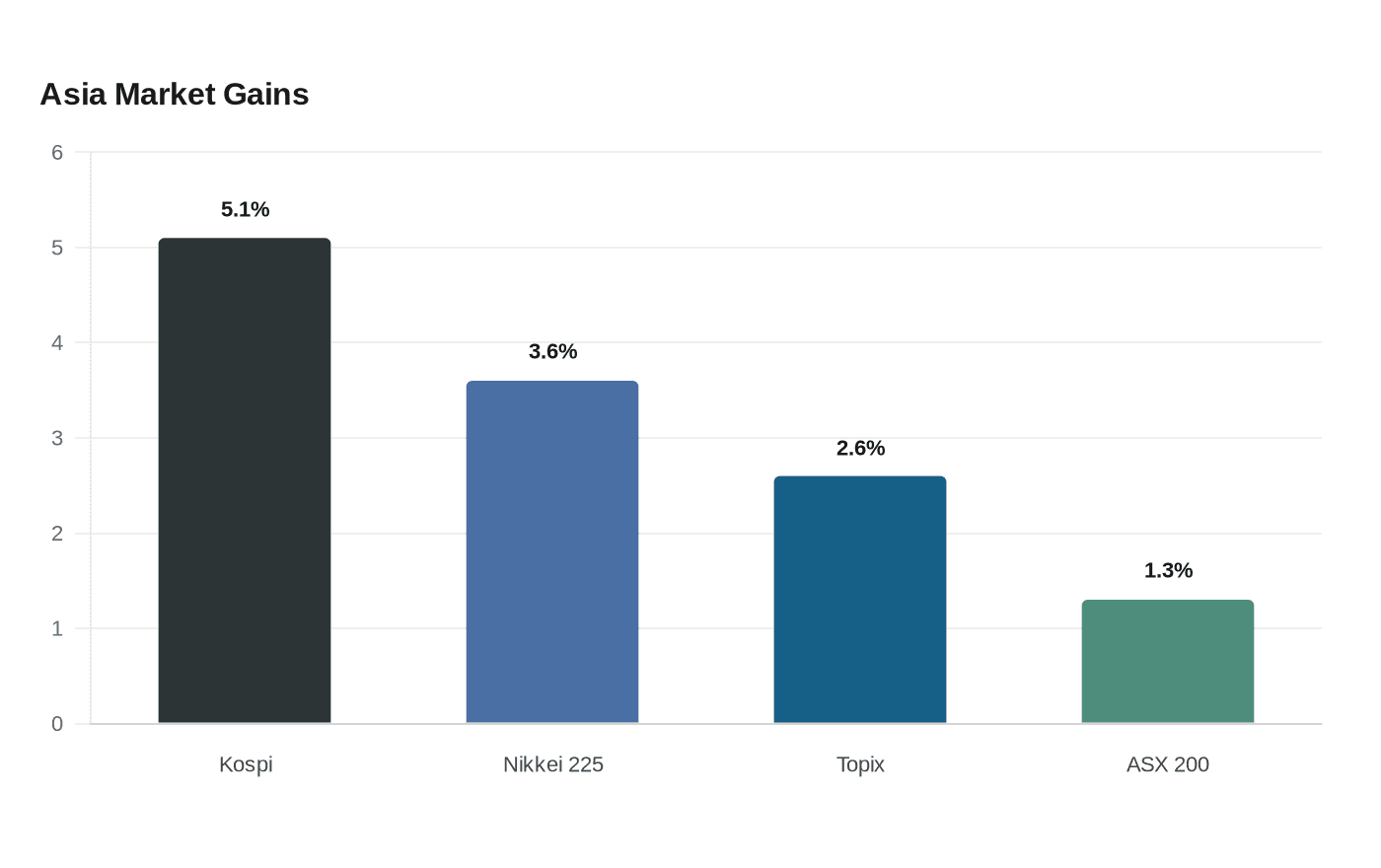
Markets moved as if a major risk premium was being stripped out of prices. West Texas Intermediate crude dropped more than 5% to nearly $80 a barrel, and Brent fell $4.22, or 4.8%, to $83.11. S&P 500 futures rose between 0.8% and 1.2% in reported trading. In Asia, the Kospi gained 5.1%, Japan’s Nikkei 225 climbed 3.6%, the Topix rose 2.6% and Australia’s S&P/ASX 200 added 1.3%. The rally followed months of volatility tied to the Iran war and the effective closure of Hormuz in late February.
Even so, traders and shipping firms are not likely to rush back all at once. Eurasia Group analysts said it could take several weeks for tanker traffic through the strait to recover to even 50% of pre-war levels, and insurers may wait for proof that the agreement endures. Trump’s announcement also landed after more than 30 prior signals over nearly three months that a deal was near, keeping the market primed for a headline reversal.
Consumers are still living with the damage. GasBuddy’s Patrick DeHaan said average U.S. gasoline prices fell below $4 a gallon on Sunday for the first time since April 20, but CBS News said the national average was still $4.07 on Monday, down from $4.53 a month earlier and 37% above pre-war levels. May inflation hit its highest level in more than three years, with energy prices accounting for more than 60% of the monthly CPI increase, and Capital Economics said the deal would not prevent inflation from rising a bit further in the near term or avert some economic damage during the third quarter.
This article was produced by Prism’s automated news system from verified source data, official records, and press releases, then run through automated quality and moderation checks before publishing. The system is built and supervised by the people who set the standards it runs under. Read our full AI policy.
Know something we missed? Have a correction or additional information?
Submit a Tip
