Maryland Gov. Wes Moore Speaks Out on Face the Nation
Maryland's Wes Moore called Trump's suggestion that states absorb Medicaid and Medicare costs "nonsense" and revealed he pulled $63M from state reserves to protect SNAP.
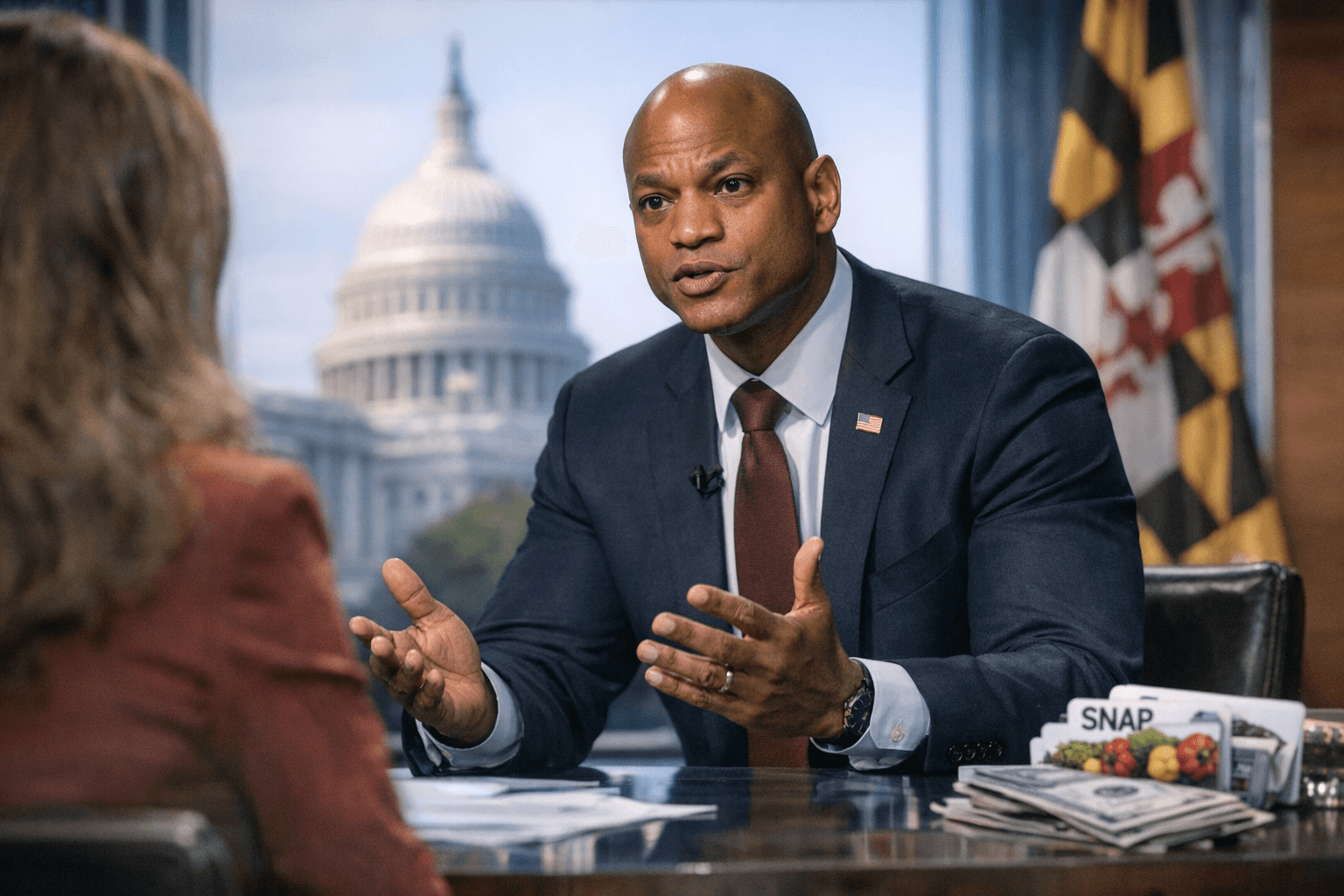
Maryland Gov. Wes Moore used a nationally televised interview Sunday to deliver three pointed messages: the federal government cannot legally or morally offload safety-net programs onto states, Maryland has already gone to court and won to prove it, and the war in Iran represents a triple broken promise that Democrats should not let the White House escape.
The interview aired on "Face the Nation with Margaret Brennan" on April 5, moderated by senior White House and political correspondent Ed O'Keefe. It was taped on April 3. Moore, the nation's only sitting Black governor and a decorated combat veteran who served in Afghanistan as an officer in the 82nd Airborne Division, positioned himself as someone with both executive standing and battlefield credibility to challenge the current administration on two fronts simultaneously.
The most direct clash came over a statement President Trump made at an Easter luncheon Wednesday. Trump told that gathering that "it's not possible for us to take care of day care, Medicaid, Medicare, all these individual things" and suggested states handle those programs while the federal government focused solely on military protection. Moore did not hedge his response. "That's nonsense," Moore said. "And that's not what any of us want. We don't want to be fighting foreign wars while you're taking away our health care."
When O'Keefe pressed whether a state could actually finance Medicaid, Medicare, or child care without Washington, Moore's answer was a flat no, followed by a concrete example of what happens when the federal government tries to make states absorb those costs anyway. The previous year, when the White House attempted to cut SNAP, Maryland sued, won in court, and then watched the administration try to appeal the ruling. Rather than wait for the next legal round, Moore pulled $63 million from Maryland's fiscal responsibility fund, a reserve built from capital gains taxes, to maintain SNAP benefits for state residents. "It is an unfair ask to ask us to take on what should be a joint responsibility, because the federal government has decided to stop doing its job," Moore said.
That posture distinguishes Moore from Democratic governors who have largely confined their resistance to press statements and legal filings. Moore is spending state reserves and framing it as a moral obligation, a signal that he intends to govern as though federal retreat is permanent, not temporary.
On the Iran war, Moore used his military biography deliberately. He argued Trump had made three core promises to voters: bring prices down, release the Epstein files, and stay out of foreign wars. "Strike one, strike two, strike three," Moore said, arguing the administration had failed on all three counts. He went further, warning that the U.S. had entered the conflict without dismantling what he called preconditions for success. Moore argued the war began while the administration had "obliterated" USAID and American soft power abroad, and while the Department of Homeland Security, "whose job it is to keep the homeland safe, is shut down."
Moore said the president "still does not have a full articulation as to why gas prices are going up in the first place, or what's going to be necessary or required to be able to bring them down." That framing, tying war costs directly to household energy bills, is a sharper economic argument than most Democratic governors have made publicly and one that connects foreign policy to the kitchen-table concerns O'Keefe opened the interview with: rising gas prices, climbing mortgage rates, and falling mortgage applications.
Moore is up for re-election in Maryland in 2026. His willingness to plant a state flag on federal spending fights, and to do so with a $63 million price tag attached, suggests he sees those fights as politically advantageous, not just morally necessary. With Congress moving toward a budget reconciliation process that could further squeeze Medicaid and nutrition assistance, the argument Moore made Sunday will only grow louder in the months ahead.
This article was produced by Prism’s automated news system from verified source data, official records, and press releases, then run through automated quality and moderation checks before publishing. The system is built and supervised by the people who set the standards it runs under. Read our full AI policy.
Know something we missed? Have a correction or additional information?
Submit a Tip