McDonald’s Uses Hamburger University to Standardize Blended Frontline Training
McDonald’s standardizes frontline training through Hamburger University, pairing shoulder-to-shoulder coaching, certified crew trainers and e-learning to speed productivity and career progression.
McDonald’s trains its frontline crews with a standardized, blended learning system that pairs in-restaurant coaching with digital modules and Hamburger University curricula to get new hires productive and on a clear path to management.
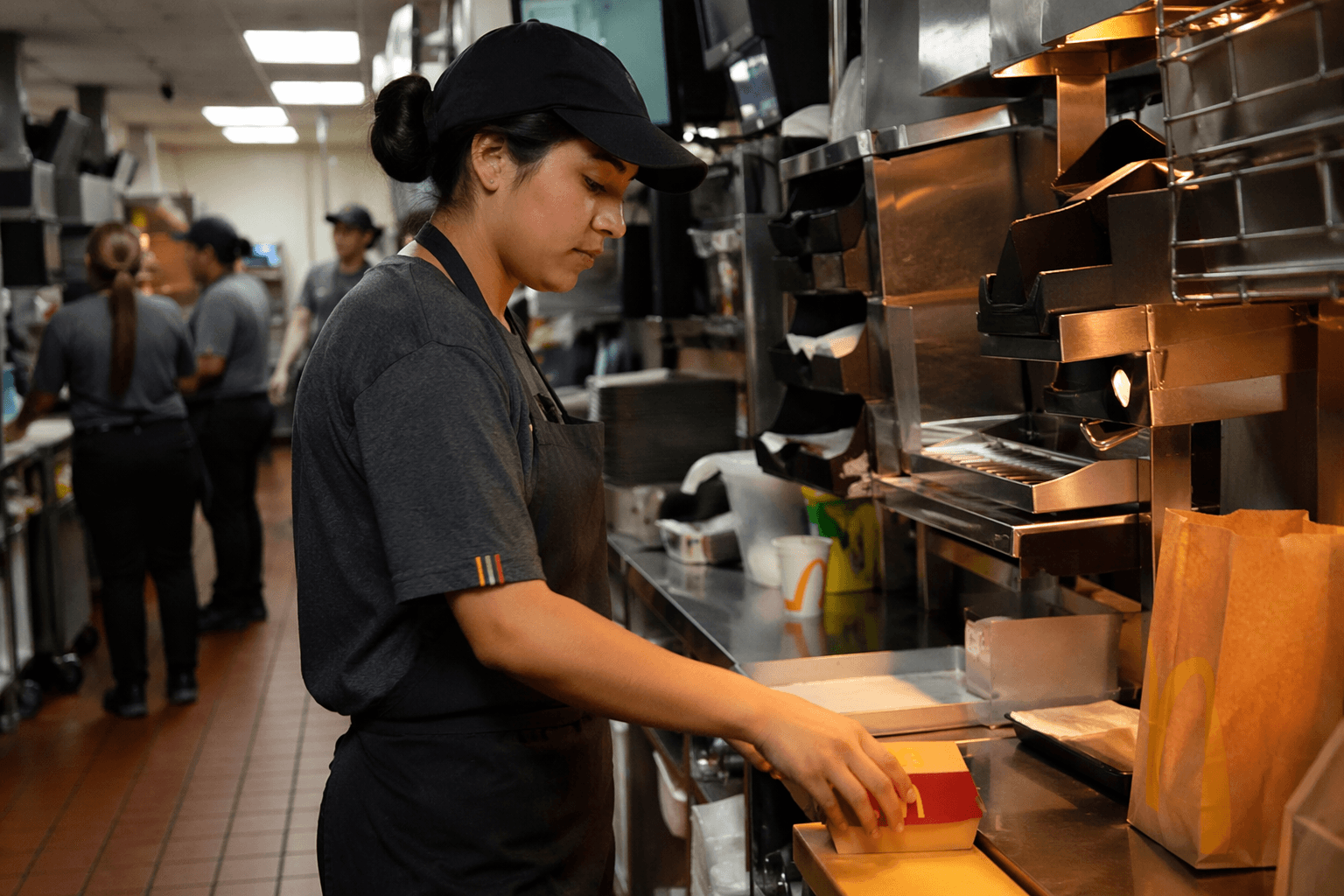
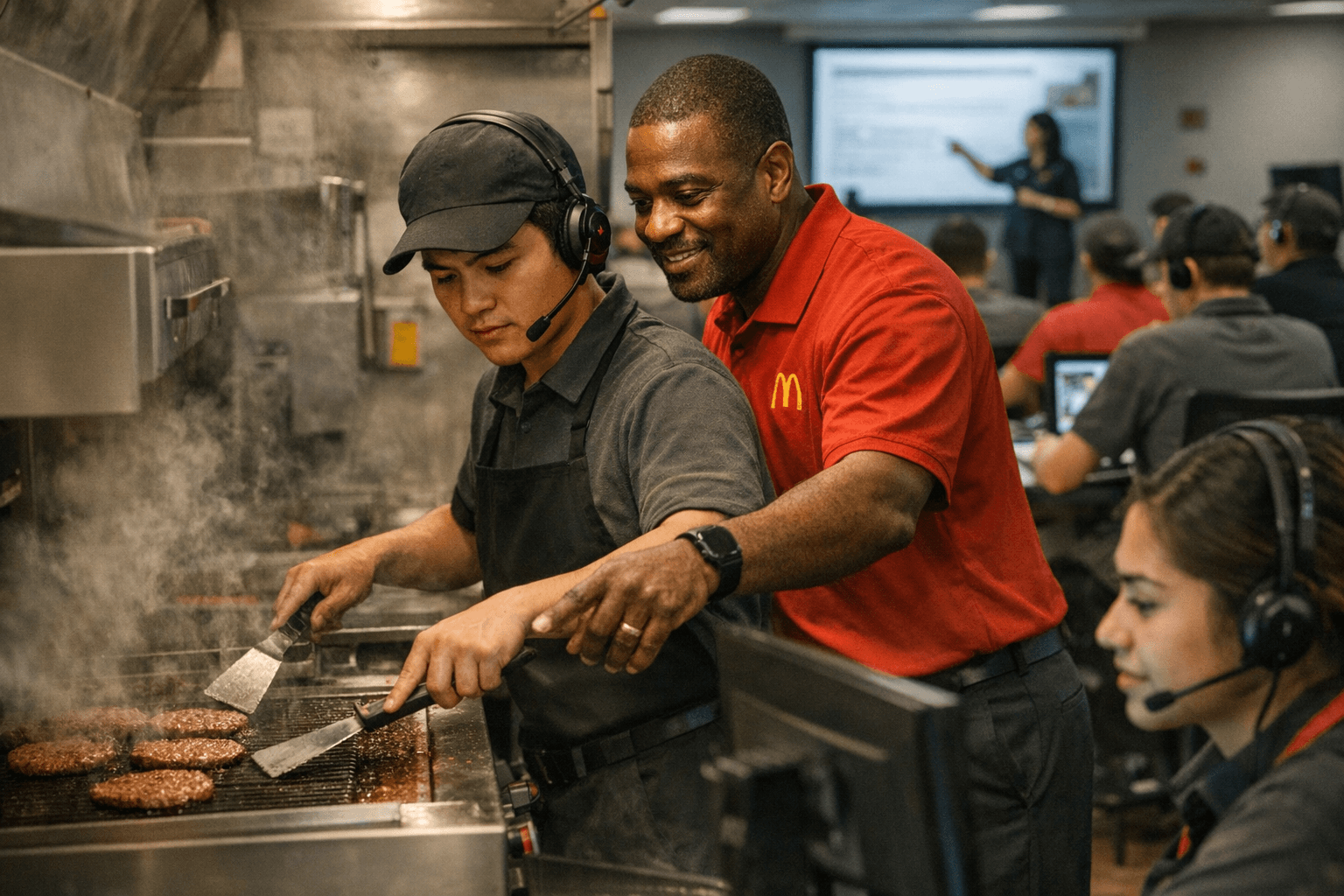
A case study document titled "Integrating e-Learning into McDonald’s Worldwide On-the-Job Restaurant Learning System" describes the model as “redesigned to incorporate a blend of e-learning and shoulder-to-shoulder coaching and verification for restaurant crew and a blend of e-learning online modules and classroom training at Hamburger University for managers.” At the crew level, training combines certified Crew Trainers guiding trainees through modules and performance support tools in a hands-on coaching environment while e-learning supplements conventional materials. “The e-learning modules for crew included both electronic performance aids and off-line electronic learning modules,” the document notes, and it stresses that “the essential four-step process for crew training was not changed.”
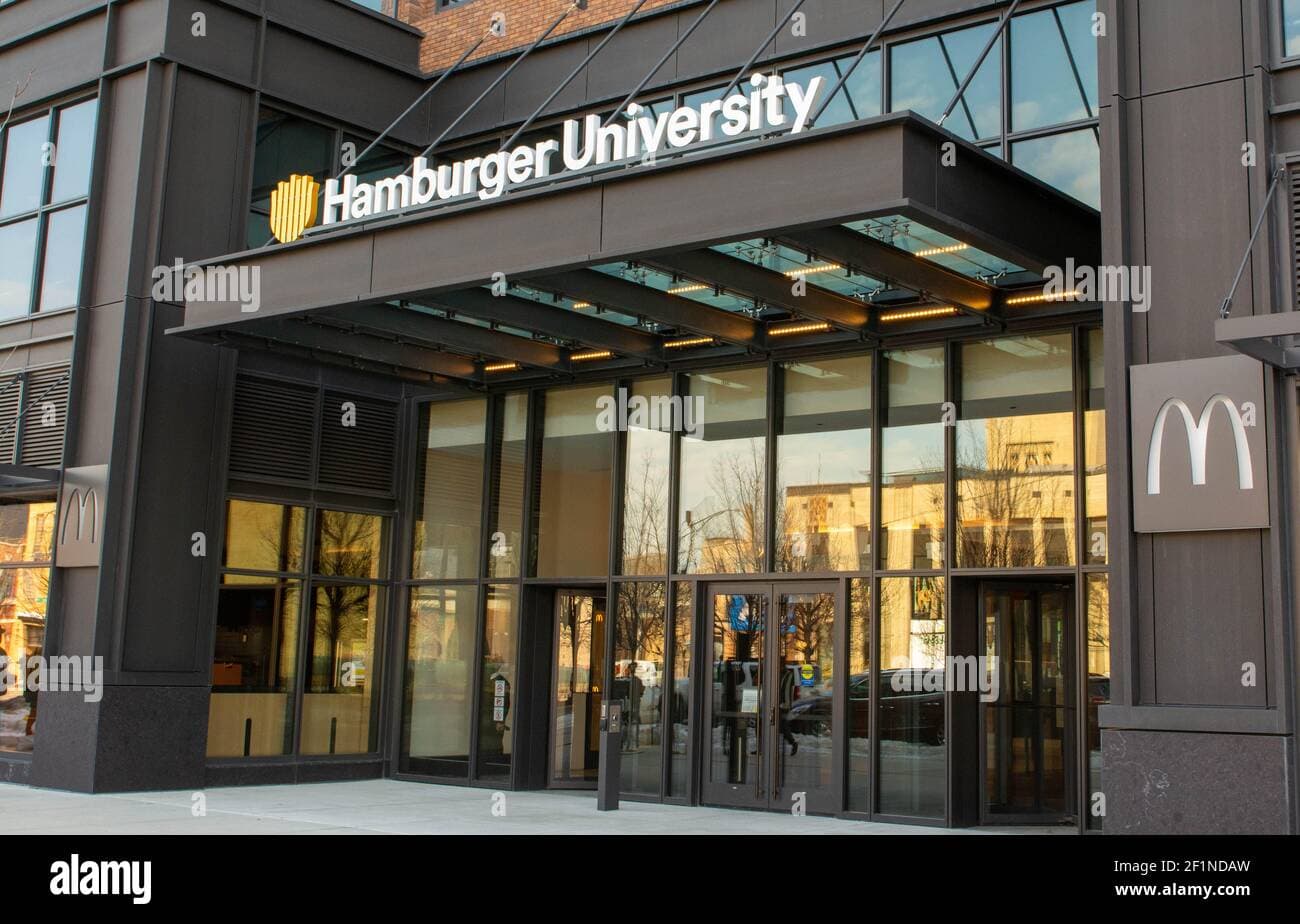
The company and its training arm frame the system as both operational and career-focused. Hamburger University is described on McDonald’s corporate site as “recognized as McDonald’s global centre of excellence for operations training and development, with numerous campuses in Chicago, Hong Kong, Sydney, Hamburg, Tokyo, China, Singapore and Dubai, among others.” Standard training materials were provided from Hamburger University at McDonald’s World Headquarters in Oak Brook, Illinois, helping ensure consistent food preparation and service procedures across markets.
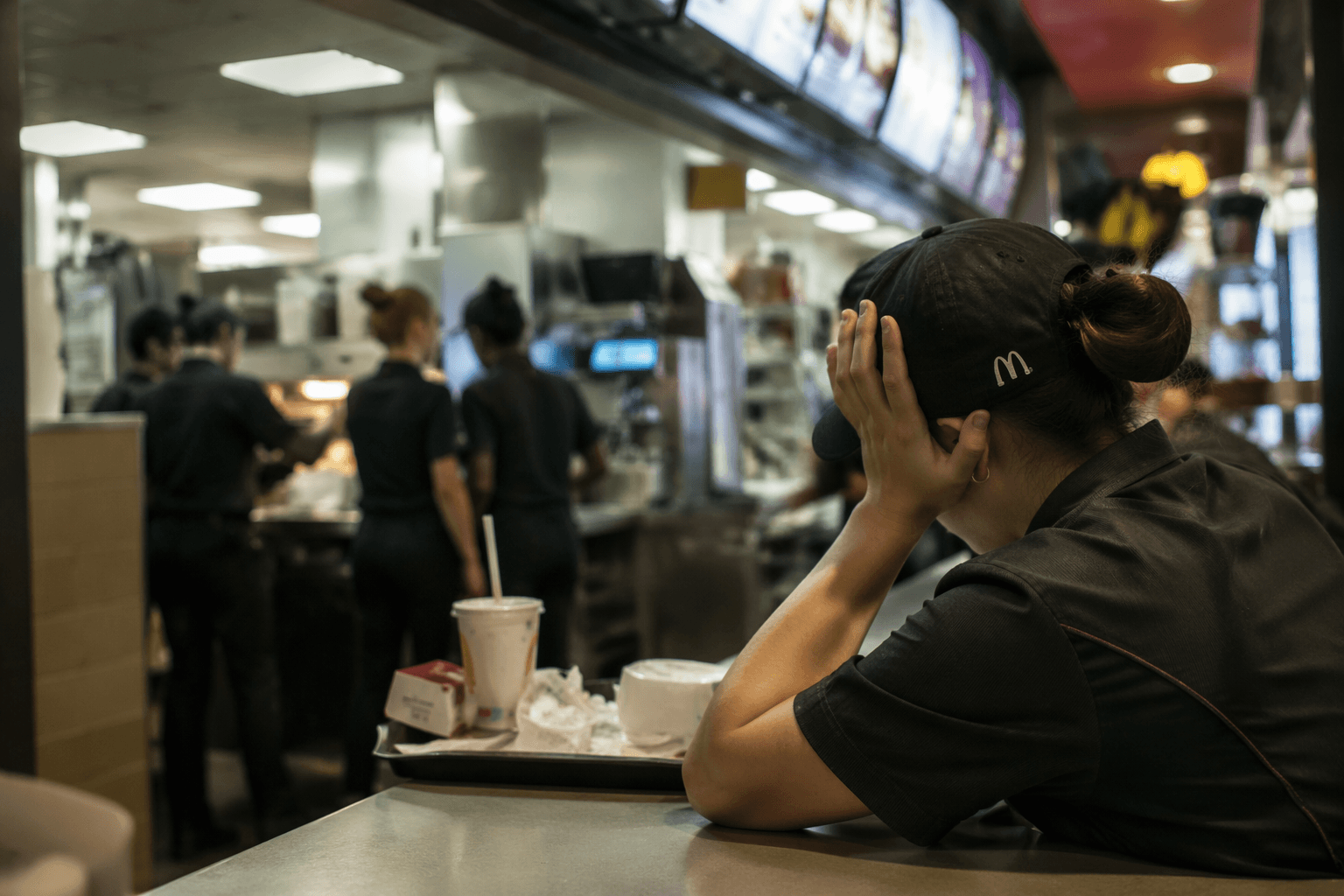
The blended program is designed for scale. The case study points back to 2001 when McDonald’s operated in 110 countries with about 1.5 million restaurant employees, a workforce that the document said experienced more than 100 percent turnover and spoke 28 different languages. That mix of scale, churn and linguistic diversity helps explain why a standardized approach that keeps the core four-step process intact while adding electronic aids appealed to McDonald’s operations leaders. The case study also concludes the system “had been effective and, in fact, copied by many other retail businesses as a model of best practices.”
For employees, the practical effects are straightforward. The case study reports that “This training typically takes approximately two months before the trainee has mastered all of the learning requirements,” signaling a defined runway to basic competency. McDonald’s corporate messaging underscores career opportunity: “We value our employees, their growth and contributions. Therefore, all our employees are well trained and appreciated for the work they do,” and the company highlights programs that aim to move crew into management positions while they learn.
The blended model ties store-level coaching and crew certification to a global center that keeps menus and processes consistent across markets. For frontline workers, that means clearer expectations, standardized performance supports and a more visible route to promotion. For managers and operators, the system offers a repeatable way to staff high-turnover locations. As companies continue to mix digital learning with in-person coaching, McDonald’s long-standing model will remain a touchpoint for how to train large, multilingual frontline workforces at scale.
This article was produced by Prism’s automated news system from verified source data, official records, and press releases, then run through automated quality and moderation checks before publishing. The system is built and supervised by the people who set the standards it runs under. Read our full AI policy.
Did this article answer your question?