Mediation fails in Franco-German fighter jet dispute, project remains stalled
The FCAS mediation collapsed as France and Germany failed to bridge a fight over who leads a program worth about 100 billion euros. Berlin now faces a decision by Tuesday.
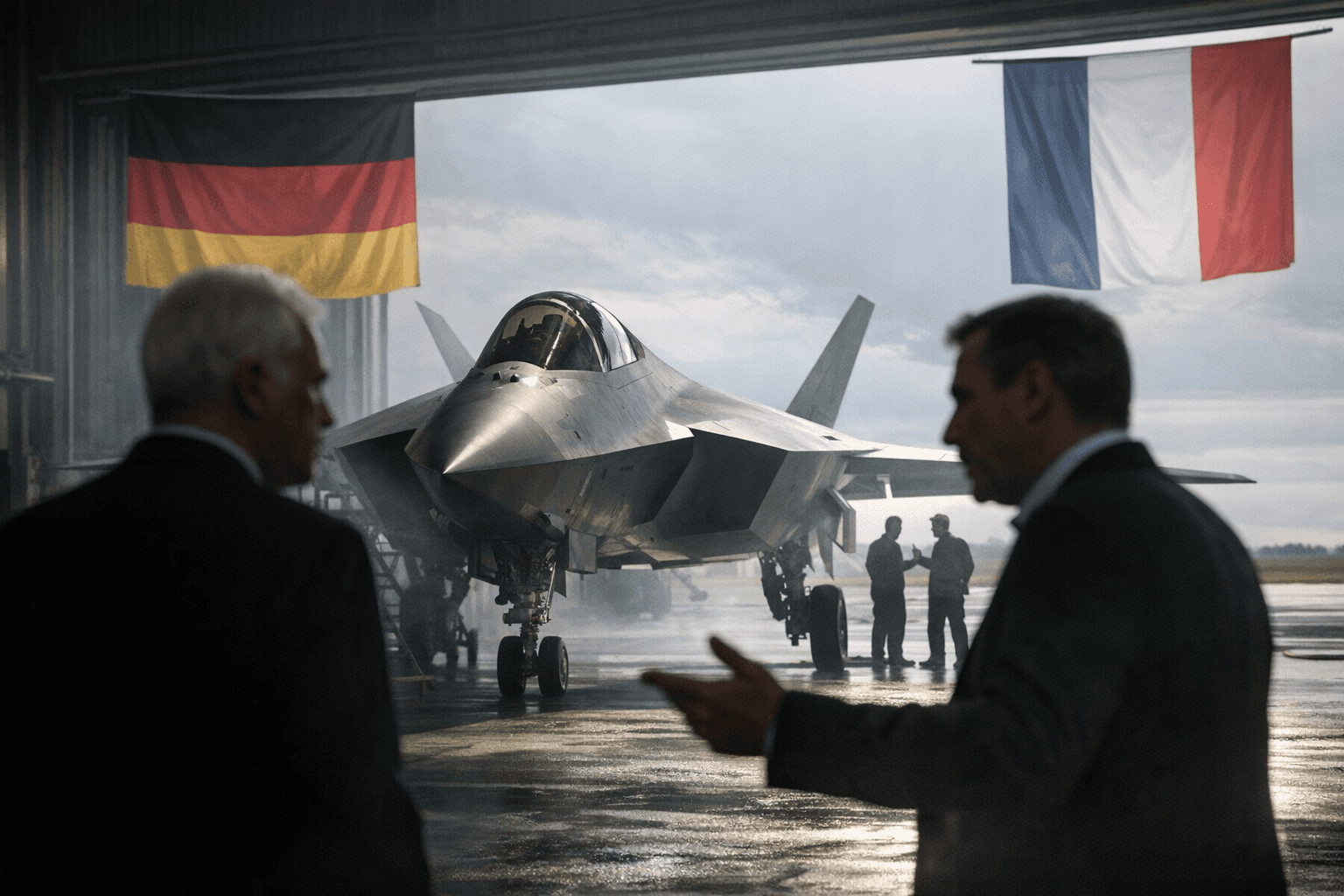
The Franco-German fight over Europe’s flagship fighter-jet project has entered another fragile phase, with mediation failing to break the deadlock over the Future Combat Air System and the program still stalled. The dispute has become a test of whether Europe can build its own next-generation airpower without surrendering industrial control to national rivals.
The mediation effort involved representatives from France and Germany, but the two mediators are now expected to file separate reports on what they found. A German mediator is expected to conclude that building a joint piloted fighter is no longer feasible, a stark warning for a program that is meant to anchor Europe’s military modernization around 2040. Friedrich Merz is due to be briefed on Sunday, and Germany may decide by Tuesday where it stands.
That timing matters because Merz is scheduled to meet Emmanuel Macron at the informal European Union summit in Cyprus next week. The talks will come as Berlin weighs whether to keep pushing for a common aircraft or accept a narrower industrial arrangement. Sources familiar with the discussions have said Germany and France could still cooperate on software, data systems and drones even if the central piloted fighter is scaled back or abandoned, but that would leave the project short of its original ambition.
FCAS was launched in 2018 by Dassault Aviation and Airbus as a program to complement and eventually replace the Rafale and Eurofighter between 2035 and 2040. France and Germany awarded the first Joint Concept Study on February 6, 2019, and Spain later joined as a partner. In December 2022, the three countries awarded the demonstrator Phase 1B contract, worth 3.2 billion euros for about three and a half years of work. The broader program has been described as worth about 100 billion euros.
The system was never intended to be just one aircraft. Airbus describes FCAS as a system of systems, built around a next-generation fighter, remote carriers and a combat cloud that links manned and unmanned platforms. The company says capabilities should begin rolling out in the late 2020s, with manned-unmanned teaming in the early 2030s and full collaborative combat by 2040. Every delay stretches the gap before Europe gets that capability and prolongs reliance on current-generation jets, even as leaders say they want greater strategic autonomy and less dependence on U.S. systems.
The impasse also exposes the political strain inside the Franco-German partnership. Dassault Aviation and Airbus have been locked in a power struggle for years over leadership, workshare and intellectual property, turning a project launched by Emmanuel Macron and Angela Merkel into a symbol of Europe’s broader defense-industrial problem. If Berlin and Paris cannot revive the project’s core design, FCAS risks becoming another expensive reminder that Europe’s defense ambitions still collide with national rivalry.
This article was produced by Prism’s automated news system from verified source data, official records, and press releases, then run through automated quality and moderation checks before publishing. The system is built and supervised by the people who set the standards it runs under. Read our full AI policy.
Did this article answer your question?


