Merz proposes associate EU status for Ukraine with no voting rights
Friedrich Merz wants Ukraine inside EU meetings but outside the vote, a new associate status meant to bridge war and enlargement.

Friedrich Merz is pressing Europe to invent a political halfway house for Ukraine: a new “associate member” status that would let Kyiv sit in EU summits and ministerial meetings without gaining a vote. The idea would also reach into the bloc’s institutions, with non-voting representation in the European Commission and the European Parliament, while leaving Ukraine outside the formal decision-making core.
That structure would give Ukraine visibility and access, but not power. It would not amount to full membership, and it would not change the fact that the European Union’s current accession framework has no such category. Merz’s proposal is designed to bridge a gap that has widened since Russia’s full-scale invasion: Ukrainian leaders want a concrete path forward, while many European governments still see full entry as too far away to promise now.
The security element is meant to make the offer more than a symbolic waiting room. Merz has argued that EU countries should make a political commitment to apply the bloc’s mutual assistance clause to Ukraine. Under Article 42(7) of the Treaty on European Union, once an attacked member state invokes the clause, all other member states must provide assistance. That help can range from diplomatic backing and technical or medical aid to civilian or military support. EU officials have also planned a tabletop exercise to test how the clause would work in practice, underscoring how sensitive any such pledge remains.
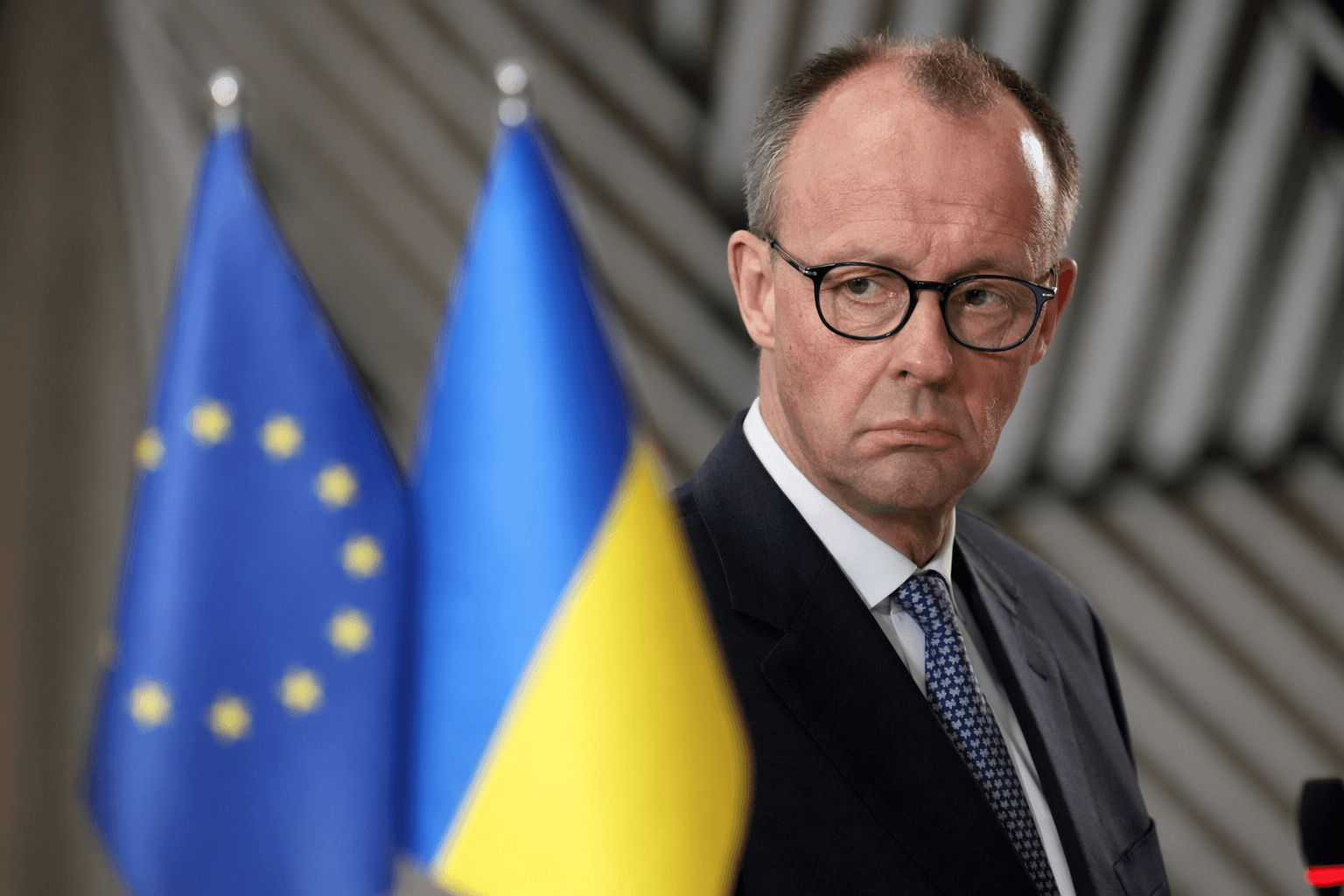
Merz’s proposal lands against the slow machinery of enlargement. Ukraine applied for EU membership on February 28, 2022, received candidate status in June 2022 and saw accession negotiations formally open on June 25, 2024. The European Commission said Ukraine completed its screening process in September 2025. Even so, accession normally requires unanimous consent and ratification by all 27 member states, a hurdle that explains why Berlin is searching for staging arrangements short of a full membership promise.
That search has a strong public mandate in Ukraine. A 2025 International Republican Institute poll found 75 percent of respondents in favor of joining the EU, and a separate 2025 Ukrainian poll found 70 percent would vote yes in a referendum. For Volodymyr Zelenskyy, that support is part of the political argument for keeping Europe’s door open, even if the door cannot yet be fully opened.

The associate-member idea would not settle the accession question. It would mark a deliberate pause between candidate status and full entry, a way to keep Ukraine tied to Europe while the hardest enlargement decisions are deferred. For Berlin and Brussels, the real test is whether that bridge leads somewhere, or simply becomes the new place where enlargement waits.
Know something we missed? Have a correction or additional information?
Submit a Tip