Merz pushes EU to loosen rules for industrial AI, boost competitiveness
Merz used Hannover Messe to argue industrial AI should face lighter EU rules, setting up a fight over whether Europe is tailoring policy or simply easing pressure for business.
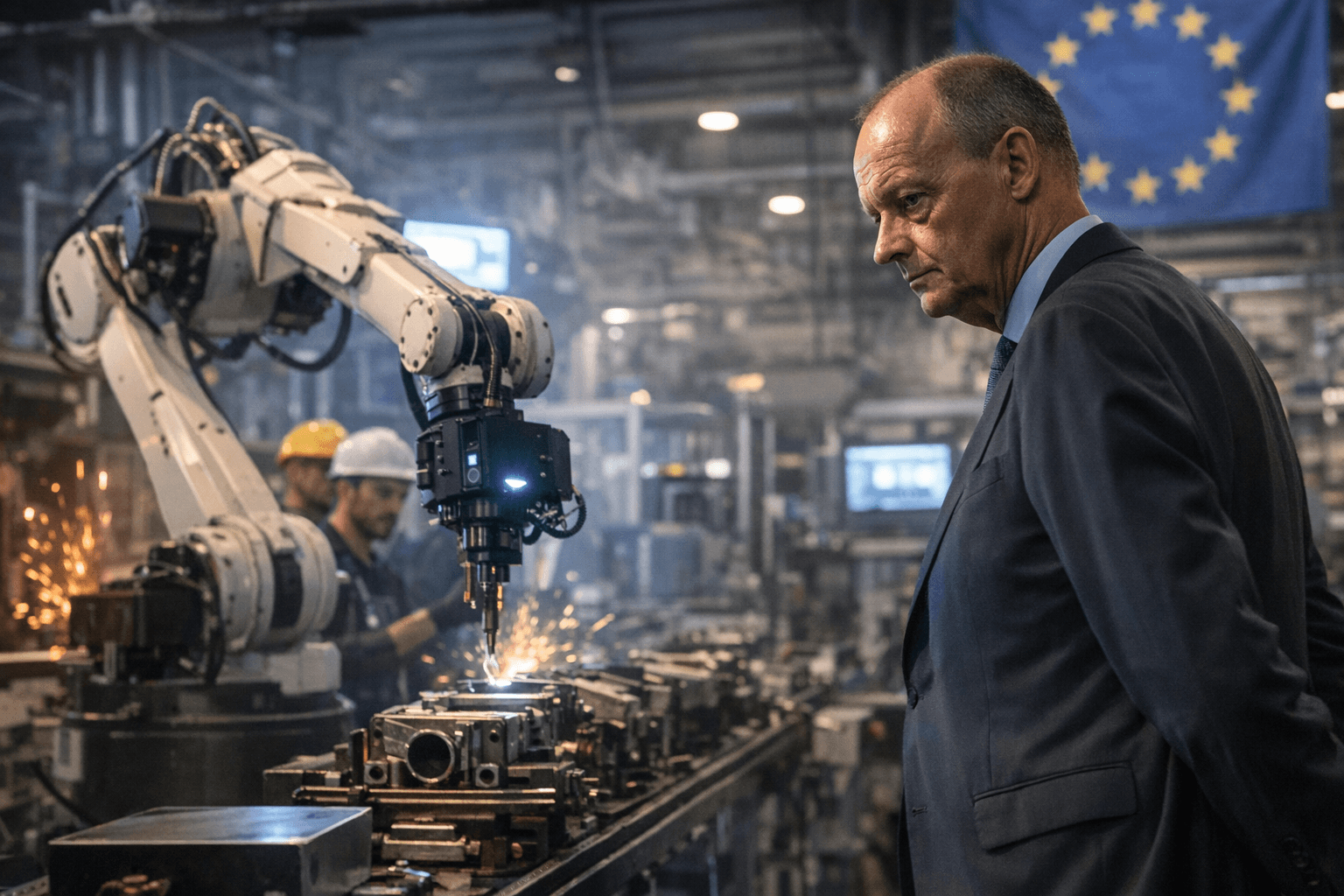
Friedrich Merz chose Hannover Messe to draw a line inside Europe’s AI debate: factory-floor and enterprise systems should not be regulated as tightly as consumer-facing AI. The German chancellor said industrial AI needs more regulatory freedom in the European Union if Europe wants higher productivity and stronger competition with the United States and China.
His intervention lands at a sensitive moment for the bloc. The European Commission says the AI Act is the EU’s first comprehensive legal framework for artificial intelligence and is being phased in over several years, with prohibited practices already applying since February 2, 2025, a major wave of obligations due to begin on August 2, 2026, and full application foreseen by August 2, 2027. That schedule makes this year a decisive compliance window for companies building or deploying industrial AI.
Merz’s argument goes beyond legal fine print. Germany is trying to protect the industrial base that has long anchored its economy, from manufacturing and logistics to enterprise software and automation. In March, the German government said it wants to at least double domestic data center capacity and raise AI data-processing capacity fourfold by 2030, underscoring that Berlin is not only asking for lighter rules but also pushing to build more of the infrastructure needed to support AI at home.
Hannover Messe gave the message a high-profile stage. Organizers said the 2026 fair centers on industrial AI, robotics, automation and digitalization, with more than 3,000 exhibitors showing how AI can deliver measurable competitive gains. Siemens has used the event to promote industrial AI across its value chain, from digital twins to autonomous workflows and smart buildings, a sign of how deeply the technology is already embedded in European manufacturing strategy.
Support from industry has been swift. Siemens chief executive Roland Busch backed the call for a softer EU approach to industrial AI and warned that investment could drift toward the United States and China if Europe keeps the regulatory load too heavy. That is the fault line Merz is exploiting: whether industrial AI is a distinct category that deserves its own regime, or whether calls for special treatment mainly reflect business pressure for fewer constraints. For manufacturers, the answer will shape compliance costs, product development and where next-generation tools are built. For workers, it could influence how quickly AI changes factories, supply chains and day-to-day tasks. For competitors, it will help determine whether Europe becomes a rule-setter for industrial AI or a market that imports the most advanced systems from abroad.
This article was produced by Prism’s automated news system from verified source data, official records, and press releases, then run through automated quality and moderation checks before publishing. The system is built and supervised by the people who set the standards it runs under. Read our full AI policy.
Did this article answer your question?


