Met deploys 4,000 officers for rival London protests and Cup final
A 4,000-officer police operation met rival pro-Palestinian and far-right marches in central London, while the FA Cup final stretched the Met further.

The Metropolitan Police put 4,000 officers on duty in central London as rival marches and the FA Cup final forced it to police political anger and football crowds at the same time. The force said tens of thousands of people were expected on Saturday, making it one of the busiest days for policing in recent years.
The operation was built around strict conditions and a heavy technical footprint: live facial recognition, helicopters, drones, dog units, police horses, armoured vehicles and dedicated investigative teams. The Met described the security effort as “unprecedented,” a sign of how much strain simultaneous protests and a major sports final have placed on public-order policing in London.
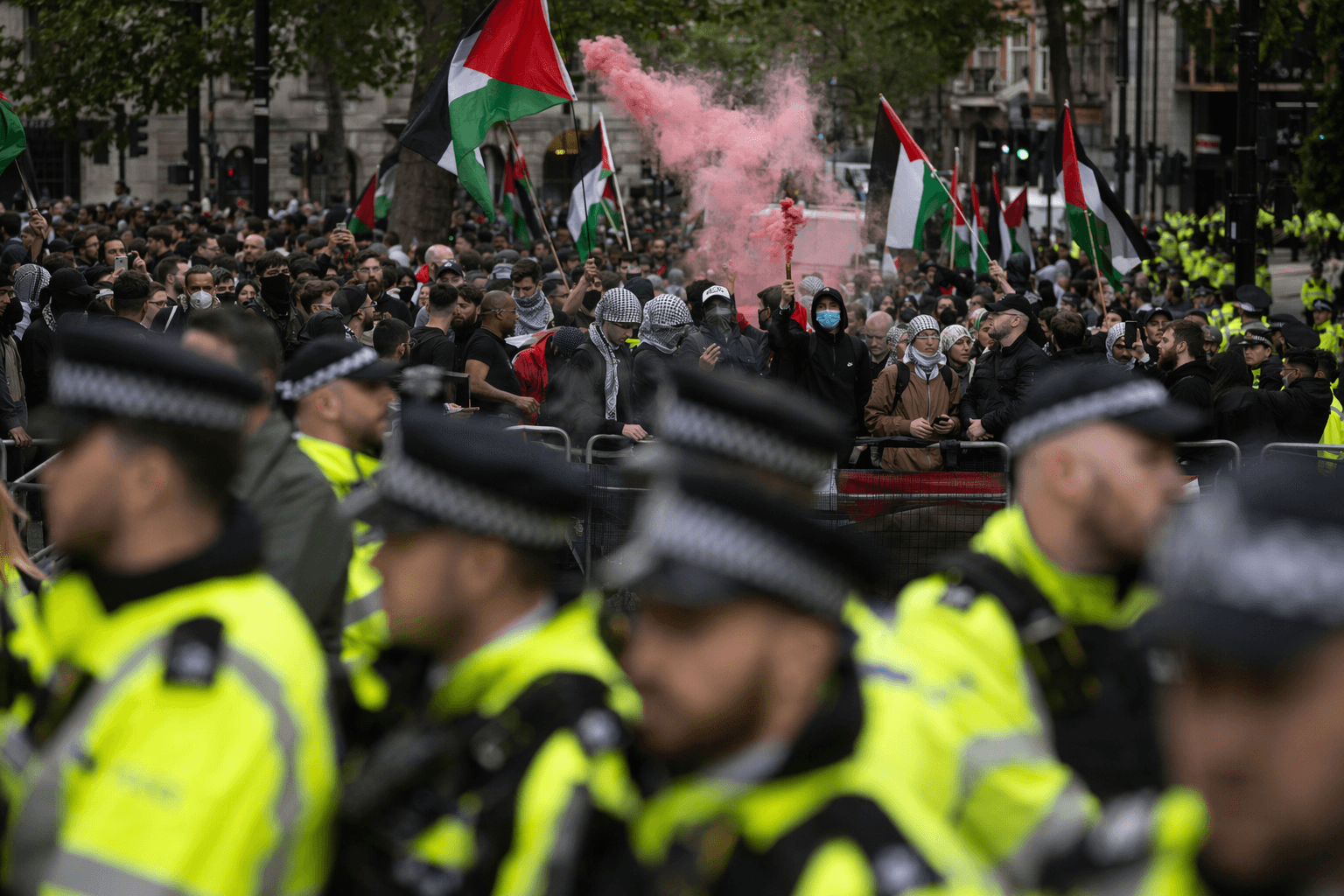
The two main flashpoints were the far-right “Unite the Kingdom” rally, led by Stephen Yaxley-Lennon, better known as Tommy Robinson, and a pro-Palestinian march organized by the Palestine Coalition. The Met said it had safely policed hundreds of protests, including more than 33 large events organized by groups in the Palestine Coalition since October 2023, but warned that previous demonstrations had produced arrests for racially and religiously aggravated public-order offences, stirring up racial hatred and support for terrorist organizations.
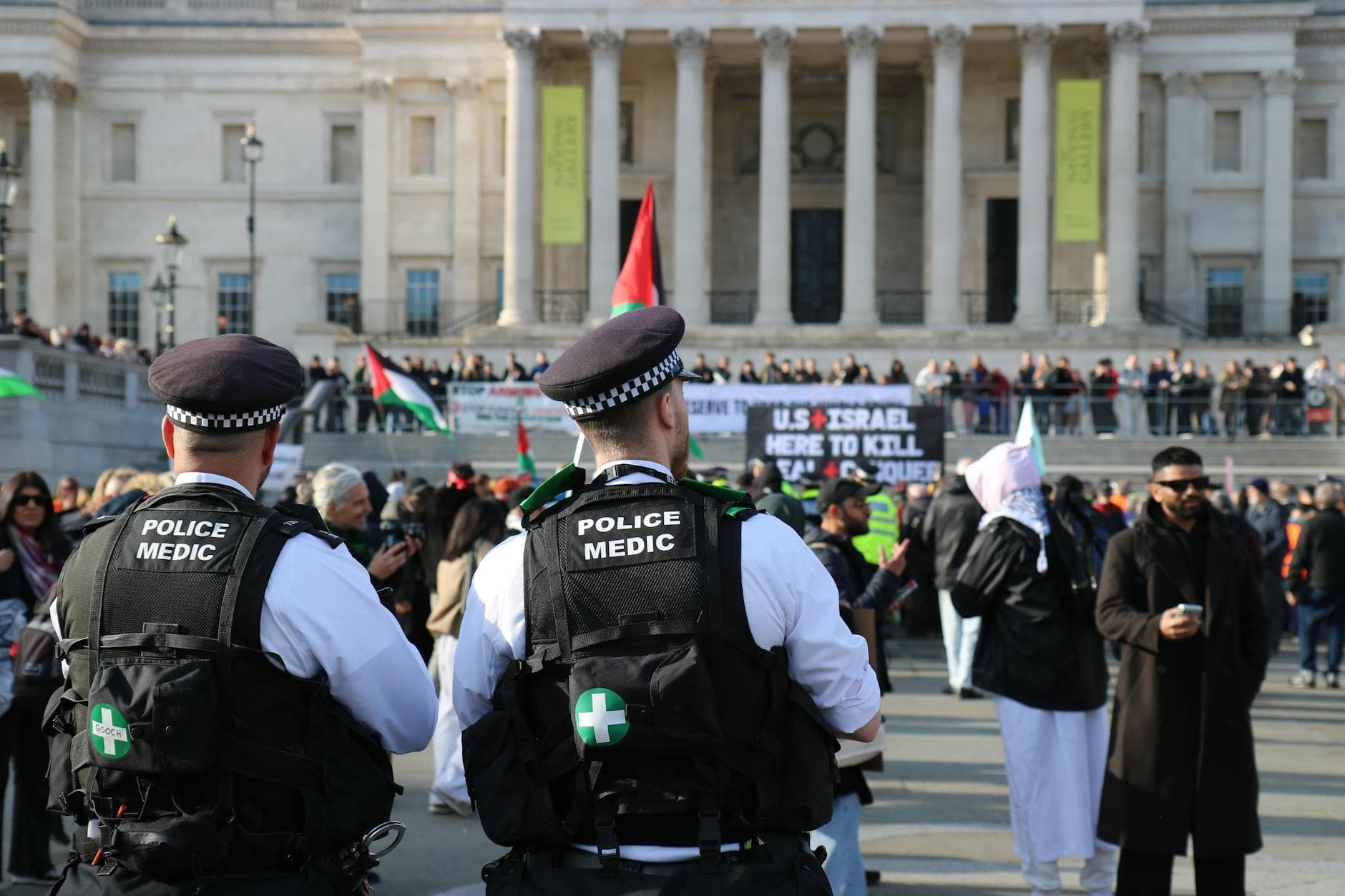
That warning carried added weight after more than 890 arrests were made in September 2025 during protests in Parliament Square linked to support for Palestine Action. The group has since been proscribed, and the Met has said expressing support for a proscribed organization is a criminal offence in the UK. Officers were expected to act where offences were committed, with the force treating the line between lawful expression and criminal support as a central test of the day.
The policing plan follows earlier London operations in which the Met imposed conditions and, in some cases, banned marches while allowing static protests, including a March 2026 Al Quds-day operation designed to keep rival groups apart. That approach underlines the challenge facing the state: preserving political expression while preventing confrontation from spilling into disorder. In practice, the scale of Saturday’s deployment suggested a new normal for democratic protest in a major Western capital, where protest, counter-protest and mass public events increasingly share the same security perimeter.
Know something we missed? Have a correction or additional information?
Submit a Tip