Meta to cut 8,000 jobs, close 6,000 roles amid AI push
Meta will cut about 8,000 jobs and leave 6,000 roles unfilled as it pours more money into AI infrastructure, models and chatbot tools.

Meta is preparing to eliminate about 8,000 jobs and close roughly 6,000 open roles, a reduction that would hit about 10% of its global workforce as the company shifts more resources into artificial intelligence. The cuts are set to begin on May 20, and they come as Meta pushes billions more into AI infrastructure, compute capacity, model development and chatbot products.
An internal memo from chief people officer Janelle Gale described the move as the first wave of a broader restructuring, with additional cuts still possible later in 2026. Meta employed nearly 79,000 people at the end of 2025, underscoring how large the planned reduction is even after the company’s years of expansion across Facebook, Instagram and its broader family of apps and services.
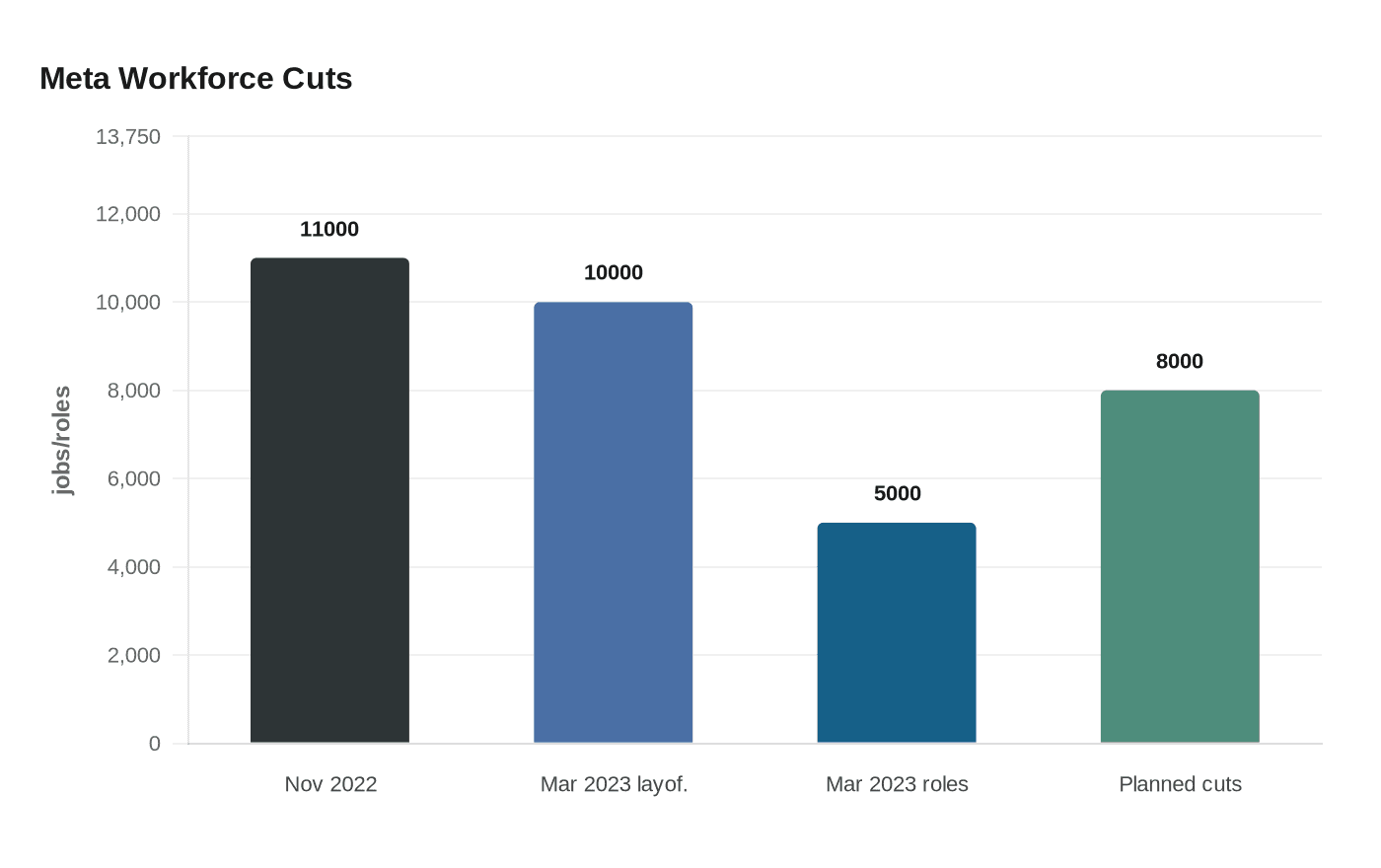
The jobs being eliminated and the roles left unfilled point to a company trying to protect margins while funding an expensive A.I. buildout. Meta has already slowed hiring for thousands of openings as part of a wider cost-control effort tied to that spending surge. Investors appeared to read the layoffs as an efficiency move, with Meta’s stock rising after earlier reports of the cuts.
The latest reduction also marks another sharp turn in a long string of workforce resets under Mark Zuckerberg. In November 2022, Meta cut 11,000 jobs. In March 2023, it announced another 10,000 layoffs and closed about 5,000 open roles during what Zuckerberg called Meta’s “Year of Efficiency.” The company said that push was meant to make Meta a better technology company and improve financial performance.
The new round shows how quickly A.I. is reshaping employment even inside the companies racing to build it. Meta is not retreating from A.I.; it is concentrating spending there by trimming headcount elsewhere, leaving fewer roles open and directing more capital toward the computing power and software needed to compete. That tradeoff has become one of the clearest signals in Big Tech: the A.I. race is no longer only about product ambition, but about which jobs survive inside the firms funding it.
This article was produced by Prism’s automated news system from verified source data, official records, and press releases, then run through automated quality and moderation checks before publishing. The system is built and supervised by the people who set the standards it runs under. Read our full AI policy.
Did this article answer your question?

