Mexican Miner Rescued After 14 Days Trapped Underground in Sinaloa Collapse
Divers found Francisco Zapata Nájera wearing his mining helmet, submerged in floodwater 350 meters underground after more than 300 hours trapped.
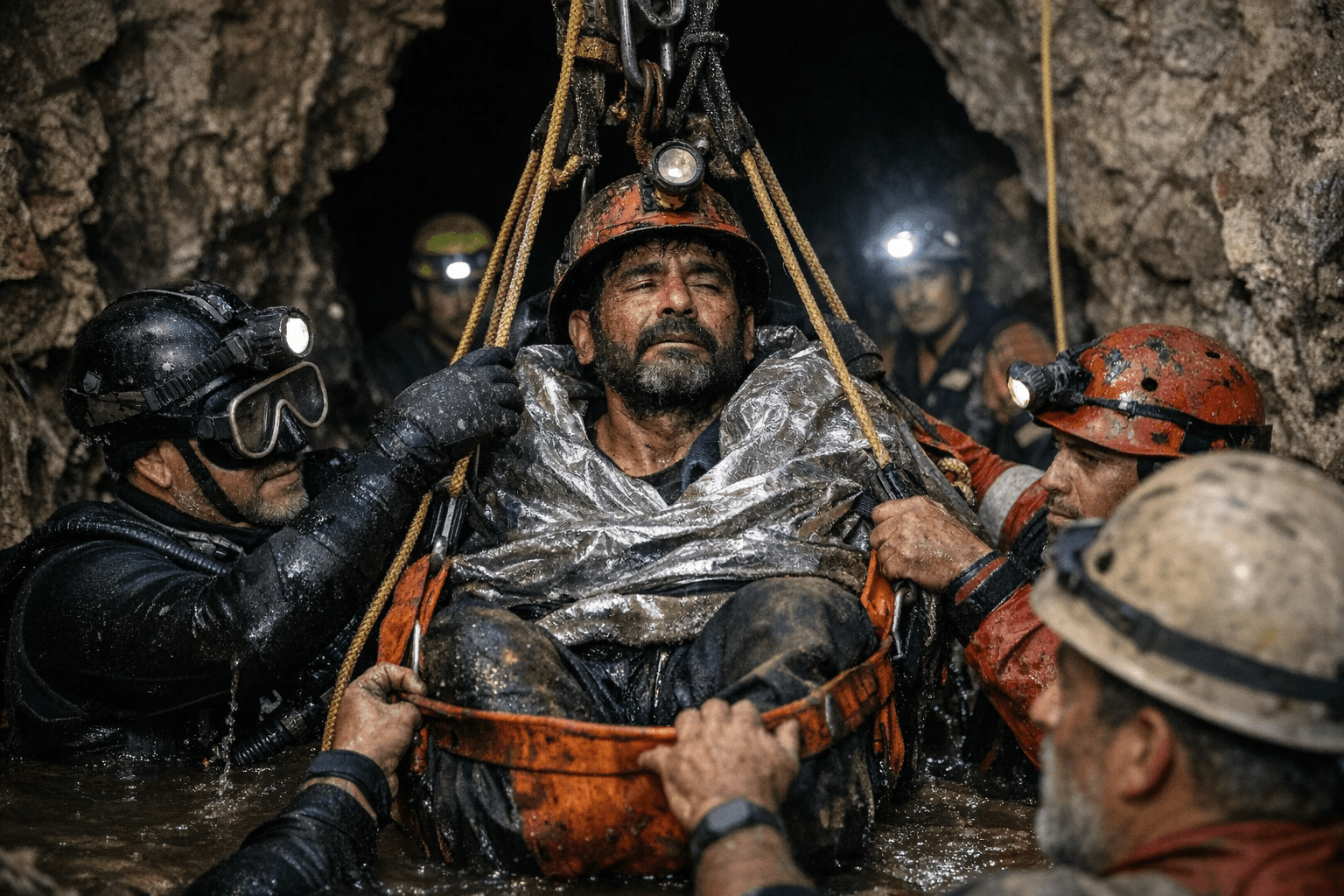
Divers found Francisco Zapata Nájera in a corner of the flooded Santa Fe gold mine wearing his mining helmet, submerged in water, more than 300 hours after a catastrophic collapse had sealed him hundreds of meters underground. On Wednesday morning, the 42-year-old miner was driven to the surface in a utility vehicle flanked by rescue workers, emerging into daylight as a crowd gathered and clapped. A Mexican Air Force helicopter then transported him to a hospital in Mazatlán for specialist treatment.
The collapse struck the Santa Fe gold mine in El Rosario, Sinaloa, on March 25 at approximately 2 p.m. local time. A structural failure triggered a tailings dam breach at the mine, operated by Industrial Minería Sinaloa, flooding underground passages and trapping four miners. Of the 25 workers present at the time, 21 escaped immediately without injuries.
Rescue crews did not reach Zapata Nájera the moment they found him. Divers located him on Tuesday, April 8, but severe flooding in the passage leading to his location blocked an immediate extraction. Teams left him supplies and a promise to return, then spent nearly 20 hours pumping water from the section designated as Zone 0, at depths exceeding 350 meters, before going back for him.
The operation was coordinated by the National Civil Protection Coordination (CNPC), with the Mexican Army Emergency Response Battalion executing the extraction. Rescue brigades explored more than 3.2 kilometers of access ramps throughout the effort, working around unstable geology, water, and limited access. Sinaloa Governor Rubén Rocha Moya and Civil Protection Director Laura Velázquez publicly committed to sustaining operations until all workers were located.
Zapata Nájera is the second of the four originally trapped miners to be brought out alive. The first, José Cáustulo, was rescued on March 30 from approximately 300 meters depth after more than 100 hours of operations. Cáustulo survived by finding refuge in a ventilated area with oxygen access, staying on elevated ground, and maintaining stable body temperatures of 20 to 30 degrees Celsius.
President Claudia Sheinbaum confirmed on Wednesday that a third miner had been found dead and a fourth remains missing. "The exceptional members of the Mexican Army's Emergency Response Battalion, along with the faith and resilience of a miner, made this astonishing rescue possible after 13 days," Sheinbaum wrote on social media. "I'm certain that all Mexicans, every one of us, hold you in our hearts."
The incident also raised serious questions about the mine operator's emergency response obligations. The CNPC noted that Industrial Minería Sinaloa did not notify municipal authorities of the collapse until the following day at noon, more than 22 hours after the event, and that the company initially conducted its own rescue operations before three government response teams joined the effort.
That delay will likely be scrutinized in any formal investigation into the tailings dam breach. Mexico's history of mining disasters gives the inquiry particular weight. A February 2006 explosion at the Pasta de Conchos mine in Coahuila killed 65 workers, and in August 2022, 10 miners died when the El Pinabete coal mine flooded; those miners' bodies were never recovered. Over the past decade, Mexico has recorded more than 270 mining accidents resulting in 270 fatalities and 108 injuries.
Authorities continue to press recovery efforts for the remaining missing miner while investigators begin piecing together what caused the structural failure at Santa Fe.
Know something we missed? Have a correction or additional information?
Submit a Tip