UK braces for record May heat as temperatures hit 35C
England faced 35C heat and a likely May record, with amber alerts across much of the country and warnings for older people and coastal visitors.
Forecasters warned that England was heading toward its hottest May on record, with 35C expected in parts of Lincolnshire, the Midlands, western East Anglia and south into London. The Met Office called the Bank Holiday weather an “exceptional spell of warmth for May,” a reminder that the most dangerous part of the heat arrived before the country had fully settled into summer.
The agency said another 35C peak was expected on Tuesday in London, the Home Counties and Cambridgeshire, and that the UK’s May and spring temperature records were likely to fall. The current May high is 32.8C, first set at Camden Square on May 22, 1922, and matched at Horsham, Tunbridge Wells and Regent’s Park on May 29, 1944. If the forecast held, the record would be beaten by a wide margin, underscoring how quickly climate-linked extremes are arriving.
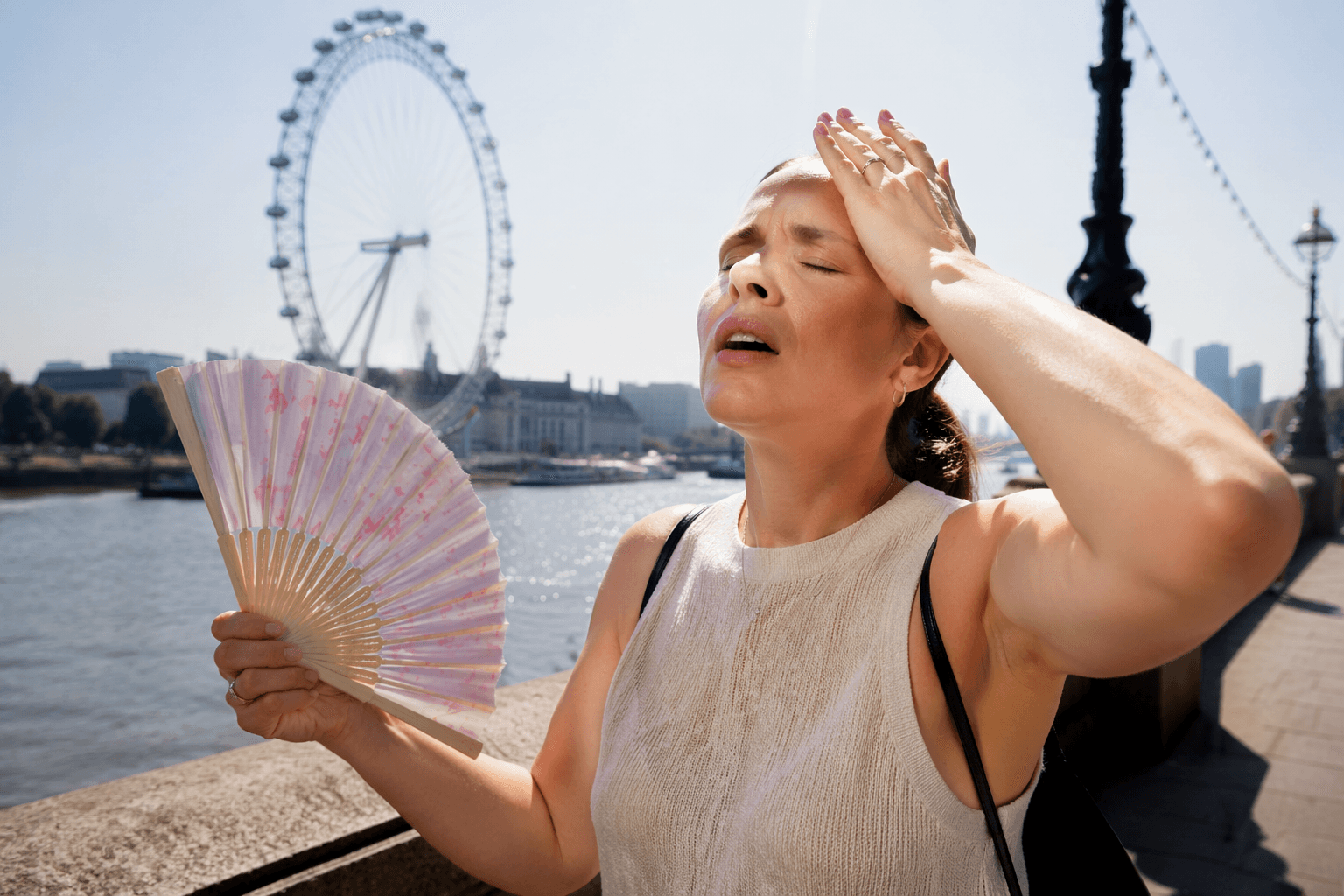
The UK Health Security Agency issued its first amber heat-health alert of 2026 for the West Midlands, East Midlands, East of England, South East and London, running from 2pm on Friday, May 22, until 5pm on Wednesday, May 27. Yellow alerts covered the North East, North West, South West and Yorkshire and the Humber over the same period. Officials warned that people over 65, along with those with respiratory or cardiovascular conditions, faced greater risk and should be checked on by neighbours and relatives.
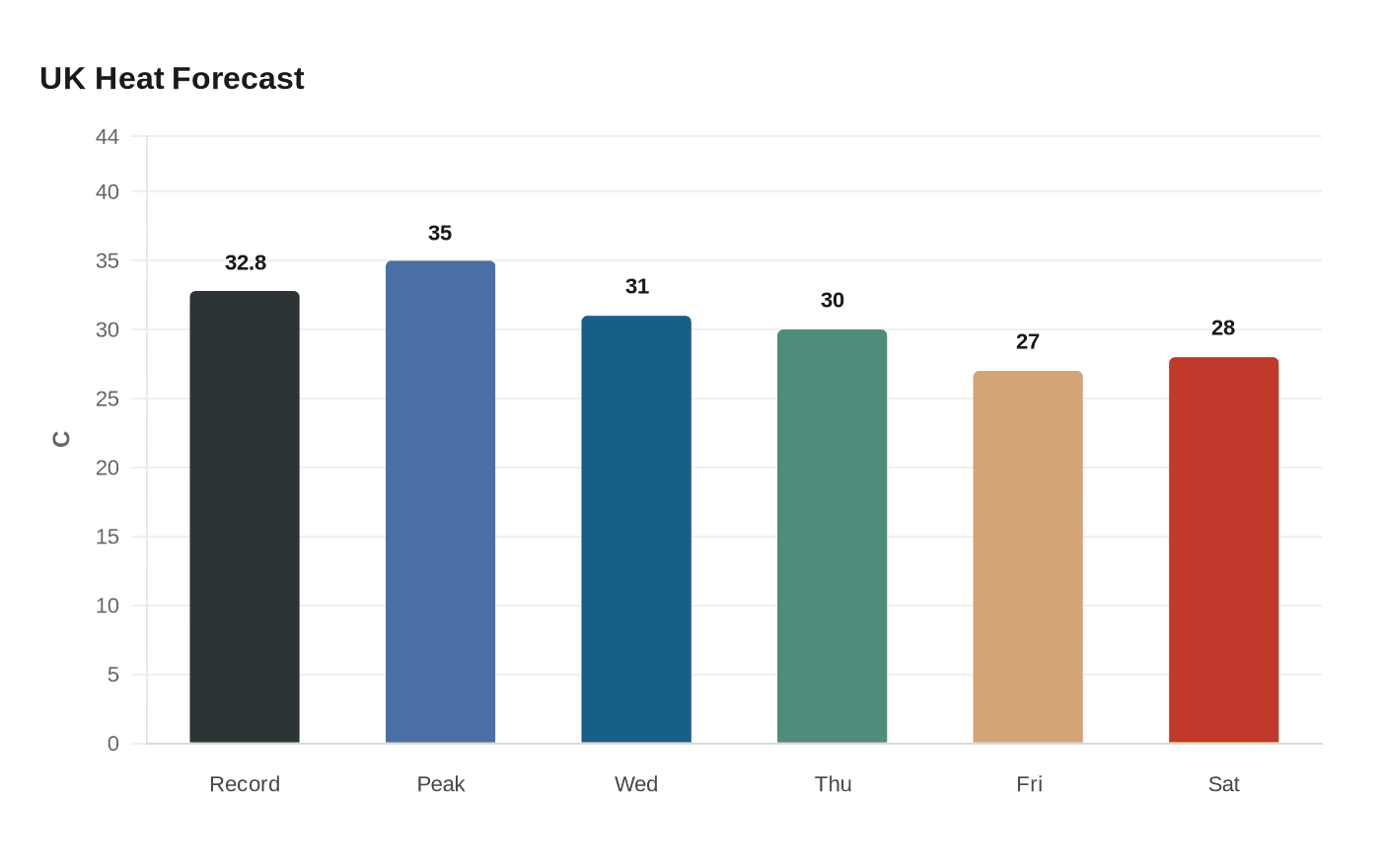
That warning carried practical weight well beyond temperature records. High pressure was driving a long spell of dry sunshine across much of the UK, with southern parts of northern England expected to see temperatures above 30C and the heat forecast to linger into the week. Highs were set to ease only gradually, with 31C on Wednesday, 30C on Thursday, 27C on Friday and 28C on Saturday. For hospitals, transport operators and employers, a prolonged run of hot days at the start of the season raises the chance of disruption before routines have adapted.
The coast was also in the frame. The Met Office urged Bank Holiday travellers to prepare for crowded beaches and more people heading outdoors, noting that lifeguard rescues had more than doubled last year. Sea surface temperatures were still far colder than midsummer, about 9C around Scotland and 13C around southwest England, creating a sharp contrast between air temperatures on shore and cold water offshore. Western Scotland and Northern Ireland were expected to see more cloud and some rain, while coastal fog or low cloud could affect western coasts.
Know something we missed? Have a correction or additional information?
Submit a Tip