Michigan's QUICC Ion-Beam Method Cuts Qualification Time 1,000×, Advances ASTM Approval
University of Michigan’s QUICC uses ion‑beam accelerators to compress more than a decade of neutron irradiation into days, claiming up to 1,000× speed-up and roughly 1/1,000 the cost while advancing ASTM review.
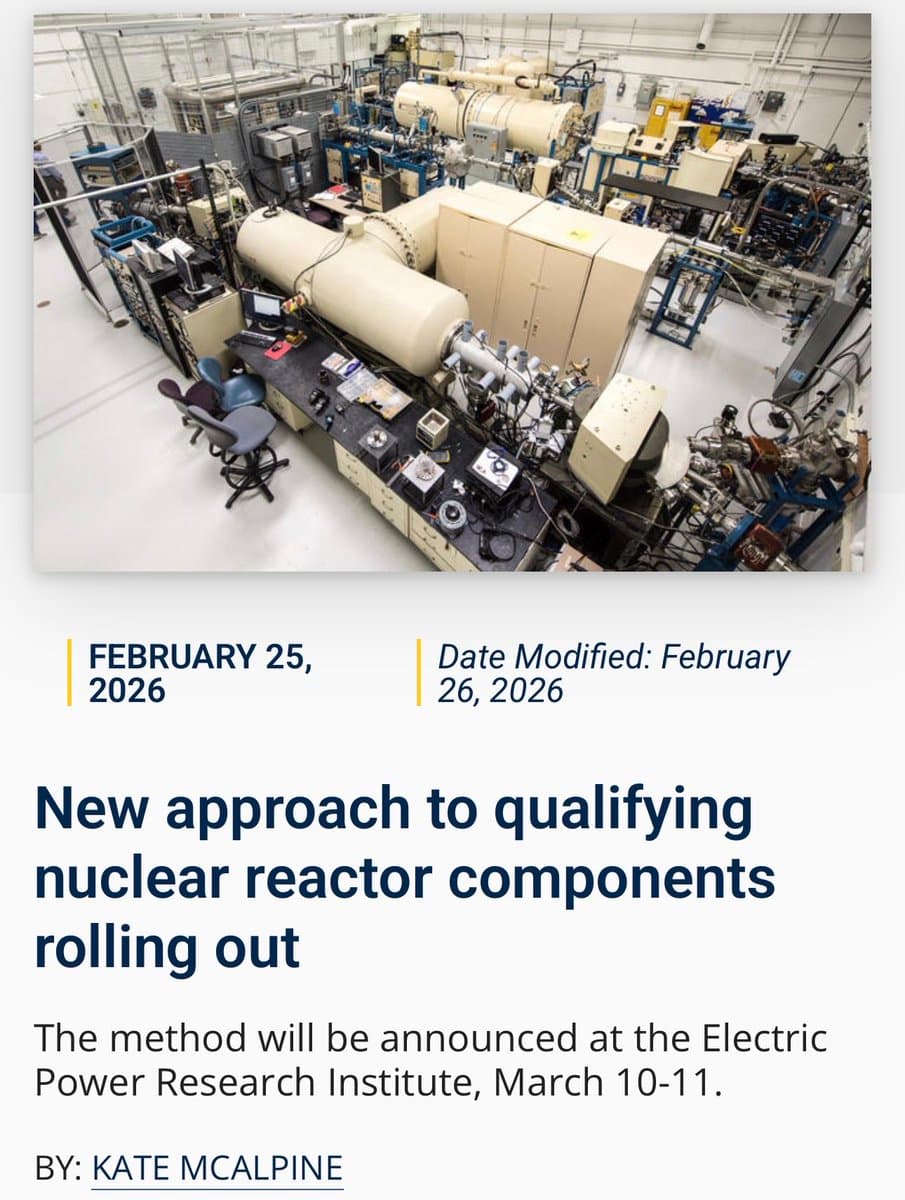
A University of Michigan‑led team has formalized QUICC - Qualification under Ion irradiation of Core Components - a lab‑based ion‑beam method that the team reports can cut materials qualification time by up to 1,000× and reduce costs by roughly three orders of magnitude. The group says QUICC can compress what would normally take more than a decade of neutron irradiation in test reactors into days in a particle accelerator, and the methodology is now advancing through approval stages at ASTM International and set to be presented at a special Electric Power Research Institute event in March.
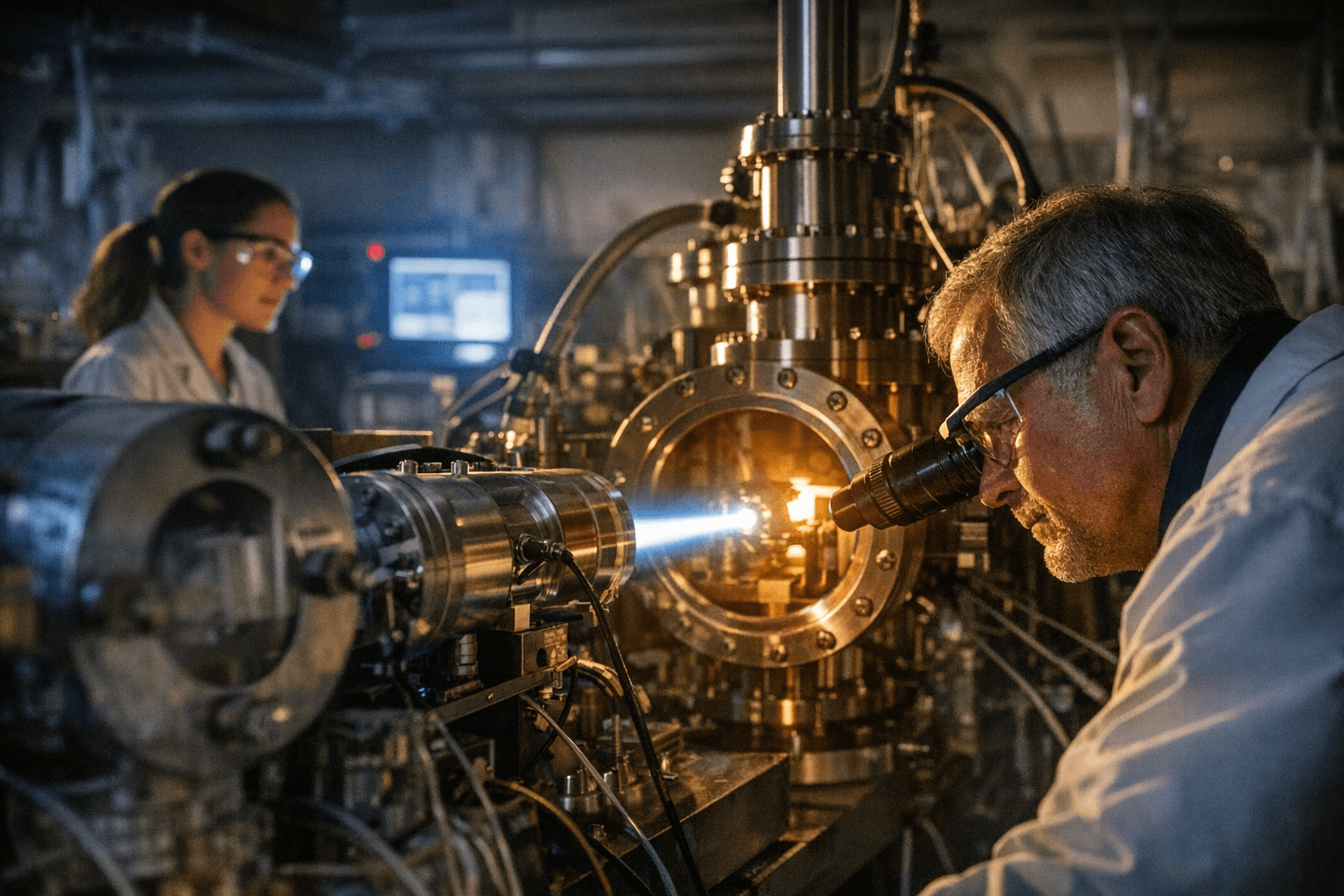
QUICC uses charged‑particle accelerators to drive displacement damage into candidate reactor core materials at very high damage rates, measuring cumulative damage in displacements per atom (dpa). The research notes the relevance of dpa values that can approach 200 dpa, where metals show embrittlement, cavity formation, swelling, and helium bubble development. By reaching high dpa quickly, the team says alloy design and validation cycles can be shortened substantially compared with placing samples inside operating neutron test reactors for years.
The Michigan team reports experimental validation across two very different alloys, finding that critical changes under ion irradiation mimic those from reactor neutron irradiation. “The QUICC methodology, applied to two very different alloys, demonstrates that the critical changes to the materials under ion irradiation mimic those under reactor irradiation. The significance is that ion irradiation can be used to predict material behavior in reactors 1000 times faster than with test reactors and at one one‑thousandth the cost,” said Gary Was, emeritus professor of nuclear engineering and radiological sciences and founder of the Michigan Ion Beam Laboratory in 1986. A paraphrase in reporting materials adds that the thousandfold speed increase brings commensurate three‑order‑of‑magnitude cost reductions.
The work was carried out at the Michigan Ion Beam Laboratory (MIBL), founded by Was in 1986 and one of the few facilities worldwide capable of simultaneous triple‑beam ion irradiation experiments. MIBL is listed as a Nuclear Science User Facility partner and was the site for five new federally funded fusion materials projects launched in 2025. “The capabilities of the Michigan Ion Beam Laboratory are pivotal in advancing our understanding and development of materials for fusion energy applications. Our work, building upon years of pioneering research at U‑M, is crucial in addressing the challenges posed by the harsh conditions in fusion reactors,” said Kevin Field, director of MIBL.
Collaborators named on the QUICC effort include Pennsylvania State University, Oak Ridge National Laboratory, and the University of Tennessee, with industry partners Framatome and Rolls‑Royce and supporters including the U.S. Department of Energy, EPRI, and ORNL. The University of Michigan team is working with its technology transfer office to develop licensing agreements aimed at commercializing the ion irradiation qualification technology. Was noted the broader fusion context: “With some 50 nuclear fusion start‑ups pushing the forefront of commercial nuclear fusion, MIBL is providing the capability to address the behavior and selection of materials for fusion‑relevant environments.”
Next milestones the team and industry watchers will watch are ASTM’s final action on the QUICC methodology and the March EPRI presentation; successful ASTM approval combined with university licensing could deploy a lab‑scale route to qualify alloys for advanced fission and fusion reactors far faster than conventional neutron irradiation programs.
Know something we missed? Have a correction or additional information?
Submit a Tip

_82415.jpg&w=1920&q=75)