Microsoft says Copilot usage surges, 20 million enterprise seats paid
Microsoft says 20 million enterprise Copilot seats are paid, but it is still offering few signs of how many workers use it daily or value it.
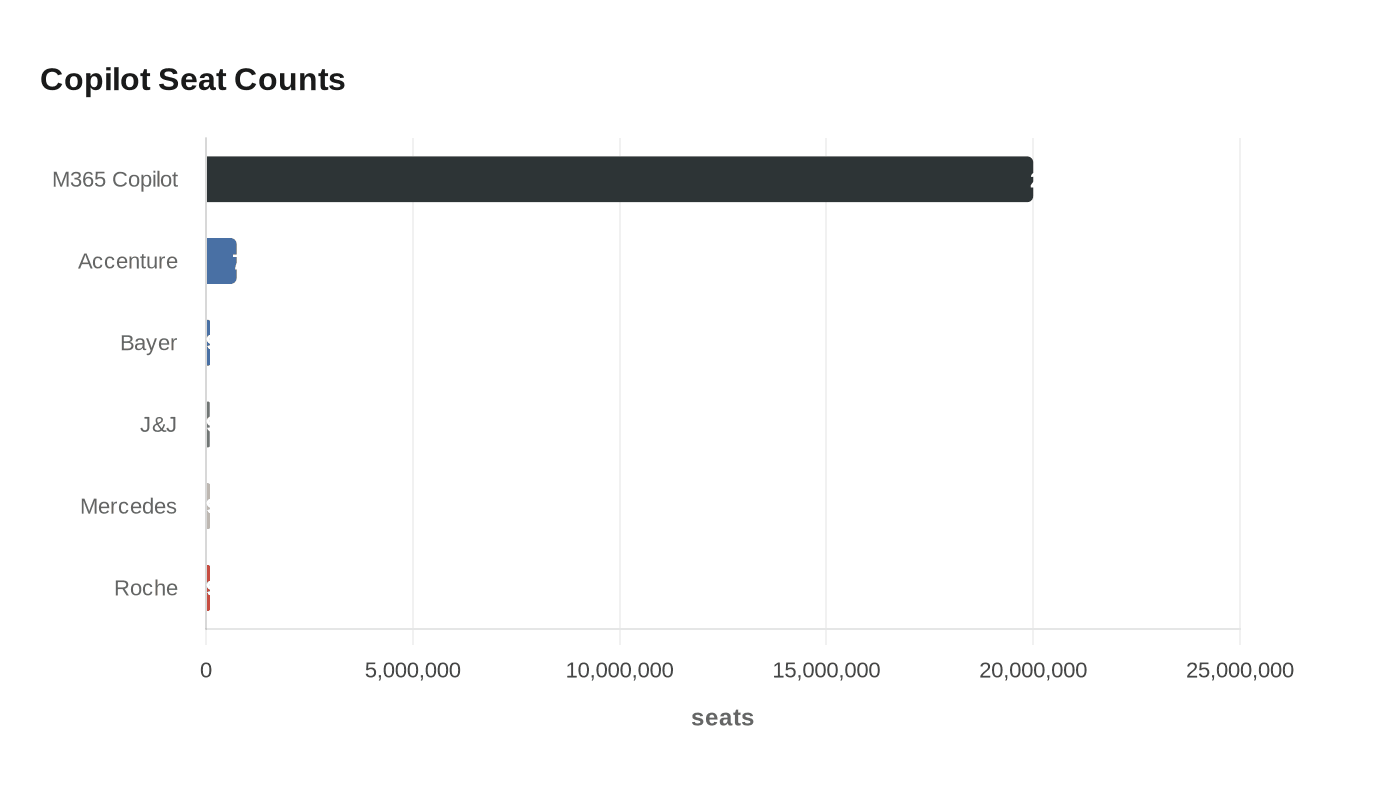
Microsoft is leaning on a bigger number to quiet a stubborn critique: Copilot may be widely licensed, but it is still not clearly widely used. On its April 29 earnings call, Satya Nadella said Microsoft 365 Copilot had reached 20 million paid enterprise seats, and he said the number of companies paying for more than 50,000 seats had quadrupled.
The company paired that headline with customer names meant to signal scale. Nadella said Bayer, Johnson & Johnson, Mercedes and Roche each had more than 90,000 Copilot seats, and Microsoft and Accenture said the consulting giant was rolling Copilot out to about 743,000 employees. Microsoft called it the largest enterprise Copilot deployment to date.
Still, paid seats are not the same as active workers. The numbers show who has bought access, not how often employees rely on the tool, whether they return to it after the first experiment, or whether it is changing workflows in a measurable way. That distinction matters because Copilot has faced a lingering reputation as an expensive add-on that many companies buy but do not fully absorb into daily work.
Microsoft is trying to close that gap by making the product harder to ignore inside Office software. Nadella said agent mode had become the default experience across Copilot and Word, Excel and PowerPoint as of last week. The company has also continued rolling out features through March and April, including updates listed in release notes dated April 21, with new capabilities introduced gradually through a safe deployment model.
The broader consumer side of the product has also been framed as growing, though Microsoft has been selective about what it discloses. In January, Nadella said daily users of Microsoft’s consumer Copilot products had grown nearly 3 times year over year, but he did not give an absolute user count. Microsoft’s own investor materials have emphasized “daily engagement” and “successful sessions,” another sign that the company is still pushing to turn Copilot from a licensing story into a habit.
There is also a built-in lag in the way Microsoft measures the product. Microsoft Learn says Copilot metrics in Viva Insights can cover up to 13 months of historical data, and the most recent data can be as much as six days old. That means the company’s reporting can show direction, but it does not deliver a live picture of how many employees are actually using Copilot at work right now.
For Microsoft, the sales pitch is straightforward: more seats, more large customers and more features designed to keep users inside the product. The harder test is whether those licenses become routine behavior, and whether enterprise buyers can point to productivity gains that justify the spend.
This article was produced by Prism’s automated news system from verified source data, official records, and press releases, then run through automated quality and moderation checks before publishing. The system is built and supervised by the people who set the standards it runs under. Read our full AI policy.
Did this article answer your question?


