Millions in Sudan survive on one meal a day as hunger worsens
Millions in North Darfur and South Kordofan are down to one meal a day as war, blocked aid and ruined markets push Sudan closer to famine.
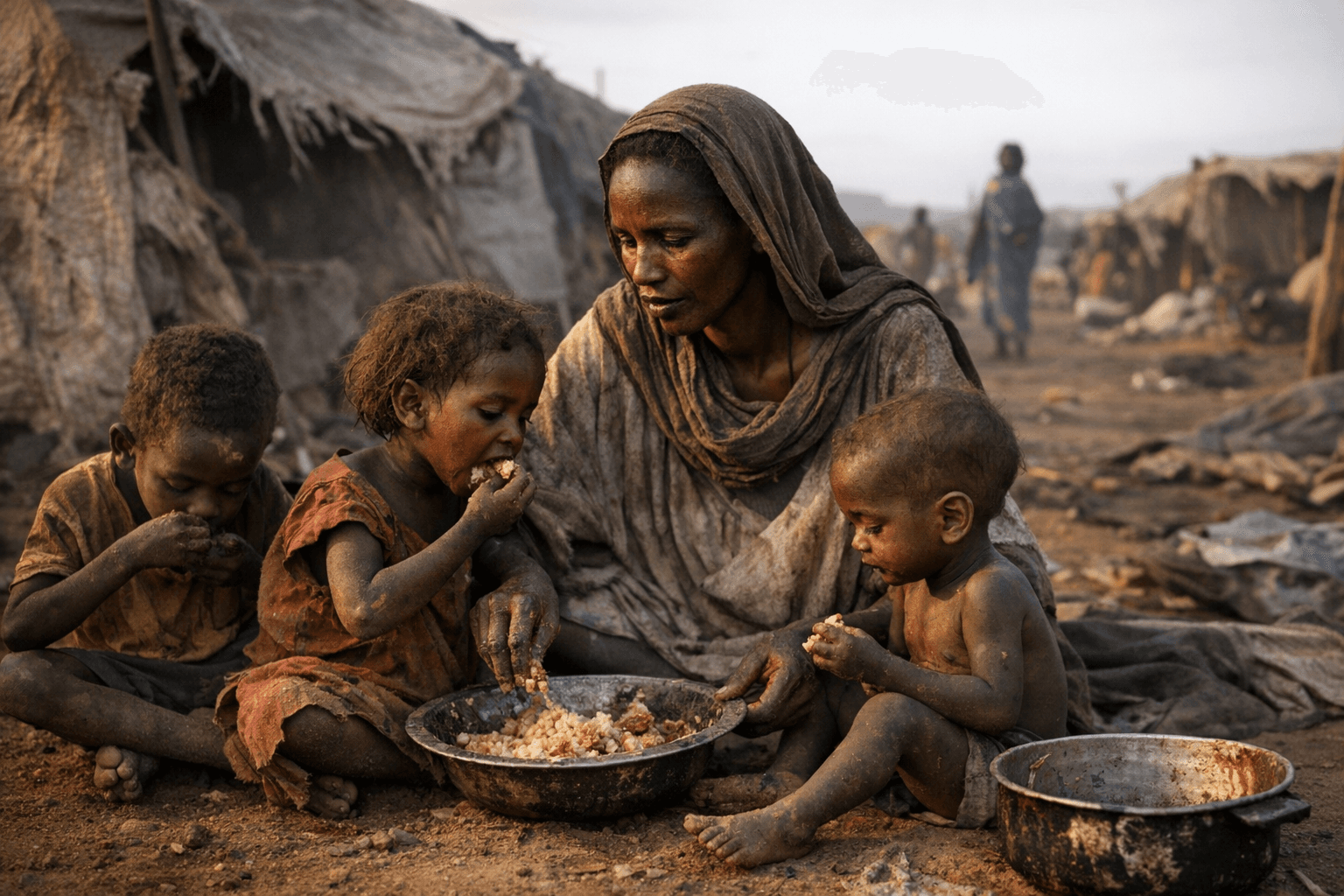
Millions of families in North Darfur and South Kordofan are surviving on just one meal a day, and in some areas people are missing full days of eating or resorting to leaves and animal feed. A new Norwegian Refugee Council-led report said that is happening because Sudan’s food system has been battered “field by field, road by road, market by market,” while civilians, farmers and traders risk crossing active battlefields just to move food.
The report, What it Takes to Eat: Conflict and Sudan’s Fragile Food System, was released with contributions from Action Against Hunger, CARE International, the International Rescue Committee and Mercy Corps. It lands as the war between Sudan’s army and the Rapid Support Forces grinds into its third year and continues to rip apart the country’s ability to feed itself. The 2026 Sudan Humanitarian Needs and Response Plan says 33.7 million people need humanitarian assistance, while 1.7 million live in localities facing catastrophic severity, including El Fasher, Melit, Tawila and Um Kadadah in North Darfur, and Habila, Dilling and Kadugli in South Kordofan.
The broader displacement and hunger figures are just as stark. United Nations agencies said 14 million people had been forced from their homes since fighting began on April 15, 2023, including 9 million inside Sudan and 4.4 million across borders. The Food and Agriculture Organization estimated 21 million Sudanese were facing acute food insecurity, including 6.3 million in food emergency. Another assessment under the 2026 humanitarian plan said 28.9 million people, or 61.7% of the population, were acutely food insecure. In many areas, the report said, families can eat at all only because farmers, suppliers, traders and volunteers keep moving through dangerous front lines.
That access problem is central to the crisis. The report said starvation is being used as a weapon of war through the destruction of farms and markets, while communal kitchens strain to serve uprooted families and donor funding cuts choke relief efforts. Women and girls face heightened risks of rape and harassment when they go to fields, markets or water points, deepening the danger around every search for food. The Sudanese government, aligned with the army, denies famine exists, while the Rapid Support Forces deny responsibility in the areas they control.
The warning is not new. The IPC special brief in November 2025 confirmed famine was already occurring in El Fasher and Kadugli, and said 21.2 million people were facing high acute food insecurity at the time. OCHA says Sudan has faced an unprecedented humanitarian and protection crisis since April 2023, and the longer the war blocks roads, shrinks aid access and destroys livelihoods, the more hunger will spread beyond the hardest-hit regions.
This article was produced by Prism’s automated news system from verified source data, official records, and press releases, then run through automated quality and moderation checks before publishing. The system is built and supervised by the people who set the standards it runs under. Read our full AI policy.
Did this article answer your question?