Minibus plunges into valley in Badakhshan, killing at least 15
A minibus overturned and fell into a valley in northeastern Badakhshan, killing 15 people and injuring several more; police say poor road conditions played a role.
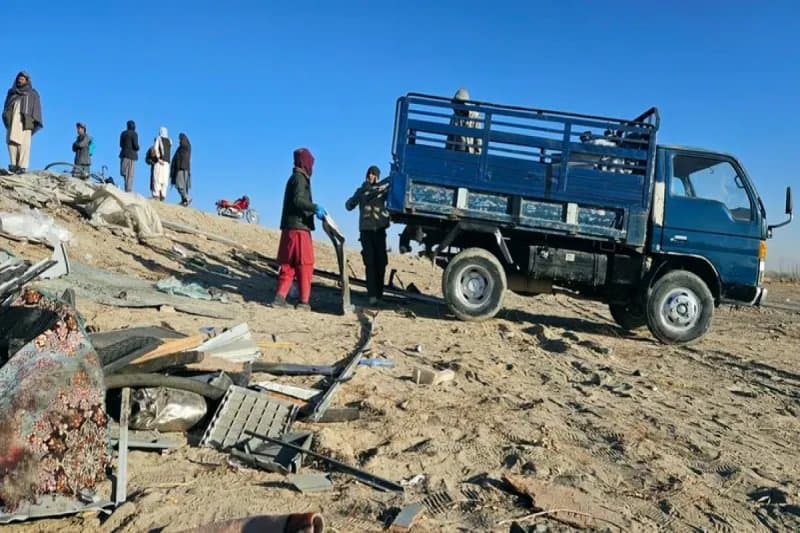
A minibus overturned and plunged into a valley in Afghanistan's northeastern Badakhshan province on Saturday, killing at least 15 people and seriously injuring three others, police said. Authorities in Faizabad, the provincial capital, said the death toll was an update to an earlier, lower figure after rescue teams recovered additional bodies and hospitals reported further fatalities.
Police said the vehicle "veered off course and fell into a valley." Local reporting and a news video account described the bus as overturning on a damaged mountain road before tumbling down a steep ravine. Several of the victims were taken to hospitals in Faizabad, where officials confirmed that three people died after being admitted for treatment.
Badakhshan's rugged terrain and limited road infrastructure make travel hazardous, particularly in winter months when narrow, unpaved routes become more treacherous. The province's economy depends on small-scale agriculture and seasonal trade; residents and traders rely on minibuses and light vehicles for most interdistrict travel. When a single vehicle is lost to an accident in such areas, the human toll is immediate and the economic ripple effects can last weeks for the families and communities involved.
Emergency response in remote northeastern provinces is constrained by sparse medical facilities and limited ambulance capacity. Hospital staff in Faizabad have routinely handled surge caseloads following traffic accidents, but serious crashes often outstrip local resources, forcing transfers to larger centers or relying on makeshift care in provincial hospitals. That dynamic increases the likelihood that initially survivable injuries can become fatal.
The accident highlights persistent infrastructure and regulatory shortcomings that contribute to Afghanistan's road safety problem. Decades of conflict and intermittent investment have left many mountain roads damaged and without guardrails, and vehicle maintenance and operator training vary widely. For rural economies that depend on road links for market access, each crash carries both immediate human costs and longer-term economic consequences: lost labor, reduced access to markets, and higher transportation costs that can depress incomes and raise prices for isolated communities.
Policymakers face a difficult calculus. Improving safety would require sustained investment in road rehabilitation, expanded emergency medical capacity, stricter vehicle inspection regimes, and better driver training, measures that demand public funding and administrative capacity. In provinces like Badakhshan, where state presence is limited by geography and resources, progress will likely be incremental and dependent on outside support and local prioritization.
For now, the focus is on recovery and accounting. Provincial authorities are conducting an investigation into the precise cause of the crash and coordinating with local health services to identify the victims and notify families. The updated toll underscores the hazards of travel in Afghanistan's mountainous regions and the acute human costs when infrastructure and emergency systems fall short.
This article was produced by Prism’s automated news system from verified source data, official records, and press releases, then run through automated quality and moderation checks before publishing. The system is built and supervised by the people who set the standards it runs under. Read our full AI policy.
Did this article answer your question?