Mogadishu votes, first step toward nationwide one person one vote
Residents of Mogadishu cast ballots on Dec. 25, 2025, in municipal elections officials describe as the first concrete move to restore one person one vote nationwide since 1969. The local vote, covering 390 council seats, will be watched as a test of logistics, security and political will ahead of planned national direct elections in 2026.
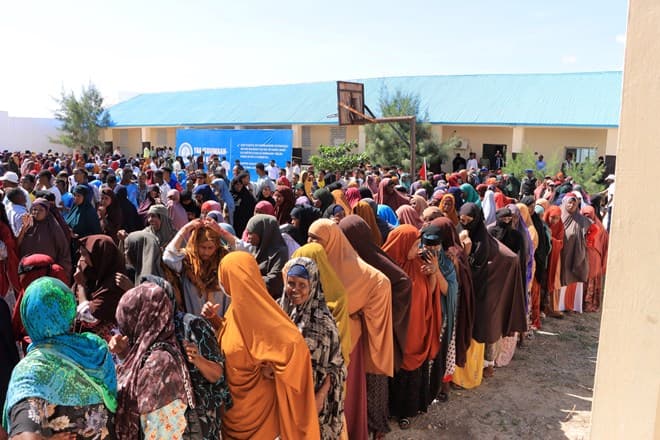
Voters across Mogadishu turned out on Dec. 25, 2025, to elect members of district councils in what authorities and observers view as the first significant step toward restoring direct, universal suffrage in Somalia since the last nationwide one person one vote elections in 1969. The municipal ballots covered 390 council seats contested by 1,605 candidates, figures provided by Abdishakur Abib Hayir, a member of the National Electoral Commission.
The council races are not a direct mayoral contest. Elected councilors will select the mayor of Mogadishu, an arrangement designed to test the mechanics of individual voter registration, ballot management and post election governance in a capital of roughly 3 million people. Officials have framed the poll as a pilot ahead of planned national direct elections in 2026, with success in the city intended to signal whether systems can be scaled up across the country.
Voter registration earlier in 2025 included biometric operations in parts of the capital, with reports of residents, including women in the Hamarweyne district, queuing to have fingerprints and other biographic details recorded. The move toward individual registration marks a deliberate shift away from the indirect, clan based selection arrangements that have governed national politics for decades. Since the fall of the Siad Barre government in 1991, Somalia has relied on an indirect model, formalized around 2004, in which clan representatives select parliamentarians who then elect the president. That system was introduced as a mechanism for political consensus during years of insurgency and state collapse, but critics say it has entrenched elite bargaining and opened space for corruption.
Security remains a central variable in whether the Mogadishu experiment can be replicated nationally. The city has seen improvements in day to day safety in recent years, yet attacks by al-Shabaab, which is linked to al Qaeda, continue to pose a clear threat to mass voting operations. Photographs from the capital during the election period showed an active security presence on city streets, with patrols visible as voters moved to polling stations.

The electoral pilot also highlights geographic and political exceptions. Puntland, a semi autonomous region, and Somaliland, a self declared breakaway territory, maintain separate voting arrangements and will not be part of the nationwide transition to one person one vote unless parallel political agreements are reached.
If the municipal vote proceeds without major disruptions, it could strengthen Somali authorities negotiating position with international partners and donors who have been conditioning greater financial support on measurable governance progress. A credible, secure transition toward universal suffrage would likely increase investor confidence in select sectors focused on reconstruction and infrastructure in the long term, though full stability will require sustained improvements in security, credible institutions and transparent electoral administration.
For many Somalis the Dec. 25 election represented more than an administrative test. It was a symbolic pivot away from decades of indirect power sharing toward a system centered on individual voting rights. The outcome in Mogadishu will be scrutinized as a barometer of whether Somalia can deliver nationwide one person one vote elections in 2026, and whether that step can meaningfully reshape the country’s political economy.
This article was produced by Prism’s automated news system from verified source data, official records, and press releases, then run through automated quality and moderation checks before publishing. The system is built and supervised by the people who set the standards it runs under. Read our full AI policy.
Did this article answer your question?