MOL pipeline explosion in Hungary kills worker, injures nine
A fireball ripped through MOL’s Olefin 1 unit in Tiszaujvaros, killing one worker and sending nine people for treatment, as a major petrochemical hub went offline.

A pipeline explosion tore through MOL’s petrochemical complex in Tiszaujvaros, Hungary, killing one worker and injuring nine others, a sharp reminder of how quickly an industrial failure can become a human and energy-system crisis.
The blast hit the Olefin 1 plant as the unit was being restarted after maintenance. MOL said the incident was an industrial accident, not sabotage or outside interference, and Zsolt Hernadi described it as an unexpected hydrocarbon explosion. Fire and rescue teams moved quickly, activating the emergency protocol within minutes.
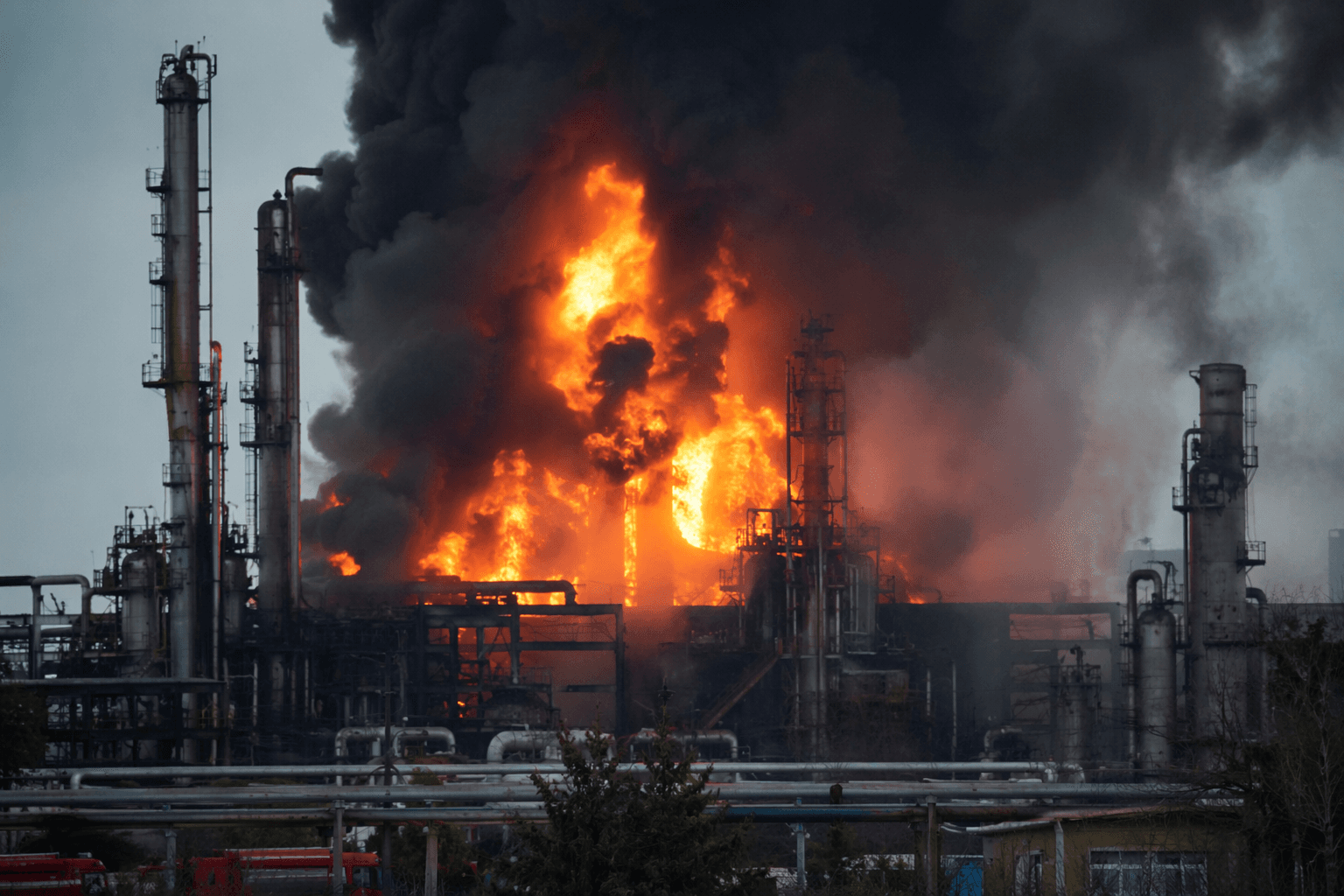
The fire broke out around 9 a.m. and was extinguished by about 10 a.m. Several fire trucks and a mobile laboratory were sent to the site, along with three rescue helicopters. One victim suffered severe, life-threatening burns to the respiratory tract and was airlifted to the University of Debrecen Clinical Centre. Seven others suffered minor burns, while two seriously injured workers were later said to be out of life-threatening danger.
The scale of the accident was visible beyond the plant fence. Peter Magyar posted a photo showing thick black smoke and flames rising from the complex, underscoring the intensity of the fire from outside the site. Officials also moved quickly to calm local fears, with the mayor saying residents were not in danger.
The explosion matters well beyond one plant because Tiszaujvaros is one of Hungary’s most important petrochemical hubs. MOL says the site has operated since 1953 and employs about 1,100 people. It includes two steam crackers with 660 kt/y of ethylene capacity, five polymer units with 765 kt/y capacity, and a butadiene plant with 130 kt/y capacity. MOL has said its petrochemical activity, together with Slovnaft in Bratislava, holds a leading position in Central Eastern Europe, giving the Tiszaujvaros site strategic weight in regional supply chains.
The financial shock was immediate. MOL shares fell 2.6%, making them the biggest decliners on Budapest’s blue-chip BUX index after the blast. That drop reflects investor concern not only about the direct damage, but also about whether a disruption at a key Hungarian chemicals complex could ripple into wider industrial production.
The accident lands at a sensitive moment for MOL’s long-term chemicals strategy. The company has described its Tiszaujvaros polyol complex as its largest organic investment, budgeted at EUR 1.2 billion and later inaugurated in May 2024 as a EUR 1.3 billion project. MOL said the project received EUR 131 million in Hungarian state support and was expected to create 200 jobs. The blast now puts fresh scrutiny on the safety of aging petrochemical infrastructure, worker protections, and the resilience of a facility central to Hungary’s industrial footprint.
Know something we missed? Have a correction or additional information?
Submit a Tip