Morgan Stanley warns AI boom is entering a debt-fueled phase
AI financing is tilting from equity to debt, with Morgan Stanley seeing nearly $570 billion of global issuance in 2026 after $236 billion by May 31.
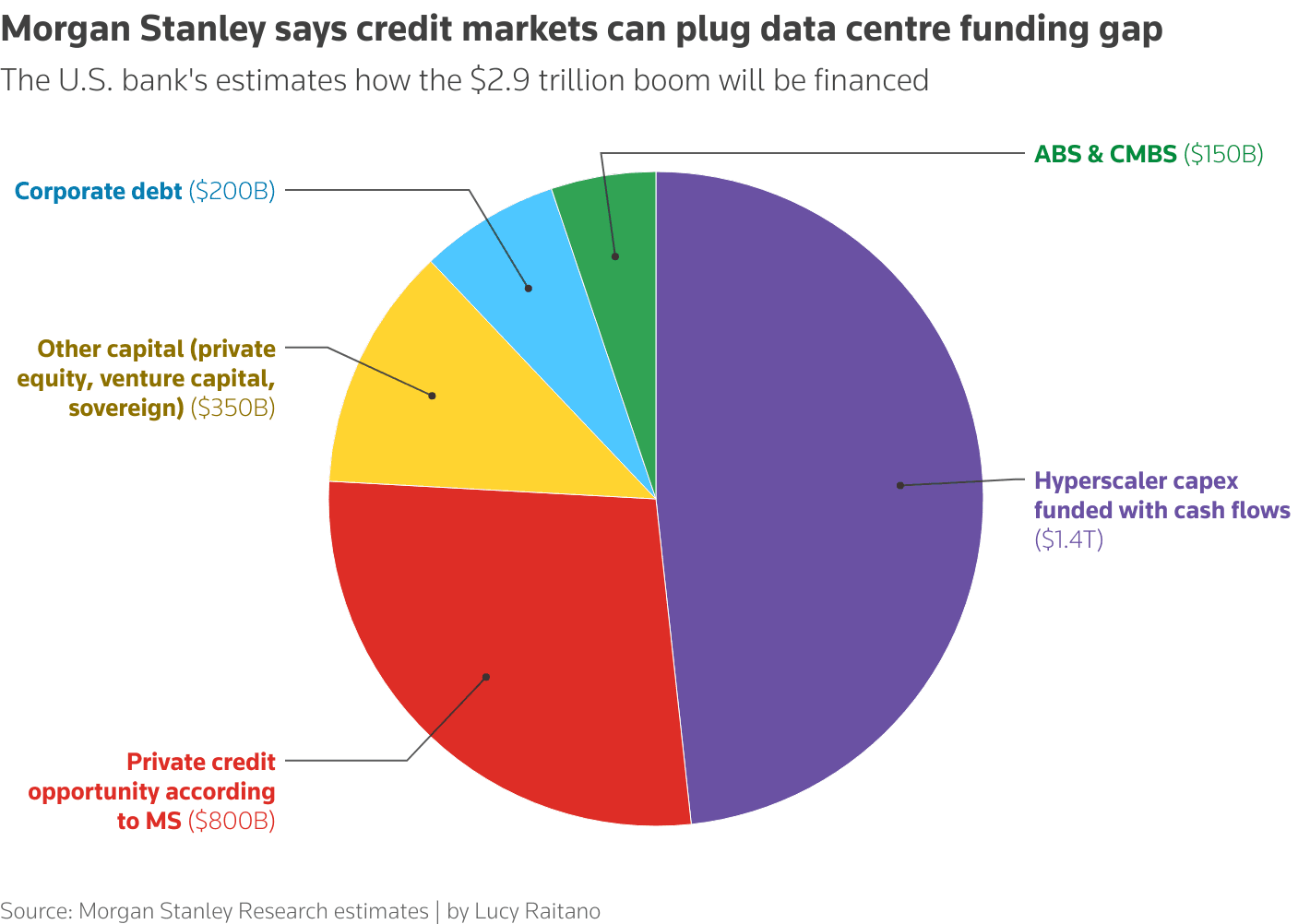
AI financing is shifting into debt, and that is where the boom becomes more fragile. Morgan Stanley expects global AI-related debt issuance to rise to nearly $570 billion in 2026, more than double the prior year, as hyperscalers and chip companies lean on credit markets to fund the next wave of buildout.
The borrowing surge is already visible in the numbers. AI-related debt issuance had reached nearly $236 billion by May 31, about four times the level seen in the same period a year earlier. Alphabet, Amazon, Microsoft and Meta are expected to spend about $700 billion on outlays this year, and Morgan Stanley thinks hyperscaler capital spending could surpass $1 trillion in 2027.
That shift changes the structure of the AI trade. The story is no longer limited to equity markets, soaring chip demand and rich valuations. It is moving into bonds, foreign-currency funding and shorter-term financing structures that must be rolled over or repaid, which makes the industry more exposed to borrowing costs, spreads and investor appetite.
Morgan Stanley expects issuance to accelerate in the second half of 2026 as companies broaden their investor base through non-dollar deals and chipmakers rely more heavily on shorter-term structures. That suggests an industry still expanding quickly, but one that now needs a deeper and more durable financing pool to keep building data centers, chips and the surrounding infrastructure.
The risk for investors is clear: if AI spending slows, or if rates stay high and lenders demand more compensation for risk, the pressure would likely surface first in the most leveraged borrowers and the shortest-dated funding. The AI boom is still advancing, but it is entering a phase where balance-sheet discipline matters as much as enthusiasm, and where credit conditions could become the first place the next crack appears.
This article was produced by Prism’s automated news system from verified source data, official records, and press releases, then run through automated quality and moderation checks before publishing. The system is built and supervised by the people who set the standards it runs under. Read our full AI policy.
Know something we missed? Have a correction or additional information?
Submit a Tip