Mortgage costs and child care crunch make Americans rethink parenthood
Mortgage payments and child care bills are forcing some couples to delay children, even as U.S. fertility fell to 53.8 births per 1,000 women ages 15-44 in 2024.

Monthly mortgage payments, child care bills and economic uncertainty are pressing so hard on household budgets that some Americans are revising their plans for parenthood. For middle-class couples, the decision is no longer just personal or emotional; it is increasingly a spreadsheet calculation, with housing costs on one side and the price of caring for a child on the other.
The strain lands against a long slide in U.S. fertility. The Centers for Disease Control and Prevention said births rose 1% in 2024 to 3,622,673, but the final general fertility rate still fell to 53.8 births per 1,000 females ages 15 to 44, down 1% from 2023. Provisional CDC data had placed the 2024 rate slightly higher, at 54.6 births per 1,000 women ages 15 to 44, yet the broader pattern remained one of weakness. The agency said the fertility rate declined by 2% a year from 2014 to 2020 before generally fluctuating.
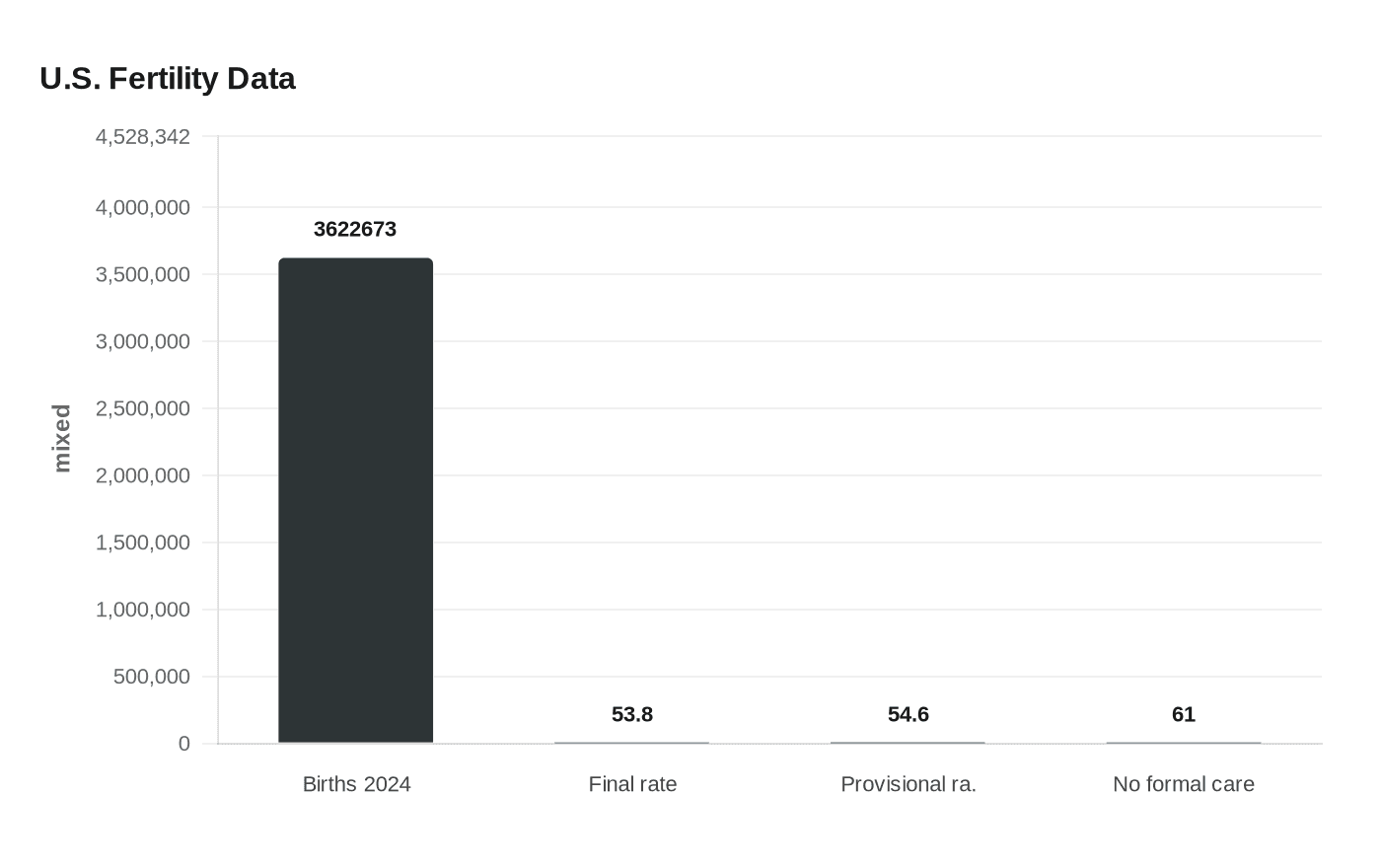
That backdrop matters because child care is not a small line item. The U.S. Census Bureau has said child care expenses are a significant part of household budgets for families with children, and its National Database of Childcare Prices tracks costs in 2,360 U.S. counties. The bureau’s survey data also show how difficult formal care can be to secure: roughly 61% of parents living with at least one child age 17 or younger reported having no formal child care arrangements in a 2022 Household Pulse Survey.
The result is a demographic squeeze that can begin before a child is even born. A higher mortgage can push a couple farther from family support networks, while child care shortages and high prices can make a second income harder to keep. When those pressures stack together, some couples delay having a first child, and others stop at one.
That has implications well beyond individual households. Fewer births over time shape school enrollment, demand for housing, the size of the future labor force and the pace of population growth. It also feeds back into policy debates over child care subsidies, housing affordability and family supports, because the cost of raising children is increasingly being set not only by wages, but by the price of shelter and care.
This article was produced by Prism’s automated news system from verified source data, official records, and press releases, then run through automated quality and moderation checks before publishing. The system is built and supervised by the people who set the standards it runs under. Read our full AI policy.
Did this article answer your question?

