Mourinho’s Real Madrid return puts Vinicius relationship under scrutiny
Mourinho’s return to Real Madrid will be judged as much by his treatment of Vinicius Junior as by results. The club’s biggest attack and its biggest off-field flashpoint now overlap.
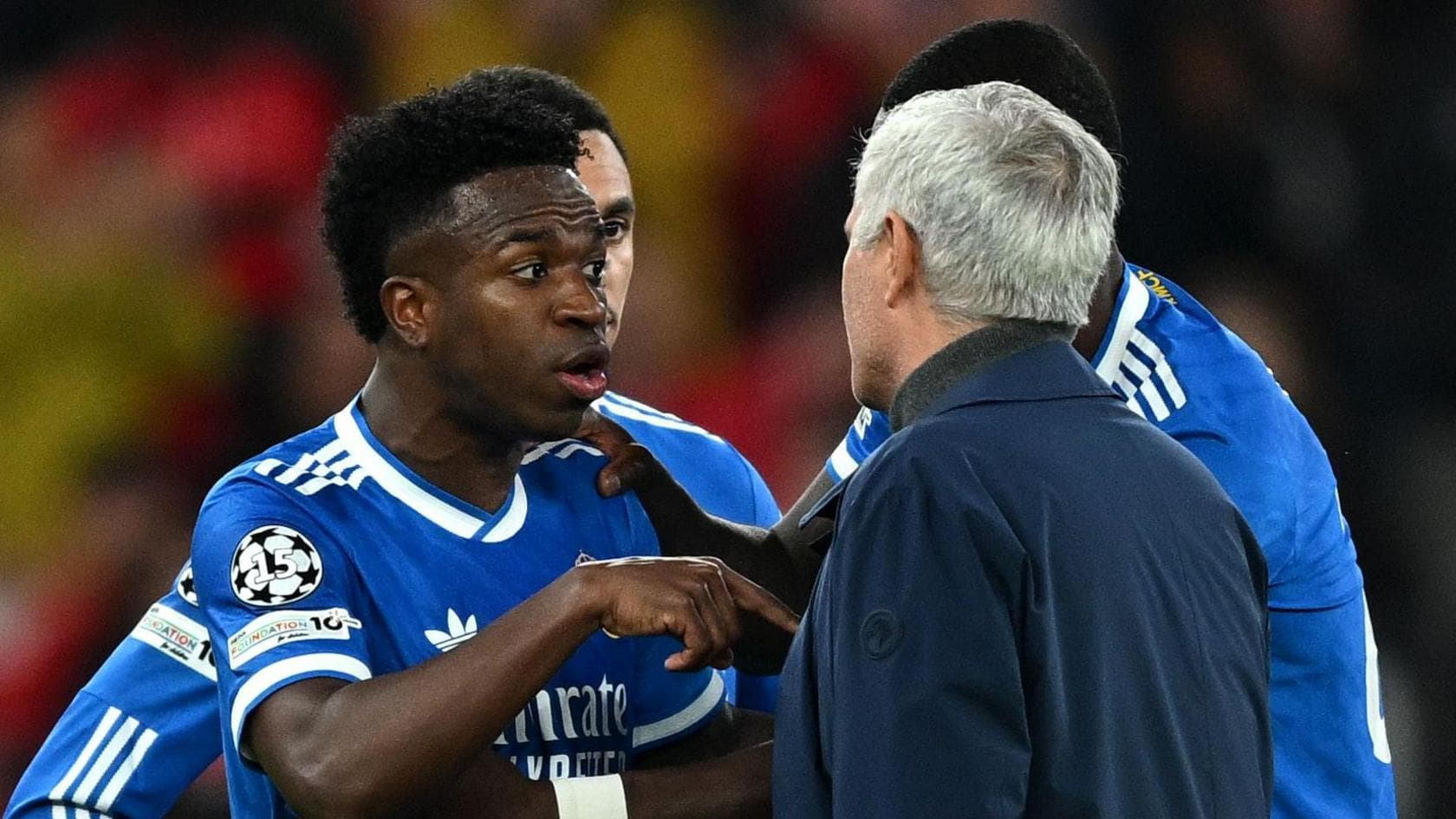
Mourinho’s first test is not tactical, but relational
Jose Mourinho’s return to Real Madrid is already defined by one question: can he build around Vinicius Junior without reviving the friction that has followed him through much of his career? The two-year appointment brings him back to the Bernabeu after his first spell from 2010 to 2013, when he delivered the 2011 Copa del Rey and the 2011/12 La Liga title. At a club that counts 15 European Cups and 36 Spanish league titles, that history buys little protection from scrutiny.
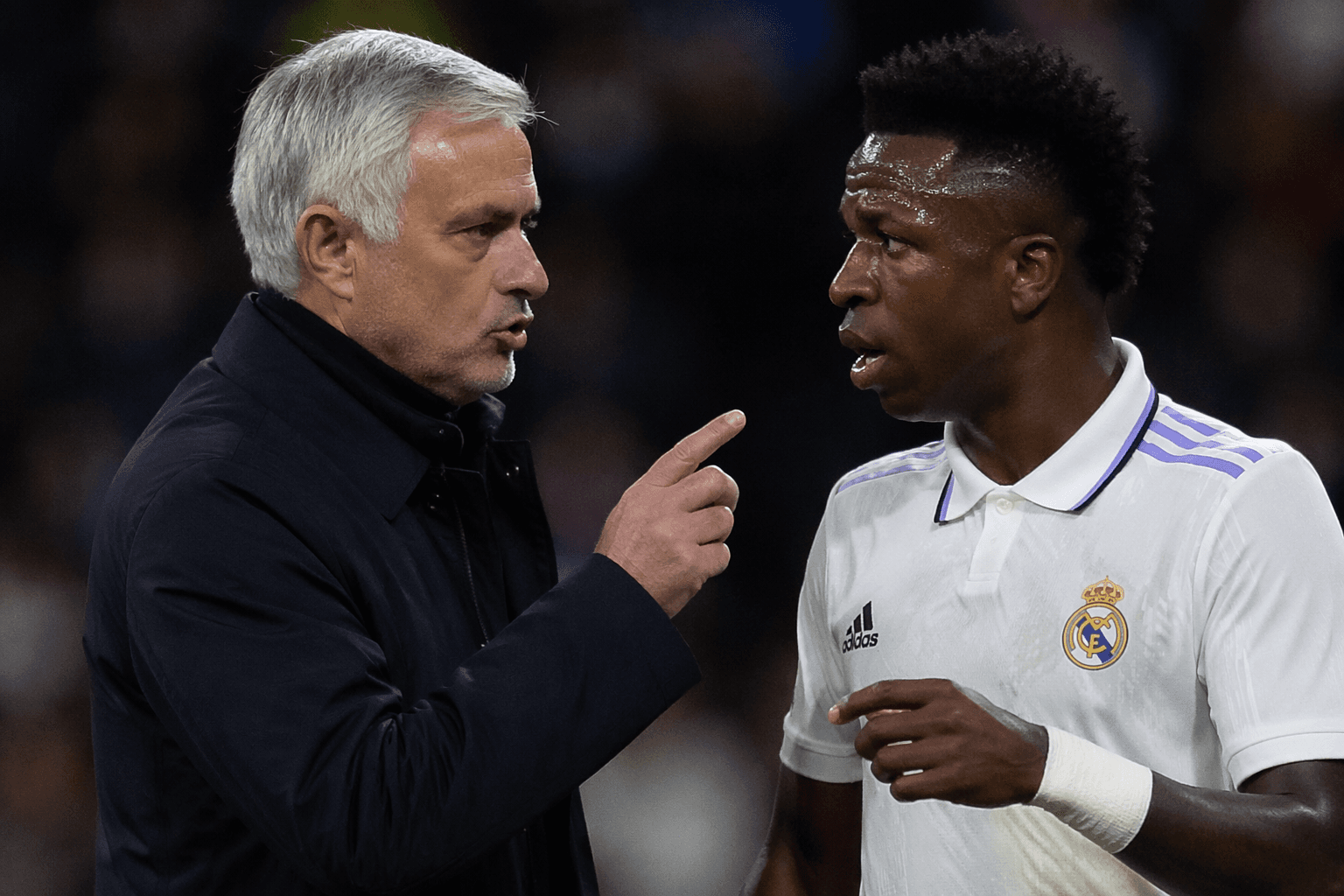
This second stint comes with a more delicate challenge than the one Mourinho faced more than a decade ago. Vinicius is no longer a promising teenager finding his feet. He is one of Real Madrid’s defining attackers, a player tied to the club until 30 June 2027 and protected by a reported €1 billion release clause. The issue is not whether Mourinho respects his importance. It is whether he can adapt his methods to a squad built around Vinicius, rather than to the old Mourinho model of control, confrontation and hierarchy.
Why this return feels different from 2010
Mourinho’s first Real Madrid project was built on immediate pressure: win fast, win often, and break Barcelona’s grip on Spain. That blueprint worked in part, with the Copa del Rey and league title providing proof that his methods could still deliver trophies at the Bernabeu. But the club he is re-entering now is different in both structure and expectation.
Real Madrid’s recent identity is shaped by continuity at the top level and by attack-first ambition. Vinicius has become central to that identity since joining from Flamengo in 2018 as a teenager. What was once a development project is now one of the main engines of the team. That matters because Mourinho is not walking into a blank slate. He is walking into a dressing room already calibrated around elite offensive talent, where any sense that the manager is restricting the club’s most explosive forward would immediately become a strategic problem.
The institutional pressure is also immense. Real Madrid’s official honors list underlines the scale of the job: 15 European Cups and 36 national league titles. That record creates a standard in which style, personality and results are all judged together. At Madrid, even a winning coach is only safe if he is aligned with the club’s stars, its power structure and its public image.
Vinicius is not just another player
Vinicius Junior’s status inside the club raises the stakes of Mourinho’s comeback. His contract runs until 30 June 2027 and carries a €1 billion release clause, a clear signal that Real Madrid see him as a long-term pillar rather than a replaceable asset. Since his arrival from Flamengo in 2018, he has grown into one of the team’s key attacking figures, and the current Madrid project also depends on the Kylian Mbappe-Vinicius partnership.
That partnership makes Mourinho’s management of Vinicius especially consequential. If the coach maximizes him, he strengthens the entire attacking structure, giving Mbappe more room and giving Real Madrid an edge against deep defensive blocks. If he misreads the balance, the damage would spread beyond one player’s form. It could affect the team’s attacking rhythm, the division of responsibility in the front line and the mood of a squad built to handle pressure from the first whistle to the last.
There is also a commercial and symbolic layer to Vinicius’s importance. Real Madrid have protected him with an elite-level contract, and his value extends well beyond one season’s output. Mourinho’s job is therefore not simply to coach a winger or forward. It is to manage one of the club’s core assets in a way that preserves both performance and authority.
The February 2026 controversy changed the stakes
The relationship already carries baggage. In February 2026, after Vinicius said he had been subjected to alleged racist abuse during Real Madrid’s Champions League tie against Benfica, Mourinho’s comments were heavily criticized in reporting at the time. Several commentators and former players described his response as mishandling the issue, and that episode now hangs over any future interaction between the two.
That matters because the question at Real Madrid is not only whether Mourinho can motivate Vinicius. It is whether he can do so in a way that avoids creating a public-relations crisis or a dressing-room split. A coach at Madrid does not only shape tactics. He also sets the tone for how the club speaks about its biggest players, its biggest controversies and its biggest vulnerabilities.
The Benfica episode also ensures that every exchange between Mourinho and Vinicius will be interpreted through a wider lens. If there is visible tension, it will not be read as a normal football disagreement. It will be seen as a test of whether Mourinho has changed. If the relationship looks constructive, it will be treated as evidence that he can adapt. Either way, the story will travel far beyond the training ground.
Racism in football gives the issue wider significance
FIFA’s active anti-racism and no-discrimination campaigns frame racism in football as an ongoing problem rather than a closed chapter. That broader context makes any future confrontation involving Mourinho and Vinicius at Real Madrid more significant than an internal club dispute. It would touch on one of the sport’s most sensitive issues and invite scrutiny from supporters, officials and the wider football public.
For Real Madrid, that raises the cost of mismanaging the relationship. The club must protect a player who is central to its attack while also showing that it understands the seriousness of racism in the modern game. For Mourinho, it means the standard is higher than usual. Tactical sharpness will matter, but so will language, empathy and restraint.
The most revealing aspect of this second spell may be whether Mourinho treats Vinicius as the player around whom the attack should be organized, or as one figure among many in a rigid system. At Madrid, the manager who best serves the stars usually lasts longest. In this case, the club’s new era may depend on whether Mourinho can turn an old reputation for tension into a new example of adaptation.
This article was produced by Prism’s automated news system from verified source data, official records, and press releases, then run through automated quality and moderation checks before publishing. The system is built and supervised by the people who set the standards it runs under. Read our full AI policy.
Know something we missed? Have a correction or additional information?
Submit a Tip